
Library
For people who love to drink and make great beer.
Showing 25-48 of 108 library items
 FreeDeep Dive
The Evolving Joy of Craft Beer & Hops | Deep Dive
Could a fresh perspective on hops inspire new and continued growth?
 SubscriberMagazine
From Grain to Class (Spring 2026)
Your guide to classic and cutting-edge techniques for brewing with wheat, fonio, specialty malts, and more.
 All AccessVideo
Final Words
“Horus is a huge labor of love.”
 All AccessVideo
Packaging and Pasteurization
“Pasteurizing was a journey for me.”
 All AccessVideo
Experimenting with Other Adjuncts
“There [aren’t] many adjuncts I haven’t tried at this point. ... A lot of them are complete failures, to be honest.”
 All AccessVideo
The Wider World of Vanilla
“Vanilla is this endless possibility.”
 All AccessVideo
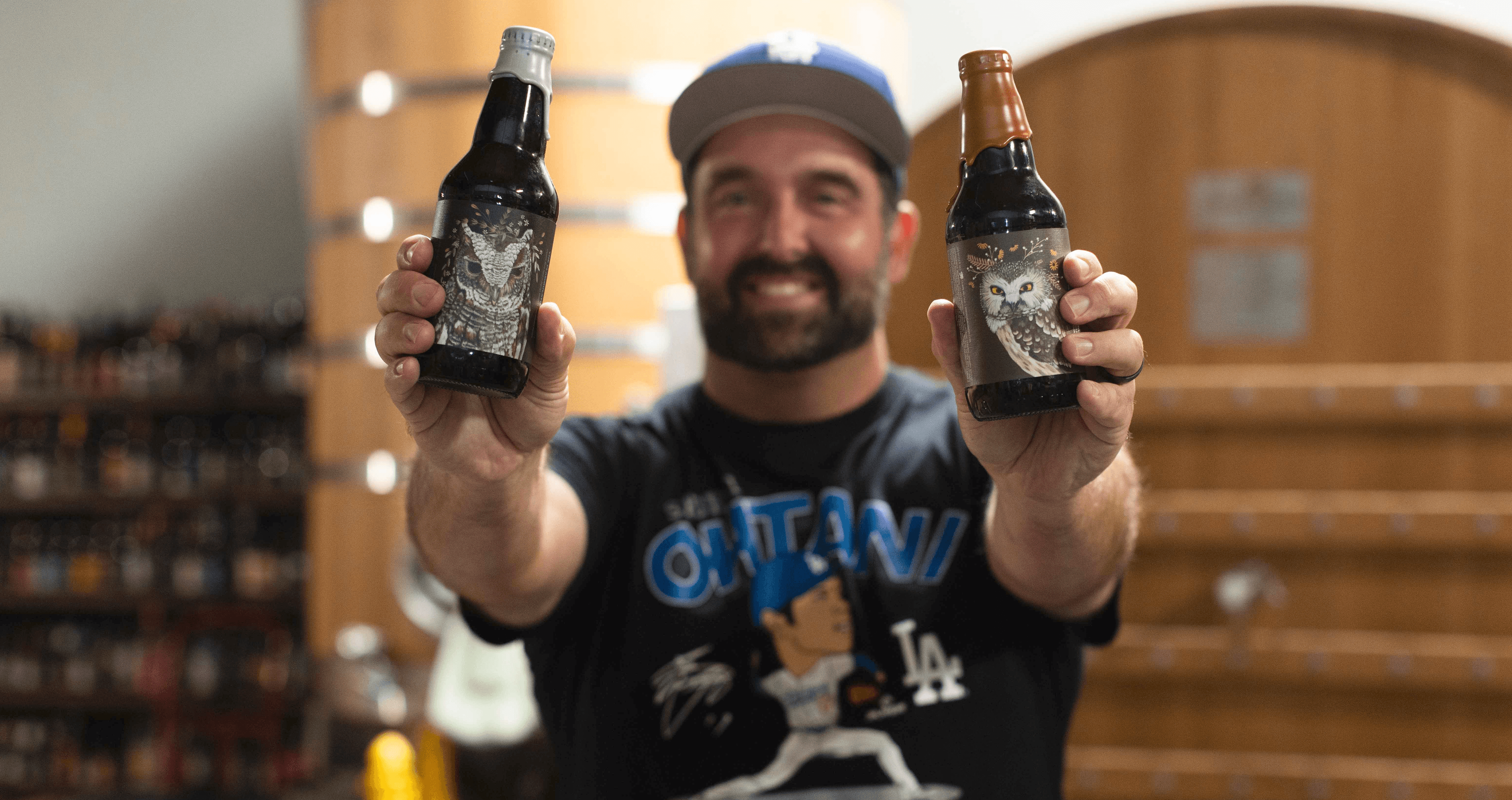
The Hazelnut Challenge
“It is the most extreme quantity that you need to impart flavor.”
 All AccessVideo
Adding Coconut
“It’s pastry.”
 All AccessVideo
Working with Coffee
“I haven’t drank caffeine myself in 20 years. I haven’t had a cup of coffee.”
 All AccessVideo
Tasting and Final Decisions
“It’s all my palate. It’s all what I taste on that given day.”
 All AccessVideo
More on Different Barrel Types
“[How] I decide whether something is going to be double- or triple-barrel-aged beer is how it tastes out of the second barrel.”
 All AccessVideo
Barrels and Maturation
“The evaporation does its thing. I’m not focused on headspace or any of that.”
 All AccessVideo
Managing High-Gravity Fermentation
“You’ve really got to be careful, and you’ve got to keep it churning.”
 All AccessVideo
Brewing for Multiple Barrels
“I've always said a barrel is the cheapest adjunct out there.”
 All AccessVideo
The Barrel-First Approach
Harrop builds his recipes around the barrel.
 All AccessVideo
Welcome to the Blendery
Horus Aged Ales is a different sort of craft-beer business.
 All AccessVideo
Conclusion | Empower Your Brewery with Sensory
There are many ways that sensory analysis can help out a brewery, from raw materials to recipe development, troubleshooting, and marketing. Making sense of your senses can help you make better beer and strengthen your brewing business.
 All AccessVideo
Data | How to Make Sense of It
Sensory analysis can produce a lot of data—here are some specific tips on how to make the most of it, including tagging, watching for trends, and radar or spider plots. It’s also important to know the limitations of your data, to avoid reaching the wrong conclusions from insufficient or misinterpreted information.
 All AccessVideo
Bias | Know the Pitfalls
There are three types of biases that should be avoided at all costs: the halo effect, first-sample bias, and adaptation. To avoid the halo effect, it’s best to have panelists complete their evaluations individually before opening things up to discussion. It’s helpful to foster a culture in which all opinions are welcome and valid. Calibration samples and randomization are good ways to help nullify the first-sample effect. To avoid adaptation bias, it’s helpful to keep sample sizes relatively low—perhaps eight samples in a sensory session. Keep it focused.
 All AccessVideo
Ingredients | Applying Sensory Analysis to Raw Materials
For brewers, it can be just as useful to collect sensory data on their hops, malt, and water, to help ensure a quality, consistent product. Two of the most common and useful ways of evaluating ingredients are the hop-grind and the hot-steep methods. Making hop tea is another method for evaluating hops, although it introduces other variables.
 All AccessVideo
Attributes | Identifying Off-Flavors and Other Specific Traits
Identifying problems in beer samples is one of the most important and useful tasks of sensory in the brewery. Flavor spikes are an effective way to train panelists on specific attributes—and for them to learn whether or not they are sensitive to those attributes. For example, about 20 percent of people are anosmic to diacetyl—they can’t smell it.
 All AccessVideo
Recognition | True-to-Target Training
Familiarity with a product is critical to the TTT method. Besides tasting the beer often, brand-recognition training is a highly effective way to help panelists get more familiar with the sensory aspects of a specific brand.
 All AccessVideo
Lexicon | Description Training and Building Vocabulary
While the hedonic method requires no training—you can’t train tasters on what they like—the descriptive method benefits from some focused training for your panelists. Can you describe grapefruit without using the word “grapefruit”? Lexicon development training, using aroma samples, is a fun and effective exercise to help panelists identify common notes in beer as they build their vocabulary and train their senses.
 All AccessVideo
True-to-Target | Does that Beer Taste Like It’s Supposed to Taste?
The TTM method—true-to-target, or true-to-brand—is a binary test that counts how many testers agree that a beer does or does not fit the target profile. In aggregate and collected over time, these can be powerful data for a brewery to collect.