

Wayward Lane Süffig
(Schoharie, New York)
Landbier isn’t a style but a label that evokes the countryside—fitting for a farm brewery. Süffig, meanwhile, is one of our favorite German words, meaning “easy to drink”—and it is, but that doesn’t speak to the depth of this collab with New Hampshire’s Schilling Beer. The process might: brewed with an heirloom German malt and some Vienna; double-decocted; given a charge of whole-cone Hallertauer Tradition in the coolship. Fermented cool, spunded, and lagered patiently. (See the recipe.) The result delighted our editorial team, starting with that impressive cap of foam. Bready malt, floral hops, and a whiff of lager-cellar sulfur all sing of freshness. The finish leans dry and bitter—süffig—but there’s plenty to unpack along the way: a brief swell of body, fleeting sweetness, light toast, balancing herb-bitterness, rustic minerality, and an elusive fruit note that resembles white grape or berry. In the end, it accomplishes that rarest combination: great character and supreme drinkability. —J.S.
Funky Fauna Sea Plague
(Bend, Oregon)
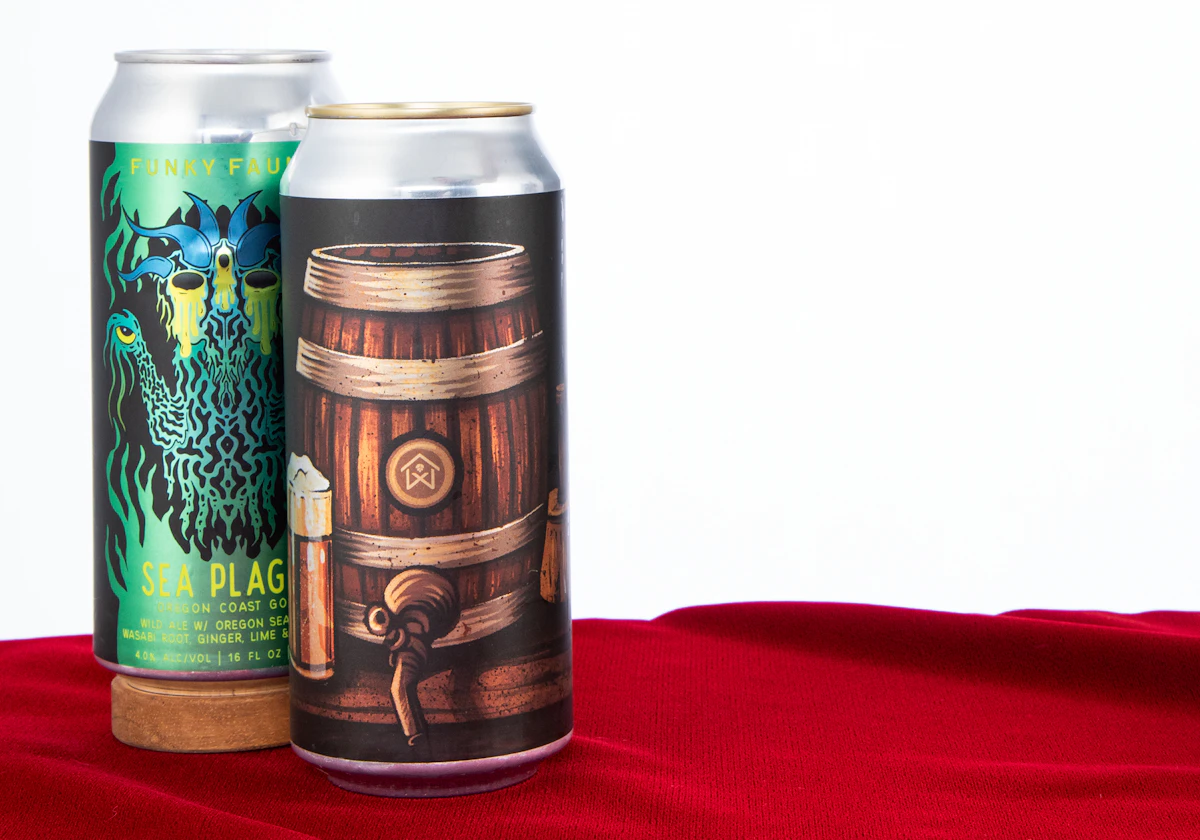
You have to be confident in your beer to call it a “plague” and know that drinkers will happily guzzle it down. Funky Fauna’s confidence is justified. Sea Plague is a half-wild gose that floods the coastal walls of any style format into culinary, complex territory. (See the recipe.) Punchy limeade takes the lead with ginger in support, blossoming with cherry and passion-fruit notes and exploding on the palate. But what’s really compelling is how the wasabi root—which you may not pick up right away—sneaks in to liven up the party. Not so much sharp and spicy as earthy and green, there’s a mustard-seed herbaceousness that’s incredibly compelling. The seaweed is subtle, lying low as an umami seabed to root all these bright, fruity, spicy flavors. Clean and quenching in the finish, there’s something new to discover with each sip. —C.I.
7 Vidas Flanders Red
(Tacna, Peru)
Hailing from southernmost Peru near the Chilean border, this beer takes inspiration from Belgium but has a strut all its own. Our blind panel gave it top marks, scoring it a 100, and they weren’t the first to honor it—the same beer won gold at the 2025 World Beer Cup. It’s lean and coppery-amber, and you might miss some caramel-malt depth, but there is plenty of other complexity to occupy you. Simultaneously jammy and earthy, the sip evokes biting into juicy sour cherries while sitting on a hay bale overlooking a verdant meadow; instead of going full balsamic or red wine, it suggests raspberry vinaigrette. This beer isn’t afraid of its big personality or its tangy acidity, keeping the acetic tingle in check, never becoming sharp or one-note. The expected challenge never arrives, and the clean, dry finish brings the whole experience to a close too quickly. —C.I.
Toppling Goliath Mornin’ Delight
(Decorah, Iowa)
Few breweries in the United States have had as much impact on the trajectory of imperial stout as Toppling Goliath, but this is no lifetime achievement award for a brewery past its prime. On the contrary: The 2025 batch of Mornin’ Delight was something special, as evidenced by the 97 score bestowed by our blind panel. And in tasting it again while considering it for our Best 20, the reasons were obvious and many: rich, nutty coffee with an espresso depth in the aroma; layered malt that evokes stroopwafel and chocolate croissant in the flavor, with a bitter coffee counterpoint; a silky and luxurious texture that feels indulgent on the palate yet finds a quick finish; and a spacious, resonant flavor that allows notes to echo through it. It’s big without feeling bulky, and the flavor notes are well defined despite their intensity. You don’t get to this point with ingredient quality alone, and like a great sound engineer, brewmaster Mike Saboe pulls the faders, dials in the parametric equalizer, builds space in the mix for each note to have impact exactly when it should, and turns a maple-tinged pastry stout pop song into a classic that you never get tired of hearing. —J.B.

Cloudburst Wet Side Story
(Seattle)
Founder-brewer Steve Luke sold Cloudburst and moved to New Zealand this year, but his fingerprints are all over this wet-hopped West Coast double IPA. Like Aqua Sea Foam Shame, one of our Best 20 Beers in 2021, it reflects Luke’s view that the best “freshies” are saturated with fresh hops—kilned and unkilned—on the hot side, and that they should take as long to mature as any other IPA. West Side Story was Luke’s father’s favorite musical, and its songs have been buried in his brain for more than 30 years. He provided modified lyrics for Wet Side, such as “And I smell pretty!/Oh so pretty!/I smell pretty and fruity and bright!” It’s no mere performance. This beer offers a stunning combination of constantly fresh and sometimes floral aromas and flavors—tropical fruits (plural), orange rind, spruce tips, paprika, and other exotic spices. Bottom line, it’s resinous and—let’s be honest about it—double dank. —S.H.

Burial Epitaph of Our Beloved
(Asheville, North Carolina)
The creatives at Burial describe this oak-aged, mixed-culture golden ale as the “most personal expression of our wild program,” made with local grains, aged hops, and matured for up to three years before blending. Like the process, the character hints at Belgian gueuze—but it also comes with a New World knack for knowing when to trade subtlety for intensity. Its nose suggests white wine, lemon peel, leafy tea, ripe apple, cool cellar floors, haystacks, and daffodils. The beer is unabashedly tart, pushing the boundaries of drinkability yet never crossing them, delivering bright intensity while allowing us to enjoy the flavors—Sauvignon Blanc grape, orange rind, Granny Smith apple, pineapple, pear, and pepper, with cobwebby strands of leather and farmyard. It’s grounded yet unabashedly bright and lively throughout. And after that ride through the sunny pasture, it still finishes dry and crisp, with a tannic, melancholy kiss goodbye. —J.S.
Formula Alcove
(Issaquah, Washington)
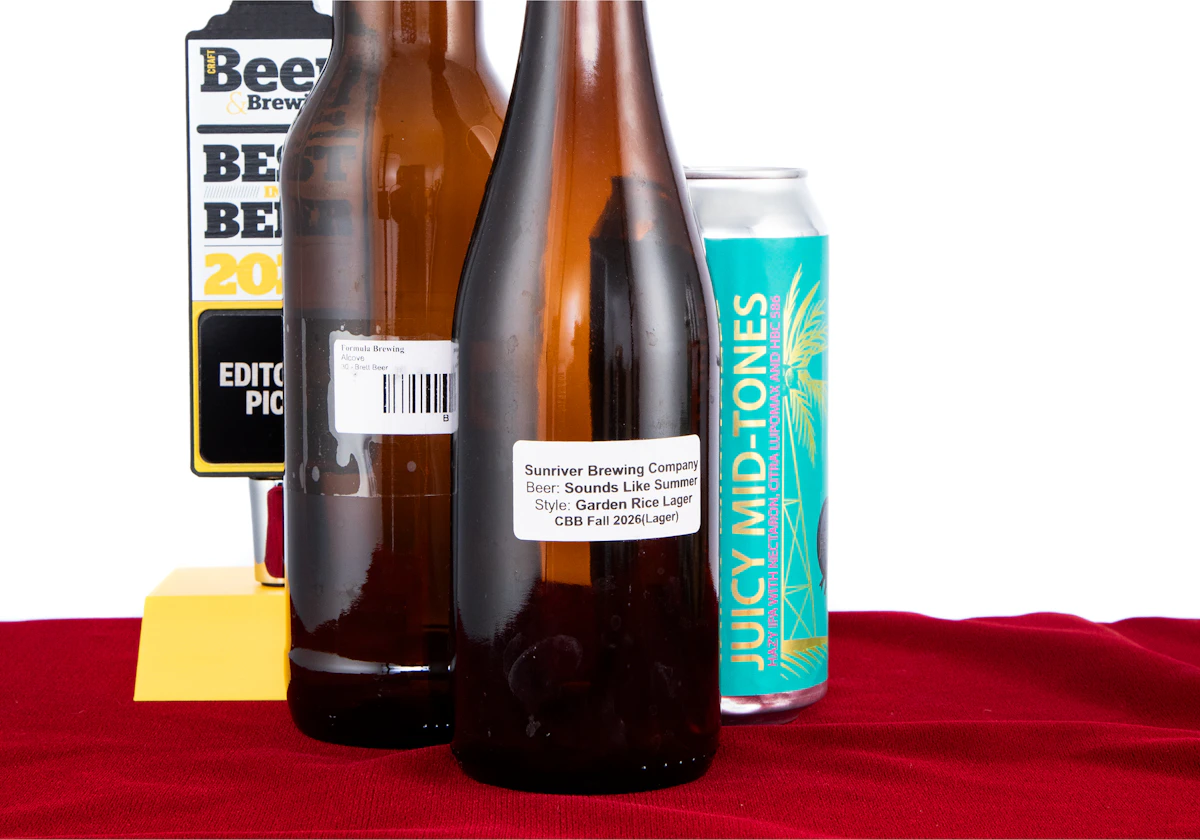
Just half an hour from the Seattle-Tacoma airport, Formula has become a popular first stop for out-of-state brewers headed to the Yakima Valley for hop selection each September. They go expecting a wide range of choices; head brewer Jesse Brown won four World Cup medals in 2024 for a British-style imperial stout, a helles, a leichtbier, and a rye beer. This dry-hopped saison with Brett appeared just as the Seahawks began defense of their NFL title, so it was among the September choices. It flaunts its freshness—sweet and earthy as a bouquet of just-cut flowers and newly zested lemons and limes. Effervescent throughout, it is light on the tongue, with layered textures that start with spritely carbonation. Wet hay lingers afterward, becoming part of the aroma and flavor with each subsequent sip. Also lingering: the sense that those who can come here year-round are lucky indeed. —S.H.
Sunriver Sounds Like Summer
(Sunriver, Oregon)
It’s incredibly rare for a brewery to have two beers in a year score 100 with our blind panel. The fact that the other was a bourbon barrel–aged barleywine speaks to Sunriver’s impressive range. Meanwhile, this “garden rice lager” makes a compelling argument: that botanicals are trending not because we need another trend, but simply because brewers are getting better at botanicals. Ginger, Thai basil, Japanese cucumber, and this other trendy plant called hops are the aromatic components that fit together beautifully, each complementing and elevating the other over the frame of a dry, delicate quaffer. Even the ginger, so easy to overdo, provides an accent rather than dominating the nose or distracting the palate. There are also notes of lime, lemongrass, rice cracker, peach, white tea, and tropical florals, as the basil meets cucumber for a bright, fresh, minty impression. And it all coheres like a great cocktail, mixed deftly but not pretentiously. Best of all, Sounds Like Summer never stops doing what a rice lager should do: quench and disappear too quickly. —J.S.
Corn Coast Juicy Mid-Tones
(Lincoln, Nebraska)
When we utter the words “hazy IPA,” inevitably our minds drift toward the bucolic Vermont countryside or the green rolling hills outside Boston—or maybe a black church in Portland, Oregon, or reclaimed manufacturing warehouses in Albany, New York, or even Montreal if we’re feeling a bit spicy. But not once do we conjure a picture of a nondescript industrial development on the south side of Lincoln, Nebraska. That, however, is exactly where some of our favorite beers from this style family have originated over the past few years, and we’re going to continue to shout about it. Four GABF medals in haze-related categories in five years? The only 100-rated hazy IPA we’ve scored in at least the past three years? Corn Coast has unlocked a secret level in hazy IPA that we didn’t know existed, where beers can be both ephemeral and vivid, richly indulgent yet precise and concise. In Juicy Mid-Tones, they’ve mastered the dynamics, effortlessly jumping from sweet pineapple juice and mango nectar into powerful lemongrass and pith punches, all with a fluffy texture that should feel far weightier than it does. It’s no wonder GABF judges and our blind-review panel have responded as they have. —J.B.

Shred Humulicious
(Rocklin, California)
Is it possible for an IPA to taste like love? For two brewers’ passion for hops to be so thoroughly conveyed within a single beer, there’s no better word for it. We’ve had some bangers from Amy Heller and Zach Frasher’s outpost just north of Sacramento, but Humulicious was a standout this year for our blind judges, laden with sticky pineapple, sweet Peach Ring, overripe mango, and even subtle strawberry notes. It’s best trait, however, is just how well it layers, fuses, and polishes these big flavors like a Japanese knifemaker forging a patterned Damascus steel blade. —J.B.
Counter Weight Ein Helles
(Cheshire, Connecticut)
Counter Weight sells rivers of IPA in Connecticut, but its trickles of lager were on our map well before the brewery upgraded to a bigger space in 2022. A shiny four-vessel Kaspar Schulz system allowed them to dial in German-style step mashes and the occasional decoction, and the results speak for themselves; only a couple of weeks after we decided to name Ein Helles to our Best 20—with this issue still under wraps—the beer won gold at the Great American Beer Festival. We love it when that happens. The nose would be classic Bavarian helles except the softly floral, lemony, pine-needle hopping is a half-notch louder than the standard, while the malt is understated. The flavor is delicate but round and beautifully integrated, offering wispy brioche, a gentle balancing bitterness, and the barest hint of bright nectarine. Lingering bittersweetness and light toast in the semidry finish leave us yearning to hear the message correctly, and there’s no choice but to rewind the tape and go back to the glass for more. —J.S.
Streetside Master Blend #4
(Cincinnati)
Streetside’s intentional approach to big flavor has endeared them to local enthusiasts, and we can see (and smell, and taste) why. Their Master Blends are blends in the truest sense, pulling from different barrels as well as various threads of stout to assemble something simultaneously indulgent and thoughtful—a beautifully sculpted drip cake from an in-house pastry chef. In the aroma, curtains of thick mocha flow around a cluster of dried, red fruits—cherry, cranberry, and currant are there with fig, prune, and walnut. On the palate, ponderous body and sweetness get a check from the deepening richness of those tangy fruit esters—raspberry jam, cherry Twizzler—plus bitter chocolate, tropical light-roast coffee, some helpful dusty tannin, and a friendly pat of alcohol. —J.S.

Riverlands Stolba Dark
(St. Charles, Illinois)
This Czech-style dark lager does exactly what a tmavý ought to do: It demonstrates that a beer can have body and a whole symphony of malt and hop aromas and still go down a treat. It’s endlessly drinkable, and we could leave it at that—a delicious, crushable instant classic. But we’d be remiss not to take a beat to drop and roll around in the lager’s herbaceous hop aroma… or its earthiness and peppery spice, its toasted pumpernickel bread crust… and those notes of coffee, bittersweet chocolate, and dates. It’s rich but it never feels heavy, tempered as it is by expert restraint and a dry finish. The aromas and flavors only get better as the beer gets warm—but not too warm. It won’t last long enough for that. —C.I.
Glenwood Canyon Crystal River Helles
(Glenwood Springs, Colorado)
When our blind panel scored this humble helles a 99 earlier this year, we weren’t particularly surprised—the same beer won silver at GABF in 2024, and Don Tse wrote about it for our lager issue in 2025. But we were excited enough to schedule a trip up to talk with owner Todd Malloy and brewer Robin Reed about how they make it. Revisiting it now, the slightly toasty malt and gentle floral notes, with just a hint of sulfur in the aroma, strike a compelling balance between helles orthodoxy and American execution. —J.B.
Burgeon Eyes to the Sky
(Carlsbad, California)
Here is, simply, one of the most entertaining beers we’ve tasted all year. From low and earthy to high and lemony via an herbal-cannabis middle, the aroma delivers the whole IPA spectrum, with further notes of honeysuckle, pineapple, lychee, passion fruit, apricot, and berry. (See the recipe.) The flavor is as bright as Equatorial noon, with a clean malt sweetness providing the canvas for punchy, candied-lemon hops—and pit-fruit, resin, red tea, and weed—before the drying, earthy, finely bitter finish. The overall effect is fun—picnic on the beach, basking on a blanket, steel-drum timpani. Sunglasses on, shoes off, fetch me another from the cooler. —J.S.
Forgotten Road M 3rd 25th: Uneasiness of Normal
(Graham, North Carolina)
Virtually all barrel-aged imperial stouts these days share certain flavor elements: sweetness, thickness, malt-driven chocolate, figgy- berry esters, and boozy warmth. Yet the finer details and paths to balance vary greatly. Thick and leggy, Uneasiness of Normal smells like rich brownie batter lifted by fresh vanilla and a judicious splash of brandy. The flavor delivers a punchy, chewy, almost vinous dark-fruit depth, all enfolded in malty chocolate. Other notes we pick up: café au lait, marshmallow, amaretto, dark cherry, plum, and licorice. Yeah, it’s sweet—of course it is—but it’s also deeply tangy, with that fruit balancing the richer dessert flavors before leaving a residual hum of after-dinner alcoholic warmth. There comes a point at which you want to chuck all the florid descriptors and jot down such bone-deep truths as, “I don’t know, it just tastes real good.” —J.S.

Living Waters Barrel-Aged Dyson Sphere (Construct IV)
(Nashville, Tennessee)
The rich nose of chocolate with a touch of cinnamon spice, waves of deeper fig and prune, a bit of roasted espresso, just a hint of barrel char, sweeter shortbread cookie, and layered bourbon vanilla provide a compelling entry point to this intentionally decadent stout, but the first point of divergence from today’s norms is evident in the tan tone of the foam—while many of their contemporaries boost the high-Lovibond roasted malts driving foam to mocha shades, Living Waters achieves their desired hue with considerably more base and midtone malts. That restraint is palpable as the beer hits the palate and gives the sweeter malt a touch of lift without sacrificing its ability to support the bigger barrel tones. Barrel quality here is evident, with a hit of Old Fitzgerald–like spice, Weller-ish vanilla and coconut, and tight but smooth oak tannin that pulls the finish together. It’s not the thickest in the genre, but that’s just one more reason we find it so compelling. —J.B.
Deep Fried NZ Firepower
(Athens, New York)
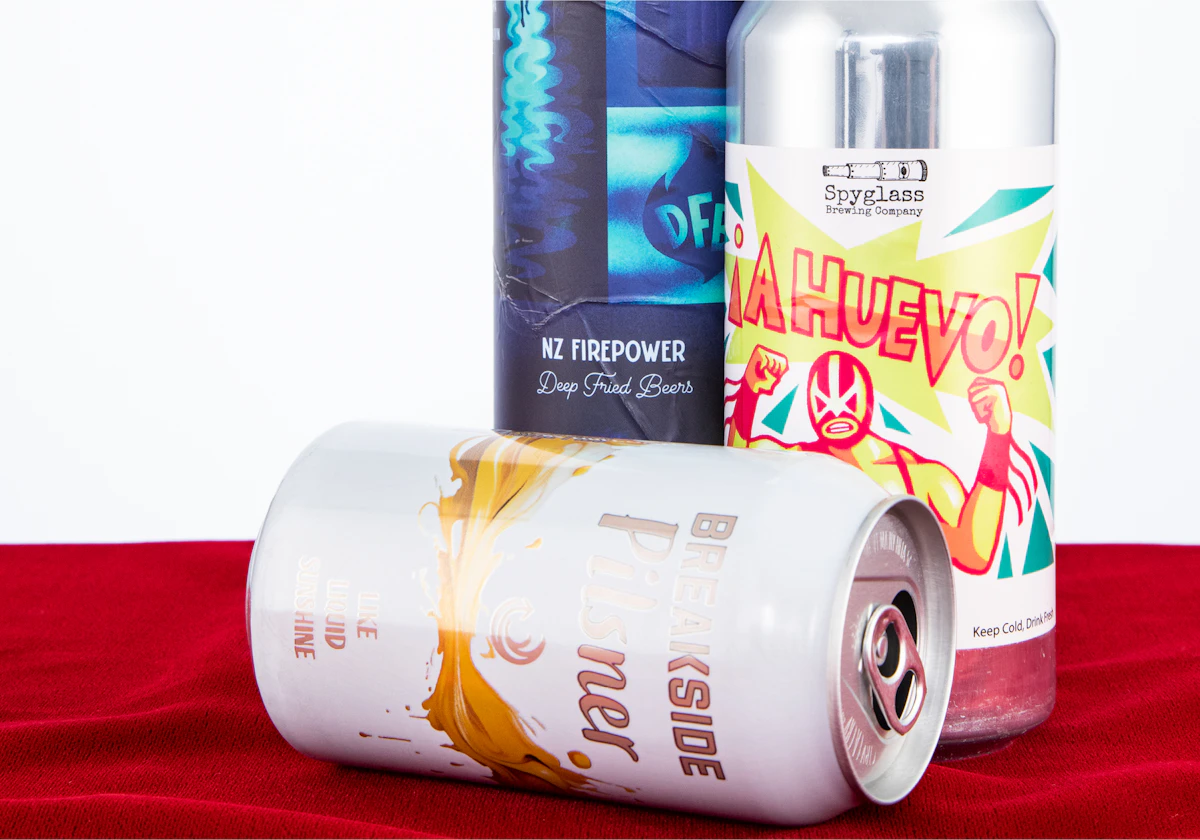
If this beer were a musical genre, it would be shoegaze circa 1991, with a hefty dose of Loveless-era My Bloody Valentine and Nowhere-era Ride. Think thick wall of sound, lyrical choruses layered over driving rhythm, with interludes of dissonant guitar noise that makes the melodies that much sweeter by contrast. Such it is with NZ Firepower, as sweet, saturated tropical-fruit stanzas crash into jagged choruses of diesel-and-dank herbal bitterness. Somehow, amid the volume and noise, a compelling melody emerges. —J.B.
Spyglass ¡A Huevo!
(Nashua, New Hampshire)
We love great Mexican-style lagers, and I’m not going to lie—from our vantage point, there’s something both entertaining and fulfilling in watching brewers eschew the default mantra of “louder is better” for the required subtlety and deft hand it takes to make a great one. This entry from New Hampshire’s Spyglass took the category’s top honors in our annual lager issue, and for good reason—with nothing more than flaked corn, barley, and Saaz hops, they captured a light elegance as well as subtle hints of lime in the tight, dry, highly attenuated beer, proving that minimal doesn’t need to mean boring. —J.B.
Breakside Pilsner
(Portland, Oregon)
This beer has evolved over the past dozen-plus years, and no doubt it will continue to do so. When brewmaster Ben Edmunds first designed it, the inspiration was Augustiner Pils and the raw materials were all German—the hops mostly Hersbrucker. More recent influences include Upright’s Engelberg, which was assertively hopped with whole-leaf U.S. Tettnang. These days, Breakside Pilsner features Oregon-grown Mount Hood and Sterling, two hybrids with European and American heritage. The brewers employ modern hopping methods—such as a large charge of hops in a cool whirlpool—but one reason Edmunds calls it an “American Noble pilsner” is the critical mass of hops in the kettle. “That’s where the art is,” he says. “Otherwise, you are untethered from the history of pils.” The stunning result is a broadly likeable beer that delivers bitterness for aficionados, with familiar pilsner-hop flavors but an addictive American brusqueness. —S.H.