

Climate change has the potential to reshape agricultural systems around the world, and hop production is no exception. Brewers need hops that can accomplish two goals at once: deliver compelling flavor and brewhouse performance while remaining reliable under growing pressure from drought, disease, and unpredictable weather.
One of the most promising solutions lies in the development and adoption of resilient hop varieties. Hop breeders work to cultivate hops that produce desirable brewing characteristics as well as thrive under challenging environmental conditions. A new wave of disease-resistant and climate-resilient hops may become one of the most crucial tools available to brewers for a sustainability-minded future.
Because every hop variety begins in the field, the choices breeders make today have the power to shape the beers brewers can produce tomorrow.
Challenges in Hop Production
Hop growing, like growing any agricultural product, is heavily influenced by weather. However, growing regions such as Washington’s Yakima Valley are experiencing shifting weather patterns and growing conditions that can present unique challenges. Hops must also stand up to pressure from disease and pests, which can also shift with the seasons and require solutions that protect the plant as well as the soil, surrounding environment, and the people who will eventually consume the product.
Water Scarcity and Drought
Despite using drip irrigation and strong water conservation year-round, hop growers depend heavily on water resources to raise healthy hop crops. Washington is part of a region experiencing years-long drought conditions, and growers must now find ways to maintain high yields while using water more efficiently.
Reduced water availability can affect plant-growth rates, hop-cone development, alpha-acid production within the cones, and overall yield per acre. However, hop varieties that can perform well with reduced water usage can support the volumes required to satisfy the brewing industry.
Disease Pressures
Disease management is a significant challenge in hop production. Powdery and downy mildew remain two of the industry’s most persistent threats, as both can drastically reduce yields and quality if left unmanaged. By developing varieties with stronger genetic resistance, growers can reduce the need for intervention while growing a reliable crop.
What Are Climate-Resilient Hops?
Climate-resilient hops are hop varieties bred to maintain strong performance despite environmental stresses such as drought and disease. Climate resilience goes beyond surviving difficult growing conditions. Resilient hops must consistently deliver strong yields, resist disease and pests, and still provide the aroma, flavor, and brewing performance that brewers expect.
“Yield per acre is one metric you can look at to understand crop sustainability,” says John I. Haas director of hop breeding Michael Ferguson. “If you are using more or less the same inputs, you can measure performance based on crop output.”
The question that hop breeders seek to answer is not only how well these experiments perform in the field, but also whether the crop is consistent and desirable to the brewing industry.
“When it comes to hops, output is only one piece of the puzzle,” Ferguson says.
How Hop Breeders Develop Resilient Varieties
Developing a new hop variety is a lengthy process that spans many years. Hop breeders evaluate scores of potential plants annually while selecting for a wide range of characteristics such as yield, disease resistance, and brewing characteristics.
One of the most important sustainability metrics is yield per acre. A variety that requires the same land area, labor, irrigation, fertilizer, and infrastructure but produces substantially more hops is inherently more efficient. Breeding programs therefore place significant emphasis on identifying plants capable of producing strong and consistent yields—a variety that yields less than 2,000 pounds (907 kilos) of hops per acre won’t advance in Ferguson’s breeding program.
Disease and pest resistance are another major breeding objective. Traditional disease management often requires additional inputs, labor, and monitoring. By incorporating genetic resistance into new varieties, breeders can help reduce the burden of disease management while increasing reliability for growers.
“Each year, we dig up all our new selections and put them in the greenhouse so we can inoculate them with powdery mildew,” says Ferguson. “We set them alongside control plants that we know have poor resistance, then we bring in known disease isolates to inoculate the control plants and let the powdery mildew go wild.”
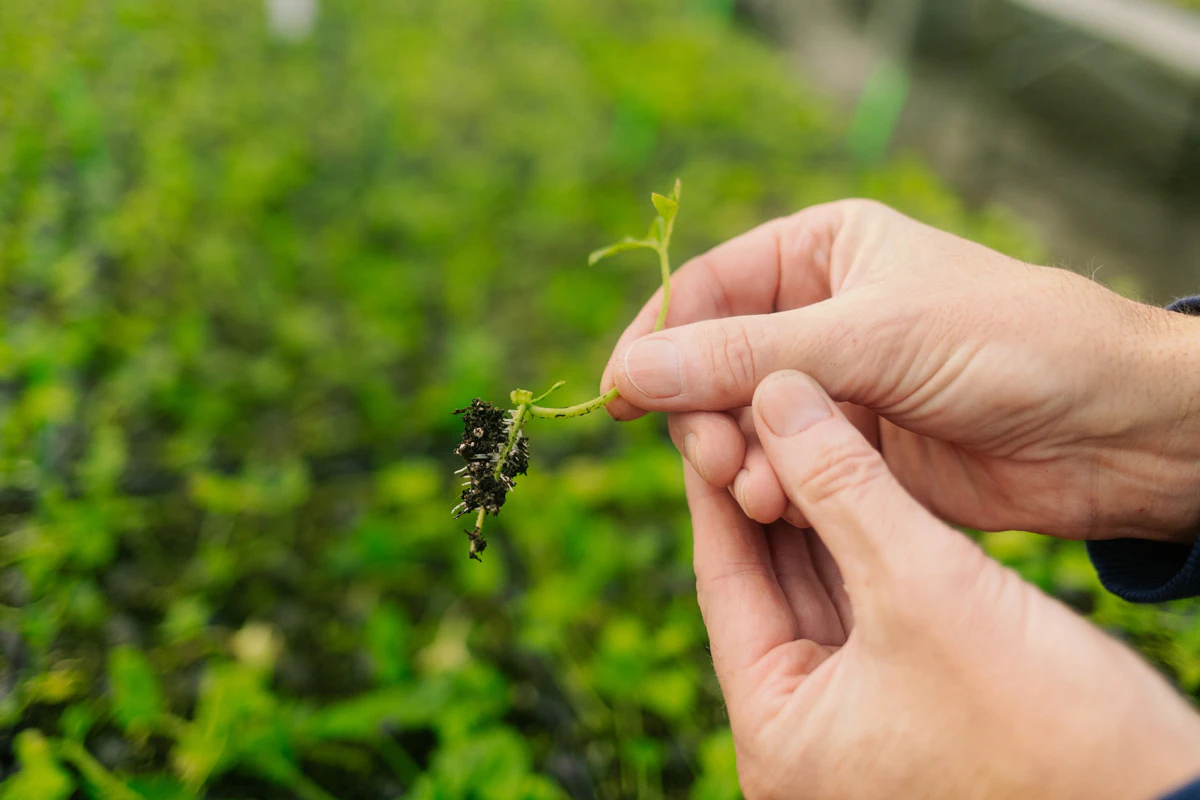
Once the disease has taken hold in the greenhouse, hop breeders can then score the new plants based on how well they resist the mildew. While susceptible plants will be completely covered with a white coating, others may be completely unaffected, growing lush and green—those are the ones breeders prize and will continue to work with as they search for strong hop plants.
However, as Ferguson noted, yields and disease resistance aren’t enough. A new hop variety must also have high enough alpha acids and a flavor profile that excites brewers in order to justify commercial cultivation.
“The nice thing about breeding for alpha hops is that it’s purely quantitative. Whichever plant produces the most alpha wins the prize.”
Ferguson also says that when he makes crosses or decisions to graduate anything in the program either for commercialization or to use as a parent, it must have strong pest and disease scores.
“Most crosses will graduate to be a parent for a future cross,” he says. “The resulting plant will have all but maybe one desirable aspect: everything you want, but lacking great flavor, or they’ll have great flavor but poor yield, for example—so you’ll try to make complementary crosses to get the best of both plants.”
Of course, even the most resilient hop variety still needs to make great beer.
Maintaining Brewing Performance
Beyond climate, disease, and pest resistance, breeders also balance agronomic performance with desirable brewing characteristics such as aroma, bitterness potential, oil composition, and more.
“Raw hops in the field won’t tell you the full story,” says Jeff Dailey, sensory manager for John I. Haas. “Our team evaluates pellets and conducts brewing trials to see how they will perform in a real-world scenario, and that feedback goes back to the breeder for future crosses.”
Brewing trials are key. These brews follow a simple recipe with a standard malt bill, yeast strain, and hop rate, to compare against other hop varieties as objectively as possible. If a hop finds success in a simple helles or pale ale recipe, it may also be brewed using another standardized recipe for IPAs to see how it performs with higher hop rates or used on both the hot and cold side. The trial beers are sent through an intensively trained sensory panel and the feedback then informs the hop breeder for future crosses.
“Crosses are genetically informed, but the proof is in the pudding—or beer,” says Dailey. “Based on sensory feedback, our hop breeder can make future crosses more efficient and find the right combination based on what the need is.”
How to Support Stronger Hops
The transition toward more resilient hop varieties requires participation throughout the industry. Fortunately, brewers can play an important role in helping promising new varieties gain traction by participating in pilot brewing trials as well as contributing to Hopsource—the Brewers Association’s annual survey of public hop breeding—held each hop-harvest season in Yakima, Washington.
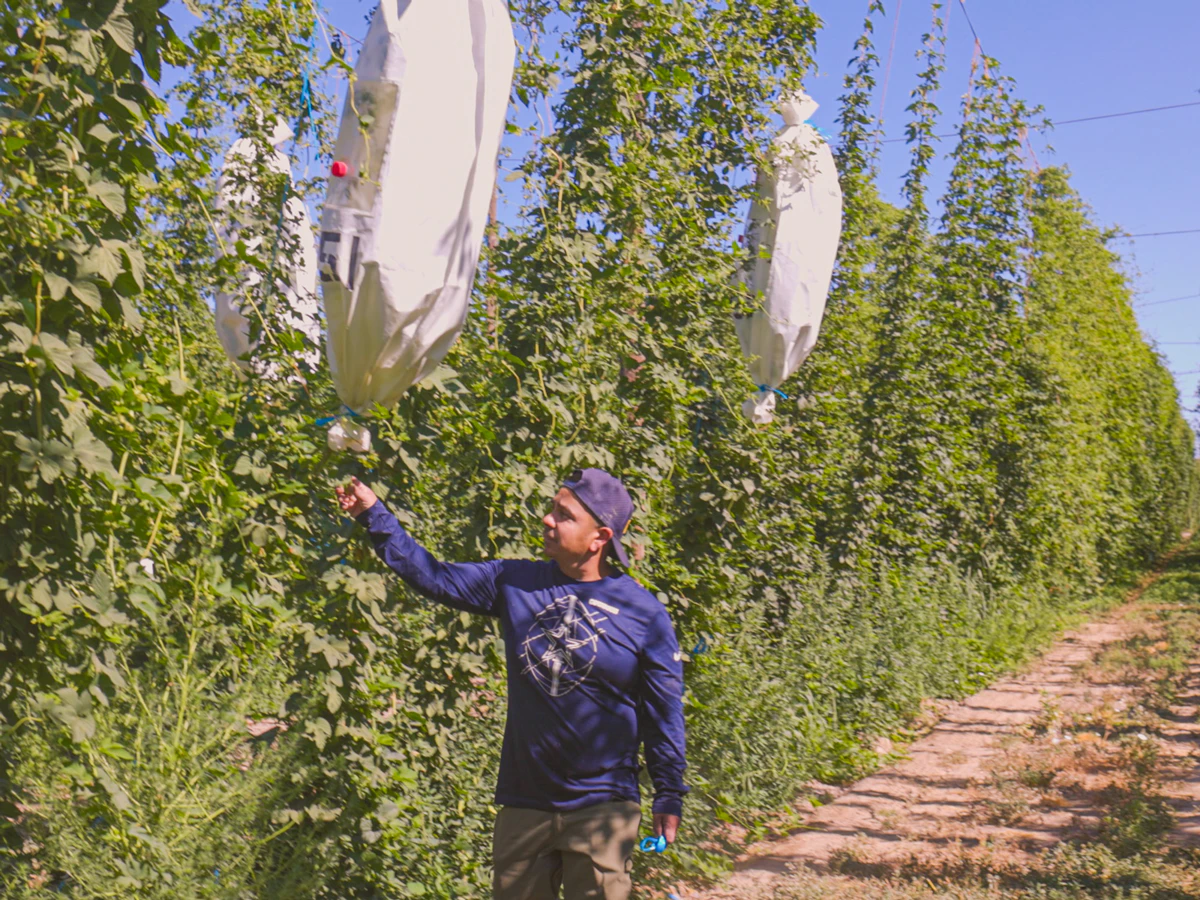
“If I were a brewer, I’d pay attention to the USDA reports and other publicly available information to see what yields look like for some of my favorite hop varieties,” says Michael Ferguson. “If sustainability is important to you and your brewery’s mission, can you make a switch to higher-yielding varieties?”
Hop suppliers are knowledgeable about the hops that are already on the market as well as those that are up and coming. Brewers can lean on their contacts in the hop industry to see what hops can help achieve sensory goals while also performing well in the fields.
“I think many brewers don’t realize the power they hold because we grow what they contract,” says Ferguson. “We can breed the most incredible hop and shout it from the rooftops, but if nobody is using it, unfortunately it won’t stick around.”
To learn more, visit johnihaas.com.