Brewer's Perspective: The Patience & Terror of Barrel-Aging
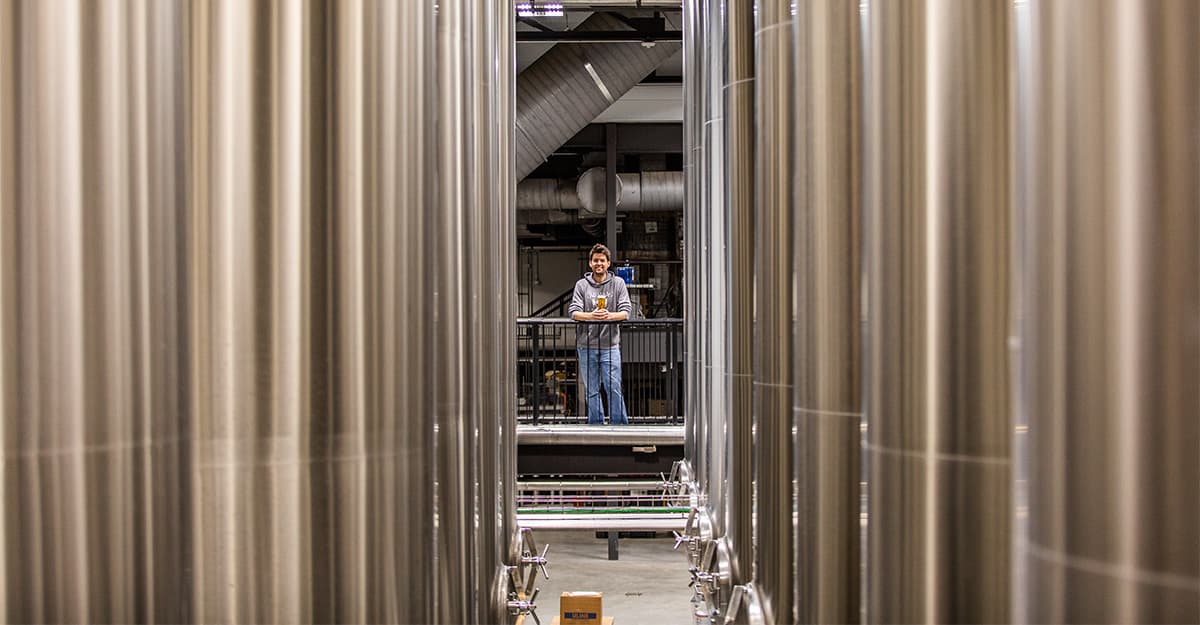
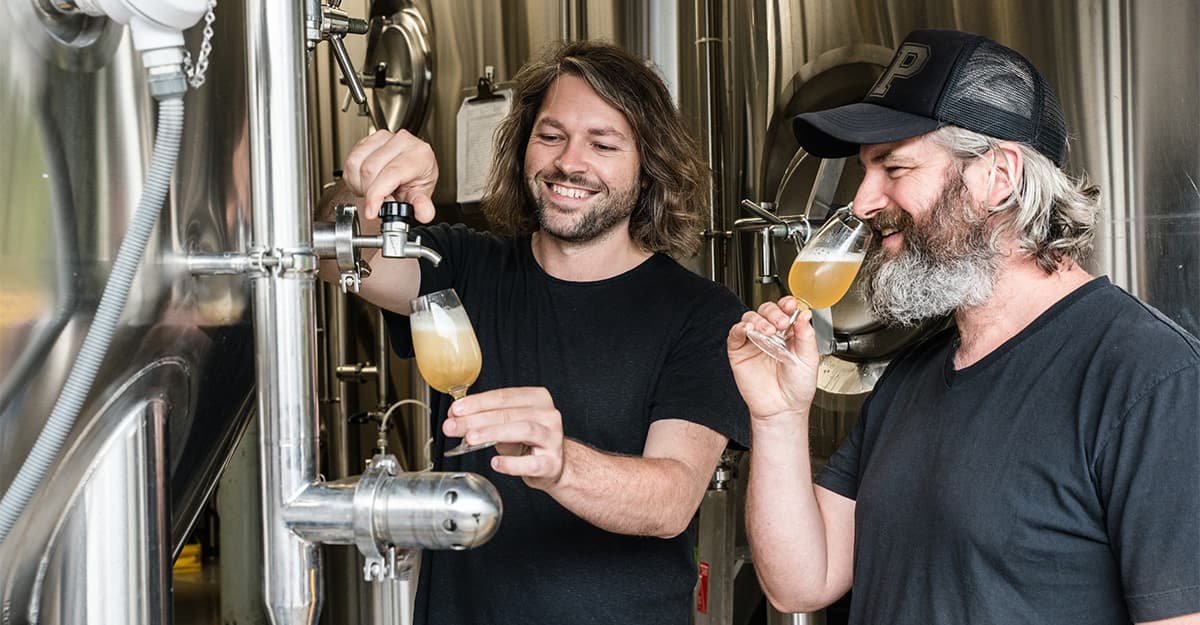
Lacie Bray and Andy Coates, cofounders of Ozark Beer in northwest Arkansas, explain the stressful process and habitual leap of faith behind their cult-favorite beer, BDCS.
Showing 1481-1500 of 4603 articles

Lacie Bray and Andy Coates, cofounders of Ozark Beer in northwest Arkansas, explain the stressful process and habitual leap of faith behind their cult-favorite beer, BDCS.

It used to be notoriously difficult to cook with American IPA—it was bitter and challenging—but the continuing evolution of this growing family of styles has created new opportunities for compatibility in the kitchen.

Czech lager’s simplicity is deceptive; there is much more to it than Saaz hops, pils malt, and soft water. Here are five favorites that combine ample character with exquisite balance and supreme drinkability.

This suburban Atlanta brewery is on a broader mission to show that low-ABV beers across the style spectrum can be just as exciting as their stronger counterparts.

Here’s a useful primer on pitching and pitch rates—plus, info on where to dive deeper for more technical details you can apply in your own brewery.

Jim Crooks, master blender at Firestone Walker Barrelworks, explains how one of the few variables that brewers can control when oak-aging beers is the environment, including temperature, humidity, and minimizing oxygen in the porous barrels.

In Prague, Evan Rail visits the Břevnovský Klášterní Pivovar Sv. Vojtěcha—aka the Břevnov Monastery Brewery, home of Benedict—to learn the secrets of “pitelnost,” essential to a great Czech pale lager.

The world’s most influential beer style is also one of the most misunderstood outside its birth country. “Pilsner” took over the world, but the Czech source material is strikingly different and far more alluring.

Inspired by Saison Cazeau, here is a recipe for a light, dry, farmhouse-style ale that gets a sweet-smelling lift from fresh fleurs de sureau.

Floral, fruity, and unique, fresh elderflowers smell like the finest hops you’ve never smelled—because those hops don’t exist yet.

BJCP Grand Master Josh Weikert covers everything you need to know to scale down your full-strength recipe to a more affordable and crushable beer.

Jim Crooks, master blender at Firestone Walker Barrelworks, explains how adjusting your recipe’s bitterness level can moderate and control lactic acid produced by bacteria during the aging process.

For Denver’s Our Mutual Friend, subtle tweaks and improvements over years of brewing have brought their hoppy beers into medal-winning form, but the big and brash flavors in their smoked beers showcase their penchant for dramatic statements.

Here is Annie Johnson’s recipe for a rich, complex, adjunct-free imperial stout that mellows and improves with some time in the cellar.

You don’t need a truckload of grain and a giant mash tun to brew a big, rich imperial stout perfect for laying down for months—this one is right in the extract brewer’s wheelhouse.

Why yes, we do fire up the grill in mid-winter. Here, brown ale adds layers of Maillard comfort to braised onions and a from-scratch (but simple to make) bratwurst burger.

Courtesy of Mike Messenie at cask-centric Dutchess Ales in Wassaic, New York, this homebrew-scale recipe is a pleasantly lush and nuanced take on their original Best Bitter, meant for natural cask-conditioning in a 5.4-gallon (20-liter) “pin.”

No, it’s not boring—it’s sublime. Yes, it should be somewhat bitter—but balanced. Randy Mosher breaks down one of the beer world’s great classics and the context that makes sense of it. Ready for a session?

Courtesy of Firestone Walker Brewmaster Matt Brynildson, this is a homebrew-scale recipe for a rich but highly drinkable milk stout with complex malt character. The recipe is also versatile—a great base for adding coffee or flavored adjuncts.

Just how much farmland does it take to grow the hops in that case of hazy IPA? Here’s some quick math to see just how many acres it takes to produce our beloved beers.