

In Part I of our series about the top tech trends shaping the beverage industry in 2027, we explored how the market landscape has evolved—and how breweries can use connected technology to adapt. From ERP systems and real-time analytics to AI-powered decision-making, the common thread is clear: the breweries that thrive won’t just brew great beer; they’ll build smarter, more efficient businesses.
But today, success means thinking beyond beer alone.
“You have to be more than a beer company,” says Next Glass VP of brewery, product & experience, Dustin Jeffers. “It helps to diversify.”
Today, building a smarter brewery means building a smarter beverage company. For many producers, that means expanding into cider, spirits, wine, coffee, nonalcoholic beverages, THC drinks, or contract manufacturing.
“You need to make sure that the people who come in [to your taproom] are going to stay longer because the whole group wants to be there,” says Jeffers. “And a larger chunk of people can all find something to enjoy at your location.”
The same philosophy applies behind the scenes. As beverage businesses grow more diverse, the technology supporting them must become more connected—streamlining payments, simplifying wholesale ordering, and making it easier to collaborate with the customers and partners who help drive growth.
Here are three more tech trends shaping the future of beverage businesses in 2027.
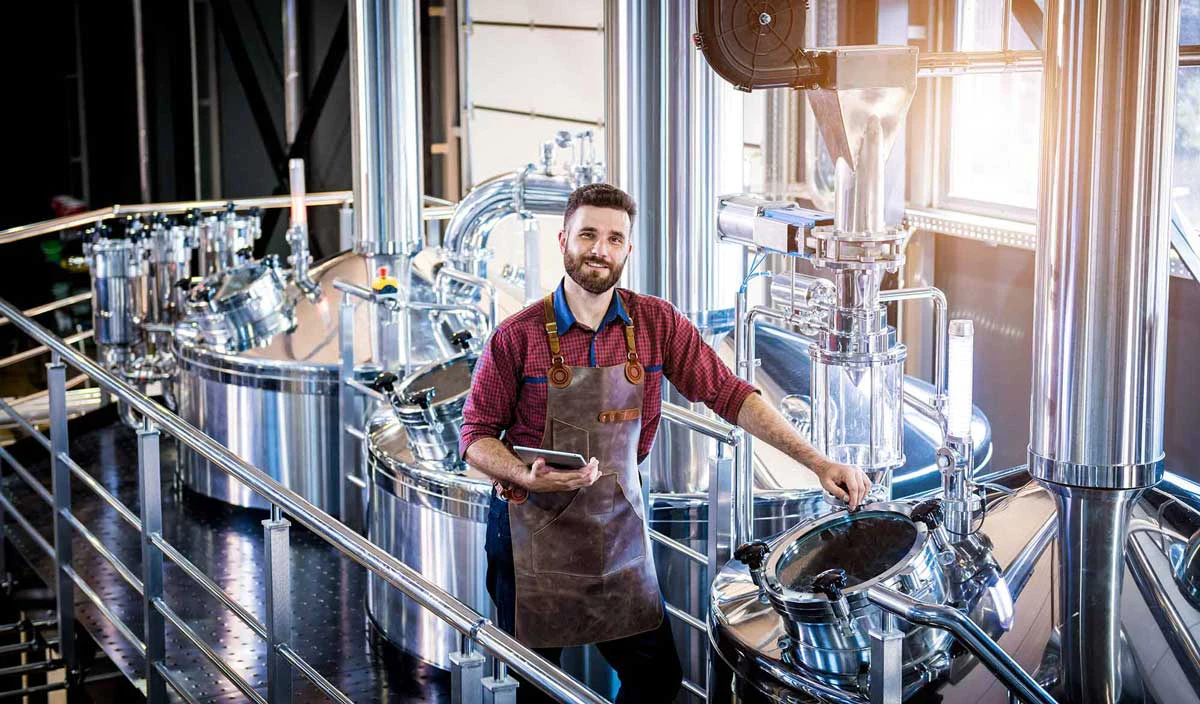
Trend #4: The Future of Beverage Payments: Less Manual Work, More Margin
Most breweries spend a lot of time optimizing production. Far fewer spend the same amount of time optimizing how they get paid. Yet for many beverage producers, the biggest operational bottleneck isn’t brewing, packaging, or distribution—it’s the order-to-cash process.
Traditionally, this process requires too many steps: sales teams create orders, accounting teams generate invoices, customers navigate separate payment portals, and finance teams spend hours reconciling transactions. Each handoff creates more opportunities for delays, errors, and unnecessary administrative work.
As beverage businesses look to operate more leanly in 2027, embedded payments are becoming the next evolution in brewery operations. Instead of treating payments as a separate process, solutions such as PaySmart, which launched this past March, bring orders, invoicing, payments, and reconciliation together into a single operational workflow in either Ekos or Ollie. Breweries, wineries, cideries, distilleries, and beverage producers can move from order creation to invoice settlement without switching among disconnected systems or relying on manual exports.
The impact goes beyond convenience. Without ever leaving Ekos, PaySmart facilitates EFT payments, improving cash flow and predictability, reducing reconciliation work, and giving finance teams greater visibility into outstanding invoices. Buyers benefit too because they can securely enter bank details once, manage invoices in a single portal, and avoid check stock, mail delays, and late payment fees.
For Trace Smith, CEO of Next Glass, the goal wasn’t simply to launch another payment processor—it was to eliminate one of the industry’s most persistent operational headaches.
“We built PaySmart to address the feedback of our nearly 2,000 producer customers who have consistently asked us for a lower-cost payment solution that is fully embedded in their business management system of choice, Ekos or Ollie,” says Smith. “For too long, our customers have suffered from overpriced payments and clunky, off-platform point-payment solutions requiring manual exports of data from Ekos and Ollie. We are thrilled to deliver this fully embedded, cost-effective option that saves our customers time and money relative to existing alternatives.”
In 2027, depending on what state you’re in, PaySmart will also introduce credit-card payments, “allowing you not to have to use Fintech or QuickBooks payment links and just do everything inside your ERP,” says Jeffers, who adds that the industry in general is trending toward all-electronic payment processing.
That focus on integration matters because payments don’t happen in isolation. They’re connected to sales, inventory, accounting, and customer relationships. The more those systems communicate automatically, the less time teams spend chasing paperwork and reconciling transactions.
The financial impact adds up quickly. Even a producer processing just 50 invoices each month can save up to $495 annually while eliminating hours of manual payment administration. For larger producers processing hundreds of invoices, the operational savings—and the faster cash flow—can be even more significant.
The breweries gaining an edge in 2027 won’t just brew more efficiently. They’ll get paid more efficiently, too.

Trend #5: Retailer Ordering Should Be as Easy as Buying a Six-Pack
Consumers have come to expect effortless buying experiences. Need groceries? Open an app. Need dinner delivered? Tap a few times. Need craft beer? In many markets, it takes just a couple of clicks.
For years, beverage sales have depended on a familiar routine: a sales rep checks in with an account, a buyer places an order by phone or email, someone manually enters the order into a system, and the finance team follows up with invoices and payments. So, while the rest of the consumer world can access their daily goods quickly, why should wholesale ordering still rely on phone calls, emails, spreadsheets, and manual data entry?
As breweries grow, those manual touchpoints become one of the biggest hidden drains on productivity, as sales teams spend more time chasing orders than building relationships and retailers have to wait until business hours to place an order. The next evolution of beverage sales isn’t about replacing sales reps, but about giving retailers the freedom to order whenever—and however—they want.
“We’re building a tool that makes sales reps more efficient,” explains Jeffers. “You can stay top of mind with customers even when you’re not actually there.”
Digital ordering platforms such as OrderHub let bars, restaurants, and retailers connect freely with self-distributing craft-beverage producers through one shared, centralized ordering experience. Buyers can browse available inventory and place orders on their own schedule, while producers eliminate repetitive administrative work behind the scenes.
“And now your sales team can make their visits to accounts less about order taking,” says Jeffers, “and more about upselling and relationship building.”
That’s the real opportunity with digital ordering—removing friction from the sales process for both producers and retailers. As breweries continue to look for ways to grow without adding headcount or unnecessary administrative work, self-service ordering will become less a convenience and more a competitive advantage.
Next year, it’s pretty simple: simplify the ordering experience and sell more beverages.
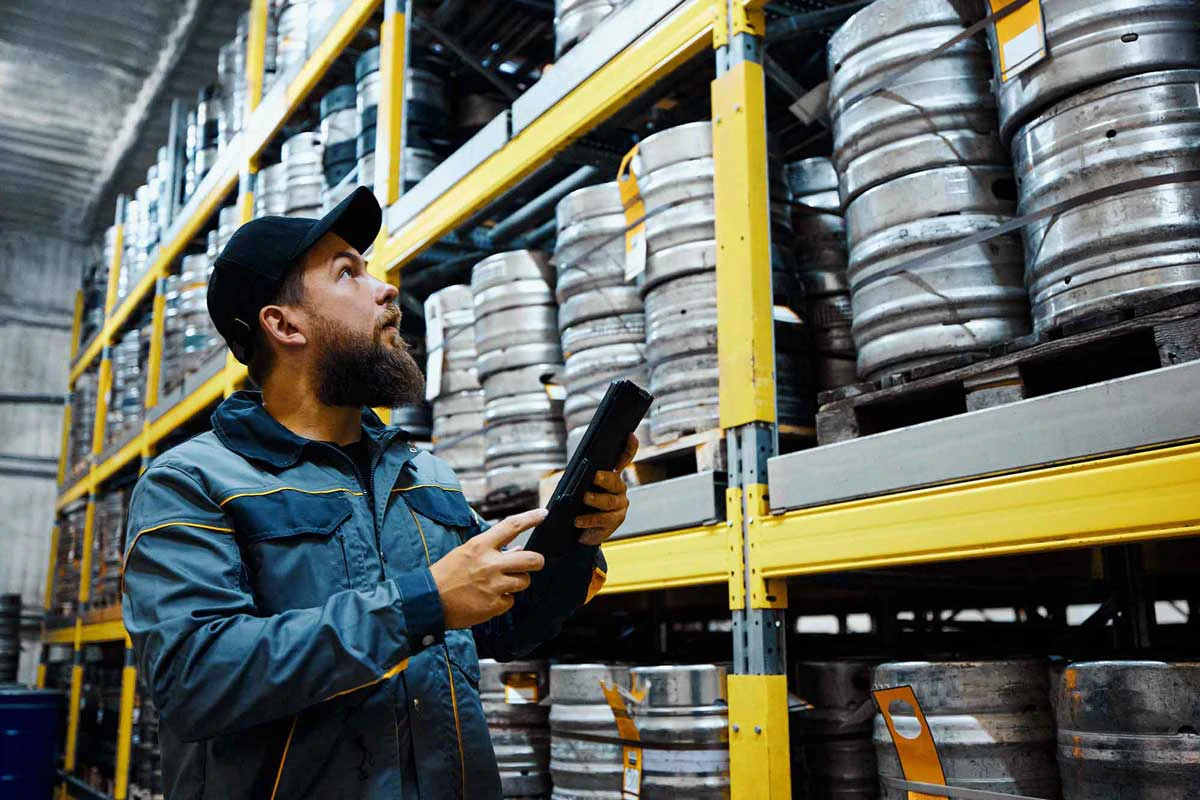
Trend #6: Copacking without the Chaos
For many breweries, growth no longer comes solely from selling more of their own beer. Increasingly, it comes from making beverages for someone else.
Copacking has become one of the fastest-growing revenue opportunities for breweries, cideries, and beverage producers looking to maximize tank space and diversify their business. But with every additional customer comes another layer of operational complexity—from managing dedicated inventory and production schedules to tracking raw materials and keeping brand partners informed.
What works for one brewery quickly becomes much harder when you’re manufacturing products for five, 10, or 20 different customers. That’s why the next generation of brewery software helps producers manage their own operations while simultaneously collaborating directly with the brands they produce for.
With Ekos’s enhanced copacking capabilities, contract brewing partners can securely access the information that’s most important to them, including available raw materials, inventory levels, and production progress, without relying on constant emails or status updates.
“We make it really easy to see how much of those ingredients they have in stock, what’s been packaged—everything,” explains Jeffers.
For producers, that transparency reduces administrative work while giving customers greater confidence in where their products stand throughout the production process. Sociable Cider Werks has experienced that evolution firsthand.
Operations director Olivia Schumack explains how, when Sociable had just a three- or four-person team, they’d package kegs in the daytime, deliver them in the afternoon, and bartend in the evening—that worked just fine. But according to Schumack, Sociable Cider Werks has grown exponentially in the past 10 years and become a copacker. Schumack, whose day-to-day job is managing all those copacking brands, says, “I can’t imagine doing it without Ekos. We knew it was going to be a tool to set us up for success.”
As more beverage producers diversify beyond their own brands, the breweries that thrive will be those that can scale manufacturing partnerships without increasing administrative work.
The Future Belongs to Connected Breweries
For years, brewery technology focused on improving efficiencies in the brewhouse. And that’s still extremely important. But looking ahead, we need to expand the definition of what a brewhouse can do. As we’ve learned, it’s not just about beer. Wine, cider, spirits, THC beverages, and more are integrated into production schedules.
New tech should create connection among all this product chaos. When production, inventory, accounting, payments, ordering, and customer collaboration all work together, breweries spend less time managing administrative work and more time building stronger businesses.
Technology will never replace the creativity, passion, or craftsmanship that defines this industry. But it can give brewers something just as valuable: More time to innovate. More confidence to grow. And more opportunities to build the next generation of successful beverage businesses.