

For most of the craft-beer industry’s first 40 years, growth covered up a lot of operational inefficiencies. Demand outpaced supply. Distribution expanded. New taprooms opened seemingly every month. Breweries could rely on spreadsheets, disconnected software, and manual processes because there was always another account to land or another market to enter.
That landscape has changed. According to the Brewers Association’s Mid-Year Report, the number of operating breweries declined 1.8 percent, from 9,515 in 2025 to 9,344 this year, while overall craft-beer volume fell 4 percent during the first half of 2026 compared to the same period last year. New brewery openings also dropped sharply—from 518 in 2024 to just 300 last year. Although brewery closures declined slightly, they remain elevated compared to historical averages.
Breweries today are navigating tighter margins, shifting consumer preferences, rising ingredient costs, and increasing operational complexity. In this environment, technology is no longer a simple convenience, but a competitive advantage.
“You have to get a little grittier and be smart about investments and time,” says Societe Brewing Company VP of brewing Teddy Gowan, who manages multiple teams at the 14-year-old San Diego brewery, from sales to operations to front-of-house—each with their own operational rubrics.
The breweries that separate themselves over the next several years won’t necessarily be the ones brewing the trendiest hazy IPA or the most medal-winning lager. They’ll be the ones making faster, more informed decisions because every department—from production and inventory to sales and accounting—is working from the same source of truth.
One Platform, Limitless Solutions
Walk through almost any brewery today, and it’s not uncommon to find production, logistics, operations, inventory, sales, POS, payroll, and more all operated by separate systems.
Most breweries didn’t intentionally build disconnected operations. They simply added software as they grew: a production platform here, a payments solution there, perhaps a CRM to bridge the gaps, and potentially fermentation or QA analysis software to enhance production.
Individually, those tools often work well. Together, they create blind spots. Every time data have to be entered twice, copied into a spreadsheet, or emailed between departments, breweries lose time, introduce errors, and slow decision-making. The real challenge isn’t the individual software—it’s the fuzzy space between them.
That’s why more breweries are moving away from disconnected systems and toward integrated operational platforms that connect production, inventory, sales, accounting, and reporting into one centralized hub. Instead of every department maintaining its own version of the truth, everyone works from the same real-time data, making collaboration easier and decisions more confident.
Brewery software like Ekos is designed specifically around this philosophy, allowing breweries to connect every stage of production—from grain purchasing through finished sales—inside one system.
“We say Ekos is our universal source of truth,” says Societe’s Gowan, who was a very early adopter of the platform. “It’s the key connection point between sales, operations, and brewing.”
Similarly, for Michael Golden, head of operations at Blockhead Beerworks in Valparaiso, Indiana, switching to a robust brewery management system such as Ekos has made all the difference.
“It’s just been very easy to use,” says Golden, who uses Ekos to manage the brewery’s production calendar, logistical operations, sales and delivery schedule, and more. “Those people with spreadsheets, I don’t understand how they do it. Ekos just makes my life a lot easier.”
It might not be as exciting as releasing the latest double dry-hopped IPA, but building an operation where every team works from connected, accurate information is becoming one of the biggest competitive advantages in modern brewing.
The future of brewing isn’t just about making better beer. It’s about running a better brewery.
The three technology trends below are just the first part of our two-part series, highlighting how breweries are using connected platforms to eliminate busywork, uncover better insights, and ultimately spend less time manually working—and more time making great beverages.
Catch Part II on August 27, 2026, to learn what we predict will be the next three tech trends in the beverage industry next year or share your own thoughts with us in our State of Tech in Craft survey!
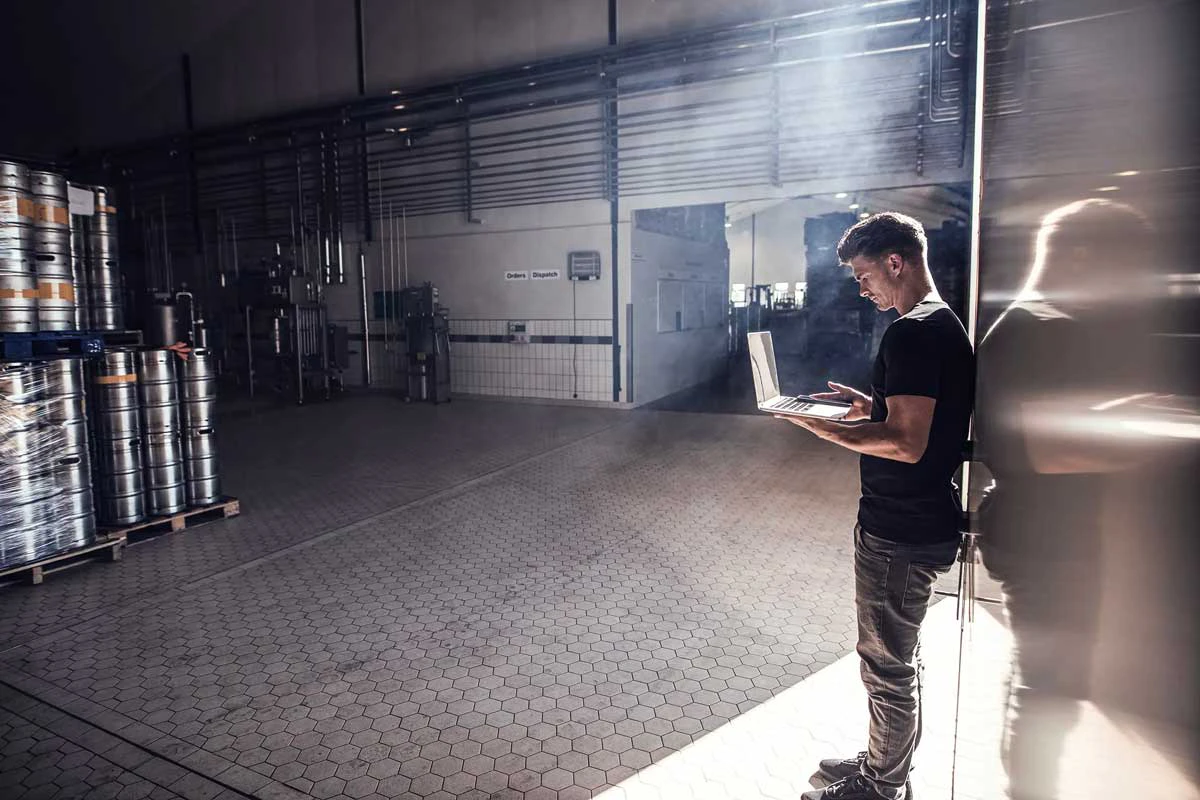
Trend #1: The ERP Advantage: How Growing Breweries Get 10 Hours Back Every Week
As breweries expand into new markets, add taprooms, diversify into new beverage categories, or take on copacking, operational complexity grows just as quickly. An enterprise resource planning (ERP) platform helps keep every moving piece connected, giving production, inventory, sales, accounting, and operations a shared view of the business.
By replacing manual data entry, disconnected spreadsheets, and repetitive administrative work with one centralized system, breweries can spend less time managing information and more time making strategic decisions that move the business forward.
For instance, as Sociable Cider Werks in Minneapolis grew from cider to soda, hemp-infused seltzers, and now copacking, and from fewer than a handful of people to about 50 full-timers, keeping track of all the moving parts became too overwhelming and time-consuming.
Before implementing Ekos, the team spent more than a full day logging production information into a paper-based system. What once worked for a small operation became increasingly difficult to manage across multiple product lines and teams.
In 2016, after using pen and paper for three years, Sociable switched to Ekos. Today, as Sociable self distributes its THC seltzers and nonalcoholic brands, Social Cider Werks operations director Olivia Schumack has been using the Ekos Beverage ERP. “I use all the production batches and backend for production planning and producing,” she says.
Most importantly, the brewery estimates the platform saves the team about 10 hours every week that previously went toward manual recordkeeping.
With staff spread across on-site, off-site warehouse, and even remote locations, Sociable likes Ekos because “it provides a central hub that anyone can access from anywhere,” says Schumack. “It allows us to track customers and update things in real time.”
Technology won’t replace great brewing, but it will give great breweries more time to brew and the operational foundation to grow without adding unnecessary complexity. That’s the real ERP advantage setting the standard for the breweries that will thrive in 2027.
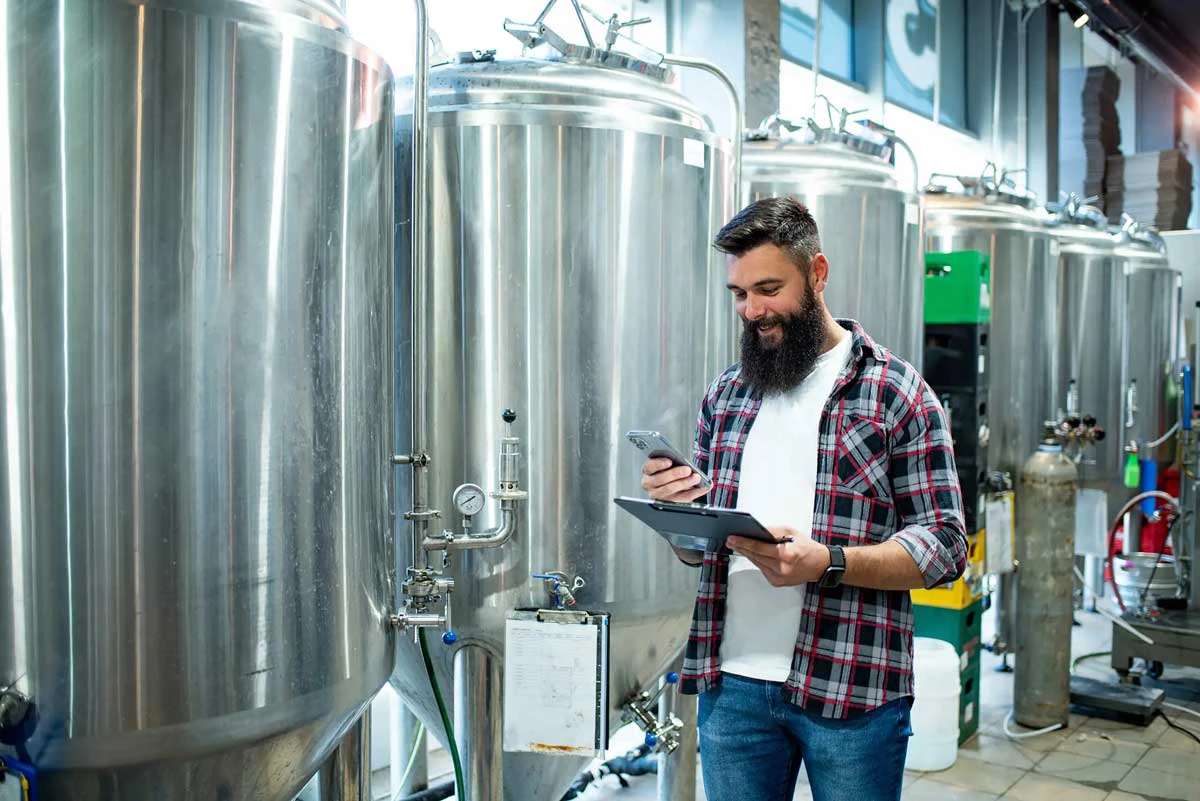
Trend #2: Why Data Are the New House Beer
A decade ago, breweries couldn’t brew hazy IPAs fast enough. Every new DDH four-pack or adjuncted 750ml stout release seemed destined to sell out, and success often came down to making the next great beer.
For several years, the market has looked very different. As competition has increased and margins have tightened, instinct alone isn’t enough. The breweries thriving in 2027 won’t just trust their gut—they’ll trust their data.
Connected operational platforms generate an enormous amount of information. The real advantage comes from turning that information into smarter decisions. Instead of exporting spreadsheets, manually cleaning reports, or piecing together data from different teams, breweries with an ERP can access real-time insights that help them forecast demand, manage inventory, monitor costs, and plan production with greater confidence.
MadTree Brewing has embraced exactly that approach. With Ekos, the Cincinnati brewery built custom, comprehensive dashboards that tracked sales and volume by distributor, giving top-level leadership one shared view of the business. “We’re all looking at the same thing,” says MadTree director of brewing operations Ryan Blevins. “This is probably one of my favorite things about [Ekos].”
For Blevins, the value isn’t just seeing more data—it’s making “really good, educated production decisions.”
“I love digging into and getting data that we didn’t have access to [before],” he says.
For instance, Ekos’s data helped MadTree improve its variety-pack production, one of the most operationally complex products many breweries produce. Blevins says MadTree analyzed sales rates with its sales team to get a line on what they thought the growth rate would be and then properly planned production a couple of months ahead of time,
“Overall, Ekos has made it logistically easier for us to manage [our variety packs] from a production standpoint,” says Blevins.
The same principle extends beyond production planning.
At Sociable, Ekos’s reporting tools helped the team accurately calculate product and supply costs without manually maintaining spreadsheets. Schumack says the reporting has “absolutely” saved the company money.
For Societe Brewing, data have become a daily decision-making tool. Gowan relies on reporting to monitor cost of goods, predict upcoming expenses, and quickly identify changes in supplier pricing before they become larger financial issues.
“We’re using it for our forecasting to understand what’s on the invoice next month,” he says. “What does this mean for our team? Do we need to add people? Are we doing okay?”
By using Ekos’s robust inventory and reporting features, Gowan can make smarter business decisions and identify and correct inefficiencies. For instance, with the cost of cans, Gowan says Ekos has been paramount. “I get an email every other week if there’s been an adjustment, so I can go into Ekos and see the true implications,” says Gowan, who calls it helpful to keep an eye on all those little things that can eventually add up to something bigger. “[Ekos] allows you to look at other places and strategize where you can get things to drop down without having to sacrifice quality.”
Previously, identifying those cost changes meant what Gowan calls “tweezer work”—digging through individual batch reports and manually transferring numbers into spreadsheets. Today, Ekos’s automated reporting surfaces those changes almost immediately, allowing the team to react faster and spend more time improving the business instead of hunting for information.
The extra time and efficiency have a trickle-down effect on the business, according to Gowan, who says these decisions became “super-valuable to the bottom line of the business and to the team.”
With the extra time and accurate depiction of cost inputs, Societe’s brewing team can be more creative.
"It becomes a chemistry problem," Gowan says. "You’re not just trying to make the cheapest beer possible, you’re trying to make the best possible beer with the best cost inputs. … It drives a lot of innovation."
The lesson for breweries heading into 2027 is simple: In today’s beer industry, your next competitive advantage probably isn’t hiding in the fermentor; it’s already sitting in your data.
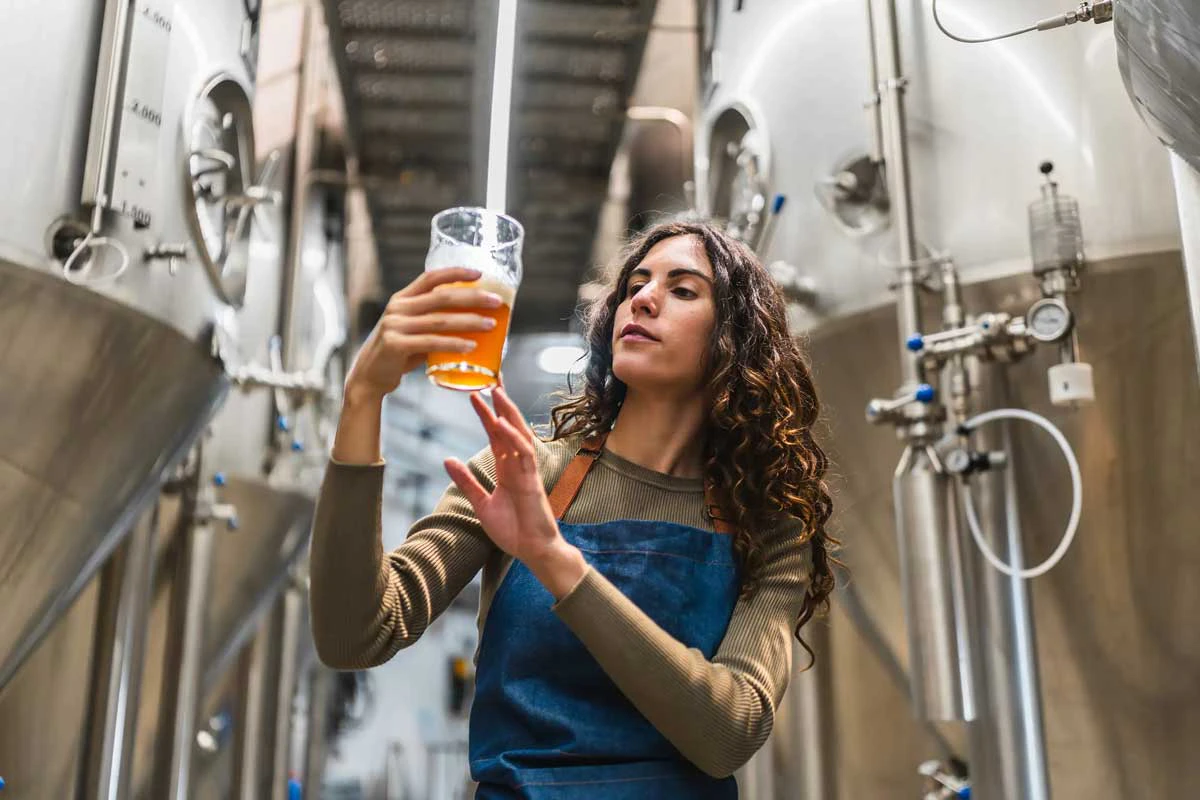
Trend #3: AI Won’t Replace Brewers. It’ll Make Them Better Decision Makers.
The potential power of AI is undeniable, becoming one of the most talked-about technologies. From a business perspective, embracing its endless capabilities could be an untapped superpower.
But the conversation shouldn’t be about replacing people, but rather helping your team make better decisions, faster.
Brewers don’t need AI to write recipes or decide what beer to make next. They need it to eliminate repetitive work, uncover trends buried in thousands of data points, and answer business questions that would normally take hours of digging through spreadsheets.
But for many, the question is: Where do I start? How and in what parts of my business can I sustainably leverage AI to make smarter decisions?
We already know that data are an extremely powerful tool. Crunching numbers, instantly formulating dashboards, and generating predictive models is where large language models (LLMs) really shine.
The next evolution is making that information instantly accessible, where brewers can ask in plain English:
- Which brands had the highest gross margin last quarter?
- Which SKU is growing the fastest?
- How have ingredient costs changed over the past six months?
- Which offerings should we brew more—or less—of next month?
According to Dustin Jeffers, vice president of brewery product & experience at Next Glass, the leading global provider of software, data, eCommerce, and marketing solutions to the beverage-alcohol industry, which acquired Ekos in October last year, that’s exactly where brewery technology is heading.
Beginning next year, Ekos will introduce a Model Context Protocol (MCP), allowing producers to securely connect their operational data with leading AI platforms such as ChatGPT, Claude, and other LLMs.
“You can then create monthly skills, daily artifacts, or anything similar you can do with any of these LLMs with your data that’s inside of Ekos,” explains Jeffers.
Rather than forcing users to learn another reporting interface, MCP creates a bridge between brewery operations and AI, allowing teams to interact with their business data through natural conversation.
Imagine asking your AI assistant to summarize yesterday’s production, identify inventory that’s moving slower than forecast, flag unusual ingredient cost increases, or generate a monthly operations report—all using your own brewery’s data.
The breweries that embrace AI in 2027 will spend less time searching for answers and more time acting on them.
The Foundation for Smarter Brewing
The future of brewing technology doesn’t replace craftsmanship, but it does give beverage producers better tools to execute their craft.
The first wave of innovation is focused on helping breweries build a stronger operational foundation. Currently, connected ERP systems eliminate repetitive work and provide real-time analytics to transform raw information into confident business decisions. In the future, AI will make those insights more accessible than ever, helping teams spend less time digging through reports and more time acting on what matters.
Together, these technologies create something every brewery is looking for: simplicity. Simplifying operations, simplifying production, and simplifying data analysis helps producers make smarter decisions to grow.
But operating more intelligently is only the beginning. In Part II, we’ll explore how those same connected systems are transforming the way beverage companies get paid, sell to retailers, and manage increasingly complex copacking partnerships. Because once your operations are connected, every other part of the business can become more connected, too.