
Understanding the Microbiome of Your Brewery: Metagenomics 101 | Deep Dive
Quality control professionals and brewmasters know that consistency and safety are the backbone of exceptional beer. But what if the key to mastering both lies in understanding the unseen world inside your brewery?
Join us for Understanding the Microbiome of Your Brewery: Metagenomics 101, a webinar designed to elevate your approach to quality assurance. Discover how metagenomics goes beyond traditional PCR kits with Microbiome Discovery – giving you deeper insights into contamination risks, fermentation health, and overall product integrity.
- Learn how metagenomics is transforming quality control in brewing
- Discover how metagenomics goes beyond traditional plating or PCR spoilage detection kits
- Understand key applications for metagenomics: unexplained spoilage events, corrective actions, & process development/improvement
This session is about giving you the tools to protect your brand and craft beer excellence. Plus, enjoy on-demand access so you can revisit insights anytime
Build a Better QC Program through Targeted PCR Solutions
Discover how PCR testing can bring precision, flexibility, and operational efficiency to every stage—from raw materials to final product—of your brewery’s QC program.

As you continue to refine your craft and scale your operations, quality control has never been more critical. In an industry with razor-thin margins and crowded shelf space, traditional plating methods are increasingly being complemented by—and in some cases giving way to—polymerase chain reaction (PCR) testing because of its increased speed, accuracy, and ease of use. Here we look at some key factors to consider as you look at integrating PCR testing into your brewery’s QC program.
Understanding PCR Sensitivity
PCR testing delivers significantly faster results than traditional methods—often in hours rather than days, letting you make quicker product-release decisions, reduce hold times, and avoid costly delays.
More than just a faster time to result, the power of PCR—and its most significant differentiation from traditional plating methods—is increased testing sensitivity. PCR’s multiplexing capabilities can also deliver results that go beyond simple pass/fail detection to offer more detailed insights into potential risks, enabling you to take proactive preventative measures.
When you’re evaluating how you can integrate PCR tools into your existing QC processes, it’s important to remember that sensitivity claims rely on several variables that are specific to target specificity, applications, and sample preparation. To truly gain the sensitivity, time, and use benefits of PCR, don’t hesitate to ask your solution provider to share the Limit of Detection (LOD) for each specific PCR test in your portfolio and how it can vary by application or sample-preparation methods. This information should be readily available and will help you understand the individual contribution of each component to the overall testing plan. This is important if your solution is enrichment-based or offers a “same day” time to result.
Additional Factors to Consider
Effectively evaluating sensitivity claims is only the first step in selecting the right PCR solution. Additional critical considerations for PCR solutions and implementation include:
- Instrumentation and Test Type—PCR methodology can flexibly meet the specifications of a wide variety of QC programs and production facilities. Offerings can be designed for single-target detection or for multichannel testing in one tube; to run on closed systems (working exclusively with its own brand of tests) or open systems (ability to run other tests and homemade assays); and can even offer fully automated software for objective results interpretation to help you avoid user subjectivity in interpreting results. The versatility of the technology means that you can take advantage of the methodology’s benefits no matter the size of your operation or QC program.
- Sample Strategy—One of PCR’s greatest strengths is its ability to test not just in finished products, but across the entire production process, including in raw materials, in-process samples, and packaging environments. This capability, paired with increased sensitivity of the technology, requires a comprehensive sampling strategy that accounts for both live- and dead-cell DNA detection (viability) in the QC process. During beer fermentation and processing, you may use several mitigation efforts to minimize spoilers, and these processes can lead to many dead cells in a sample. The presence of these dead cells can paint an incomplete or inaccurate picture of the true spoilage risk in a sample. bioMérieux’s Viability Kit distinguishes viable from nonviable microorganisms detected on PCR, helping to ensure precise spoiler detection to safeguard your supply chain. This ready-to-use sample treatment method helps reduce seemingly false positives, avoids unnecessary follow-up tests, supports getting products to market, and streamlines operational decision-making.
- Training and Integration—Even with simplified workflows, integrating PCR testing into your facility requires training to ensure confidence in your results. bioMérieux’s training process includes a representative onsite in your brewery to train your team on the solution, followed by regular site visits and consultations to help optimize the solution to your facility. If you’re expanding your company’s offerings, you can’t assume that sample preparation that is optimized and validated for beer testing will function properly on other beverage categories. Such assumptions can lead to ambiguous results and time-intensive confirmation processes. bioMérieux can leverage their R&D team’s expertise to develop validated, specialized sample preparations for diverse beverage categories beyond beer—such as RTDs, seltzers, and other emerging beverage categories.
- Cost in use—While PCR tests can provide faster and more accurate results, the true cost-per-test goes beyond the price tag of the test itself. QC costs should also factor in personnel overhead—the most significant lab resource. This is particularly true with intensive tasks associated with DIY molecular tests, such as preparing master mix raw materials and convoluted sample-prep protocols. When you’re choosing a PCR solution, look for one that minimizes hands-on time—or includes pre-prepared components—to reduce the operational overhead and improve cost-efficiency.
A Strategic Shift toward Proactive Quality Management
Integrating PCR testing with a traditional plating approach is more than just a technology upgrade. It’s a shift toward proactive, real-time quality management. With all the pressures you face today—rising costs, hitting operational efficiency targets, incorporating sustainability objectives, meticulously managing overhead—the ability to detect and differentiate spoilers early and act quickly is invaluable.
Having a more reliable, flexible QC process isn’t just nice—it’s a no-brainer. Want to learn more about how bioMérieux’s diagnostic solutions can improve your brewing operations? Visit: our website.
Brewing Better Beer: The New Era of Yeast Quality Control
Yeast is the heart of every great brew—but controlling its quality has long been a challenge. Discover how cutting-edge PCR technology is transforming yeast testing and helping brewers detect contamination faster, protect their brand, and brew with confidence. From breakthrough tools to smarter testing for wild-yeast variants, the future of fermentation starts here.

The beer industry thrives on the passion and commitment of brewers, suppliers, and partners who constantly push the craft to new heights. From small independent brewers to large-scale producers, everyone faces the same challenge: balancing product quality with operational efficiency. As the industry evolves, investing in advanced quality control—beyond just basic presence/absence testing—has become a key strategy for maintaining brand integrity, improving margins, and ensuring long-term sustainability.
Raising the Bar on Yeast Quality Control
Science is changing the game, especially when it comes to yeast—the backbone of every great beer. Historically, brewers had limited quality-control options for yeast in its raw state because of its dense cellular structure. This meant testing could only be done with traditional microbiological plating, allowing for reactive results up to five to seven days later and leaving little room for proactive quality management. Now, with new molecular testing capabilities, brewers can monitor yeast quality earlier in the process, leading to more consistent and high-quality fermentations.
Breakthrough in Yeast Slurry Testing
For years, developing an effective yeast quality-control solution has been an industry-wide challenge. In 2023, yeast supplier White Labs partnered with bioMérieux—known for our expertise in brewing quality control—to create the first-ever test designed specifically to detect bacteria and yeast contamination in yeast propagations and slurries.
The result? GENE-UP® BREWPRO™ YS—a fast, PCR (polymerase chain reaction)-based test with enhanced sensitivity tailored for yeast slurries. This test doesn’t detect just common spoilage organisms; it also identifies other contaminants unique to yeast, providing brewers with a full-spectrum quality snapshot. With this data and improved sampling power, brewers can make more informed decisions, improve efficiency, and confidently ensure the integrity of their raw materials.
Since the 2024 launch of GENE-UP® BREWPRO™ YS, brewers and yeast suppliers alike have embraced this innovation, recognizing the benefits of rapid contamination detection in yeast propagation and harvesting.
Smarter Testing for Diastaticus
The brewing industry thrives on innovation, and yeast quality control is no exception. To further improve detection methods, bioMérieux teamed up with Cornell University to research new genetic markers for Saccharomyces cerevisiae var. diastaticus, an aggressively attenuative yeast known for causing unintended secondary fermentations that can cause exploding cans or bottles in the marketplace.
This collaboration led to the development of BREWPRO™ WILD YEAST PLUS, an advanced PCR test that aids brewers in distinguishing between spoilage and nonspoilage strains of diastatic yeast. By combining conventional and proprietary biomarkers, BREWPRO™ WILD YEAST PLUS helps brewers avoid costly decisions such as unnecessary quarantining or, worse, letting compromised product hit the market. With this predictive risk-based testing, brewers can act fast and confidently protect their beer.
Moving Forward with Confidence
These latest innovations are just the beginning. BioMérieux has long been committed to supporting the brewing industry with accessible, ready-to-use quality-control solutions. From streamlined workflows and hands-on training to ongoing support and service programs, our goal is to make high-level quality control feasible for brewers of all sizes.
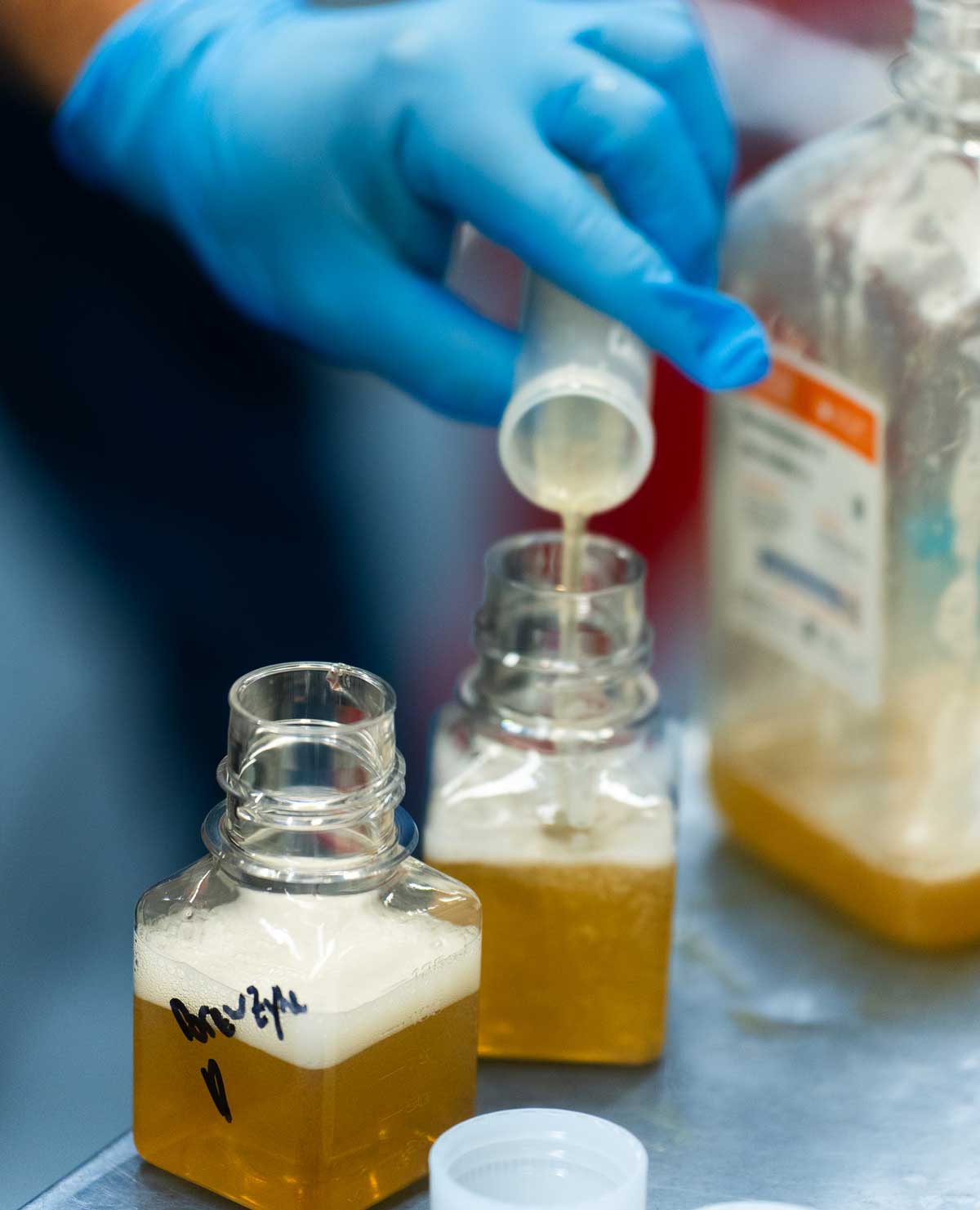
As the industry continues to evolve, so do the tools available to brewers. By investing in advanced quality-control solutions, brewers can not only protect their products but also push the craft forward, ensuring that every pour meets the highest standards.
Want to learn more about how bioMérieux’s diagnostic solutions can improve your brewing operations? Visit: biomerieux.com.
Safeguarding Quality: The Role of Commercial Sterility in Modern Beverage Manufacturing
If you, like many breweries these days, are running multiple beverage products within your facility, consider the advantages of using bioMérieux’s BacT/ALERT®—a commercial sterility solution—to safeguard quality, control costs, and keep shelves stocked with products that meet the highest standards.

Commercial sterility is a cornerstone of a comprehensive quality-control program; however, the precise concept of commercial sterility itself can be misunderstood because commercial sterility doesn’t imply the complete absence of microorganisms but rather helps beverage manufacturers confirm whether there are organisms present that may cause spoilage or present a health risk over the course of a product’s shelf life.
Historically, beverage products fell into two broad categories—high-acid products (such as juices, carbonated soft drinks, beer and other flavored malt beverages) and low-acid products (e.g., dairy-based smoothies, plant-based milks). Today’s grocery shelves paint a different picture as consumers continue to seek clean labels, preservative-free offerings, and natural ingredients such as coconut water, plant-based powders, and natural food colorings.
In recent years, the rapid product innovation in the beverage category has outpaced regulatory updates for commercial sterility, creating complex challenges for quality teams as new spoilage-organism concerns emerge during the manufacturing process. In response, beverage manufacturers are taking on the task of adapting their strategies to maintain quality-control standards across an increasingly diverse portfolio of products.
To meet the needs of beverage manufacturers running multiple product categories within the same facility, producers are finding that the limitations of traditional quality methods—such as microbiological plate counts—are increasingly constricting because of several factors, including:
- Selective growth: Some spoilage organisms won’t grow under standard conditions but can still ruin a product.
- Small sample sizes: Traditional microbiological plate methods often test just 1 milliliter of product volume, offering a limited snapshot of a packaged product or entire lot.
Time-consuming workflows: Making traditional growth media each week requires specialized equipment, heavy labor, and is a time-intensive process; plus, some products may require up to a 14-day hold period before release—tying up warehouse space and delaying product delivery.
Human error: Manual preparation, plating, and reading introduce variability.
More modern tools, such as Polymerase Chain Reaction (PCR) testing, bring their own challenges. PCR can be too specific in the case of commercial sterility, focusing only on certain organisms known to be a threat to a particular product category. This can be especially true when ingredients are new to beverage manufacturers and prone to microbiological contamination. Cross-contamination between product lines (for example, a cannabis beverage line running seltzer products) can also complicate interpretation.
To address commercial-sterility testing needs considering the above dynamics, the beverage-manufacturing industry has used one of bioMérieux’s commercial sterility solutions—BacT/ALERT®—for more than 20 years to meet their complex manufacturing needs.
The advantages of using BacT/ALERT® in beverage manufacturing are significant:
- Larger, more representative samples: Up to 20 ml of product volume can be tested instead of the 1 ml sample volume typical for plates—offering users flexibility to achieve increased sensitivity as compared to traditional methods.
- Liquid media and agitation improve detection by keeping samples in motion during incubation, rather than static on a plate.
- Automation reduces chances of human error and removes the need for a formal microbiology background.
- Modularity: The BacT/ALERT® system is easy to scale—you can start with one cabinet and expand as needed.
- Speed: The BacT/ALERT® system delivers results in 2–3 days instead of up to 1–2 weeks, cutting storage costs and enabling faster market release.
These attributes of the BacT/ALERT® solution are helping manufacturers identify spoilers early for both high- and low-acid products, while simultaneously accounting for complicated matrices of new and natural ingredients. The significantly faster time-to-result aids in sustainability and product-output goals, while protecting brand reputation among consumers through minimizing spoiled product or costly recalls.
This is especially important if you are involved in contract brewing, comanufacturing, or copacking where speed and reliability aren’t just operational goals; they’re competitive advantages to accelerate product release without compromising quality and ultimately customer loyalty.
As the beverage landscape continues to diversify, commercial sterility remains a non-negotiable standard, but the tools to verify it have evolved. For manufacturers balancing complex formulations, tight timelines, and consumer expectations, rapid-detection systems such as BacT/ALERT® offer a way to safeguard quality, control costs, and keep shelves stocked with products that meet the highest standards.
Further Reading
UHT Food and Beverage Microbiology
Microbial Growth Under Limiting Conditions—Future Perspectives
Understanding and Evaluating Microbiological Sampling and Testing
An Overview on Novel Microbial Determination Methods in Pharmaceutical and Food Quality Control
Reducing Human Error in the Lab
Polymerase Chain Reaction (PCR)
The Fit for Purpose Evaluation of the BacT/ALERT® System