

More than just beer, the zoigl tradition is brewing history come alive.
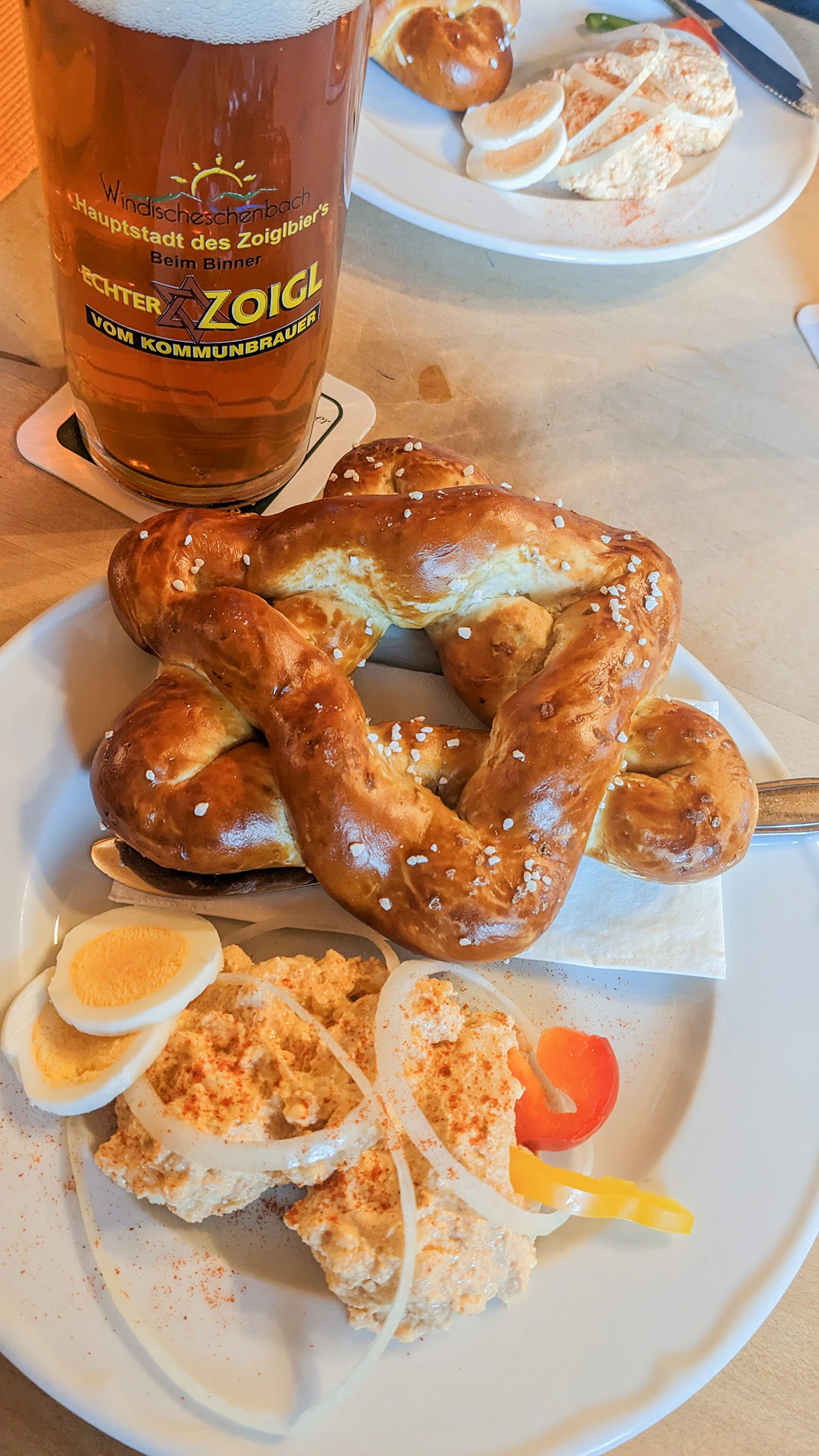
Zoigl hails from the five Oberpfalz towns that still maintain their communal brewhouses. Residents who possess historic brewing rights take turns brewing beer, which they each serve for a few days a month from their own living room–like tavern—that’s the zoiglstube. You’ll know the beer’s ready when you see the six-pointed zoigl star hanging from the facade.
In part, the zoigl tradition is a defense of a slower way of life in the face of on-demand pressures. You won’t find authentic zoigl beer in Bavaria’s bottle shops, and that’s part of the magic—you have to go a zoiglstube to drink it.
The zoigl brewers once served the beer from their own kitchens or living rooms. Nowadays, they each have a homey zoiglstube—a pub that’s built into or attached to their home, right upstairs from where they cellar the beer.
People from miles around show up when the zoiglstube is open. It’s the kind of place where complete strangers could become lifelong friends.
Connections with the Past
Zoiglstuben are unique expressions of place—creations that reflect the traditional livelihoods of the region and the aesthetic sensibilities of the people who brought their own house pubs to life.
One such person is Reinhard Fütterer, who opened Schafferhof Zoigl in Neuhaus in 1999. As a popular zoiglstube and 700-year-old farm adjacent to the Neuhaus castle tower, it’s a prominent address in the village.
Like most zoigl brewers, making beer isn’t Fütterer’s main occupation. By trade he’s a chimney sweep, a job that took him to all sorts of wirtshäuser, or inns, in the region. Some were no longer in business but “had all the furniture still set up as if waiting for the next guests.” For him, those old pubs were treasure troves. “I began collecting furniture like others collect postage stamps,” he says. Soon he needed a place to store all that stuff—or better yet, to share it.
While out on a walk one day, Reinhard and his wife Gabi hit upon the idea of buying the Schafferhof. Shuttered since the 1960s, it had seen better days. Still, the place held promise.
It takes a certain perceptiveness to create places that draw in families for a meal alongside crusty regulars playing rounds of cards. All the zoigl brewers who preside over these cozy zoiglstuben know this. It comes down to fostering a connection between the place and its past: the scythes at Kramer-Wolf, the plough at Schlosshof, the postal horn hanging from a beam at Posterer.
Fütterer’s sense of this is keen.
“I don’t want to hit people over the head with nostalgia,” he says. Instead, he prefers “to let the wood, the floors, and the furniture speak.”
A table with pin marks bears witness to the 19th-century zither player who anchored his instrument there. A bread oven from 1925 recalls the bakery that was once part of the Schafferhof estate. The floorboards come from a nearby monastery. Saved from oblivion, these things rekindle a connection between today’s zoigl drinkers and the region’s past inhabitants, the denizens of old-time taverns.
More than a Beer or a Place
For what it’s worth, if we were to pay homage to zoigl and its culture, I think the most “authentic” way to do it would be to homebrew a big batch with friends, split the wort, ferment it at home, and then take turns hosting people to drink it up. Bonus points for added touches such as open fermentation or hanging out a sign to invite random strangers to your house.
As for décor? The most authentic homage would be to do precisely nothing to our kitchens and living rooms and serve our beer in those intimate spaces. Some folks might have photos of their kids hanging on the walls, or bookcases overflowing with books, or mismatched furniture.
More broadly, though, you can’t capture the essence of zoigl in a bottle and export it. The whole cultural apparatus—communal brewhouse, historical brewing rights, taking turns, using the coolships, turning your living room into a pub, and so on—is simply too complex, and it all belongs together.