

The hops of New Zealand—at the risk of understating what anyone who’s brewed with them already knows—are not like the others.
The more aromatic varieties come with a punch as dramatic as the country’s scenery and as intense as its sunshine. To put it lightly: They are expressive.
It’s not only about intensity, of course—their profiles are unique. While the most popular American varieties tend to coalesce around citrus with bits of tropical, the most frequent descriptors for New Zealand hops make for an unusual basket: passion fruit, gooseberry, lychee, lime, white-wine grape, red currant, blackberry, apricot, feijoa, pink grapefruit, and more.
While these aromas can be bright and sharp, they can also be ripe and sweet—often smelling like the gummi or lollipop versions of any of those fruits. With certain varieties—depending on when they’re picked and how they’re used—that ripeness slips into a fascinating but divisive realm of dank weed, minerality, sulfur, and diesel. The compounds involved are many and complex, and—just to make things a bit more complicated—we all perceive them differently. One drinker’s tiki punch might smell to another like a busy truck stop.
That gets to an important point: Because these hops are different, you shouldn’t brew with them the same. Sure, you could plug Nelson Sauvin and Riwaka into wherever Citra and Mosaic normally fit in your can’t-miss IPA recipe, and it might turn out great. Maybe. If everything else is going right for you. More likely, it’s going to be okay, with a fragrant ripeness but less drinkability—or worse.
Bottom line: Hops that pack this kind of punch tend to reward some finesse.
With that in mind, I asked some of New Zealand’s top brewers—all of whom go to harvest in Nelson to select their lots, with specific ideas of what they want from them—for their best advice on how to get the most from their country’s hops, and on how to avoid the pitfalls.
Broader Strokes, from Hay to Haze and Stone Fruit to Sulfur
Knowing what sets these hops apart can help you decide how best to use them.
Generally, “New Zealand hops are much more layered in flavor and aroma,” says Eliott Menzies, founder and head of production at Altitude in Queenstown, toward the southern end of the South Island. “Where Citra and Mosaic can give you beautiful stone fruit and berries when grown well, New Zealand hops have more complexity with the good lots. Whether tropical-, stone fruit–, or citrus-first, there are normally many other descriptors tasters will pull out—umami, diesel, flinty, hay, etcetera.”
That complexity means that New Zealand hops can work better than some others as stand-alone hops, or in single-hopped beers—but they also work great in blends, Menzies says, adding depth as a “key aroma driver.”
However, there’s a flip side to that distinctiveness: “Subbing New Zealand in for a U.S. hop, you might not get the definition of desired aroma you want,” he says.
On the cold side, generally, there’s another thing to watch with these varieties: “We think New Zealand hops have more potential for over-extraction and getting bad hop burn,” Menzies says. “This is much like Aussie hops.”
Deftly used, however, and with a clear idea of your goal, there are all sorts of uses for even the more intense varieties.
“What I really appreciate is their versatility,” says Paweł Lewandowski, head brewer at Mount, a few blocks from the beach in Mount Maunganui on the North Island. “They are bold, expressive, and packed with unique character—but they can also show a lot of finesse when used thoughtfully.”
While American hops can get tropical, the New Zealand varieties bring a different side of that broad family of flavors. “Think lime, zesty, nectarine, gooseberry, quite often diesel, grassy, sauvignon blanc, or—in recent releases—more toward pineapple, passion-fruit lolly, candy-like notes,” Lewandowski says. (For those last two descriptors, he cites Nectaron and Superdelic, specifically.)
Kiwi hops bring “a different kind of intensity,” he says. “I would look at them not as a substitute for classic U.S. varieties—like Citra, Mosaic, Simcoe, Amarillo—but as an equal companion. Those tropical notes I mentioned before meet, quite often, herbal and unique characteristics that deserve their own space and spotlight.”
Lewandowski says he’s noticed the hop-breeding programs chasing the big tropical notes—as with Nectaron and Superdelic—that brewers and drinkers seem to want. “But even then,” he says, “they still carry a unique New Zealand touch. It may be because of the unique New Zealand climate, terroir, or very talented hop growers that we have here. A good example of those differences is NZ Cascade, Taiheke, [which] is different from its older American sister—bringing quite intense piney, grapefruity layers, with herbal and passion-fruit touches.”
Unrelated to flavor, Lewandowski cites another trait that broadly applies to the country’s hops: “I noticed that everywhere … I use New Zealand hops in hazy IPAs, the haze is much more stable and opaque.”
We’ve heard that from multiple brewers, anecdotally, and there is research to back it up. Chicago-based Omega Yeast, the lab that identified the “hazy gene” in yeast, has investigated various factors that promote or inhibit that haze stability. Naturally, one of those factors can be the hop variety. (For more about brewing for haze that stays, see page 62.)
Laura Burns, director of R&D at Omega, says the most significant haze-promoting hop varieties include Australia’s Galaxy and Vic Secret as well as New Zealand’s Rakau and Motueka—and there’s more haze to be had, generally, in Southern Hemisphere hops.
“We’re definitely seeing this come through rather easily,” Burns says. “There’s definitely an impact with Southern Hemisphere hops.” They’re not exactly sure why that is, yet, she says, but it’s well established that hop acids and polyphenols are important sources of haze.
Given that the aroma compounds within these hops are so different, maybe the corollary effect isn’t surprising—and it’s interesting that their sweeter tropical flavors are also a big part of what’s driven the popularity of hazy IPA.
Another tip that broadly applies to New Zealand hops, and to sound brewing in general: Watch your pH.
“I think New Zealand hops are even worse than U.S. hops at raising pH,” says Vlad Petrovic, head brewer at Saint Leonards in Auckland. “Just keep it in check, or you’ll extract plenty of undesirable compounds.”
Also, he says, be aware that even the best lots can come with a lot of sulfur.
“Maximizing thiol content is becoming more and more popular, and with that comes sulfur,” Petrovic says. “If your beer already has some low-level sulfur, this can send it over the edge. Smell the bag and trust yourself. If its sulfury, feel free to dry hop with [1°P/1.004] left to go—or even at terminal, with the blowoff open. You’ll still get great hop character.”
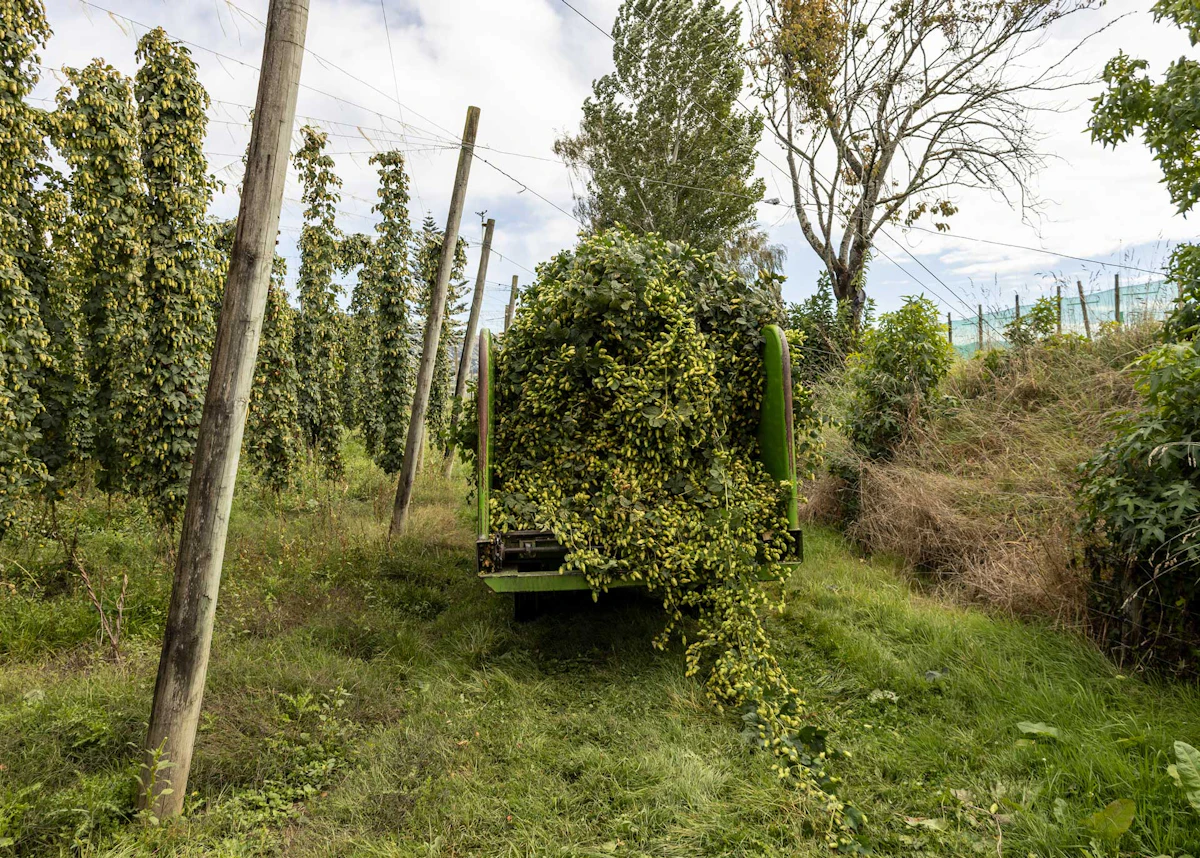
Mac Hops in Motueka
Selecting for Flavor
Petrovic offers another piece of advice that sounds like common sense, but it’s more easily said than done—especially if you’re buying from overseas.
“Avoid shit hops,” he says. “I’m sure this is true for all hops and sounds obvious, but there are plenty of very sub-par New Zealand lots—especially if you hit the spot market.”
Among craft brewers worldwide, Australia is infamous for homogenizing its lots of Galaxy, removing the option to select for specific aroma traits—traits that brewers might prefer or even need for established brands. It can still happen in New Zealand, too, depending on your supplier and their source. However, the country’s growers have been working to establish more direct relationships with brewers, wherever they are.
“Stick to working directly with farms or with smaller cooperatives,” Petrovic says. “Not many have the resources to send their hops away [for] analysis, but make friends with your hop supplier and trust them. Some of the best lots I’ve worked with have [come] from asking the growers what their favorite is.”
His next suggestion: Figure out what kind of New Zealand hop you have, whatever its variety. Broadly, he sorts them into three categories:
- Fresh/vibrant: “These are your bright flavors—citrus, vinous, zesty.”
- Tropical: “All the thiol-driven mango, passion-fruit juicy flavors.”
- Dank: “Sweaty, diesel-y, and, to many, onion-garlic.”
Once you’ve got that figured out, Petrovic says, decide how that would interact with the rest of your load. “Vibrant-type hops can make a beer feel fresher, lighter, and brighter,” he says. “These are a great pairing with more jammy, sweet-sweaty U.S.-style hops. Something like Citra-Motueka works amazingly in a hazy IPA.”
Meanwhile, the danker ones “can accentuate the rest of your hops,” Petrovic says, “but be careful not to overdo it.” He compares it to spicing the dry-hop load with just a touch of CTZ, for example.
Then, “once you understand exactly what kind of hop you have, you can work on decisions such as dry-hop timing, temperature, or contact time,” Petrovic says. That doesn’t only vary by variety, but also by lot. “I’ve opened bags and thought instantly that I can’t [dry hop] more than 24 hours contact time with this lot.”
The hop’s ideal function and role isn’t always obvious at first, either, he says. “Sadly, this is something I tend to figure out after two or three brews using the same lot.”
One more point that Petrovic wants to underscore: There is much more to New Zealand hops than “tropical.”
“Look, I know juicy flavors are all the rage,” he says. “But my favorite New Zealand hops often tend to be the earlier-harvest, brighter varieties. Many of the U.S. hops I come across are super-tropical these days, and when you’re brewing a hazy IPA with an overripe fruit ester–driven London strain, and a huge dose of mango-esque Citra, it helps having a lemon-lime, gooseberry-driven New Zealand hop to brighten everything.”
And it’s easy to go overboard with those sweeter, tropical notes. “One of the worst beers I ever made was a Citra-Nectaron IPA,” Petrovic says, “which turned into an absolutely sweaty mess in two weeks on tap.”
When it comes to getting the best hops you can, like Petrovic, other Kiwi brewers stress the value of making direct connections with the farms, if possible.
“Form a relationship with the grower, and start forming your approach there,” says Menzies at Altitude. Otherwise, “we get some terrible lots, which we have learned to not even look at.” Over time, they’ve learned that they tend to like certain varieties from certain farms. For example: “I like Nelson from Freestyle, I like Riwaka from Eggers, and I like Cascade and Motueka from Garston,” Menzies says, naming three different farms.
Garston Hops, just south of Queenstown, may be the world’s southernmost commercial hop farm, and many brewers say the hops they get from there have a different character. For the first time this year, the Altitude team are also evaluating selections from Canterbury, a region on the South Island’s eastern coast. While promising terroir doesn’t guarantee a good lot, it does open up the options for a brewery that can connect with growers.
“For us, what makes a good lot is specific to our brews,” Menzies says. “We select Garston hops for some beers and Nelson [region] hops for others, due to the characters. Garston, we find, is far more subtle but has a deeper, riper fruit profile, and more floral—usually less sulfur and diesel. So, Nelson-grown, we select for the opposite—so we can blend or ‘pop’ beers accordingly.”
Broadly, Altitude is looking for “bright, intense aromatics with true-to-type profiles,” Menzies says. “There can be incredible differences within one variety from one farm, and I use Eggers Riwaka as an example here—everything from shiitake mushrooms to limestone.”
So, what makes a lot undesirable to Altitude?
“Bad lots in New Zealand are either very grassy, early-pick stuff, or green onion,” Menzies says. “Pitfalls to [watch] for are too-early Riwaka—as this is a hard window to pick, and it stays super-grassy and capsicum—and late-harvest Nelson, which dives into green-onion soup pretty quickly.”
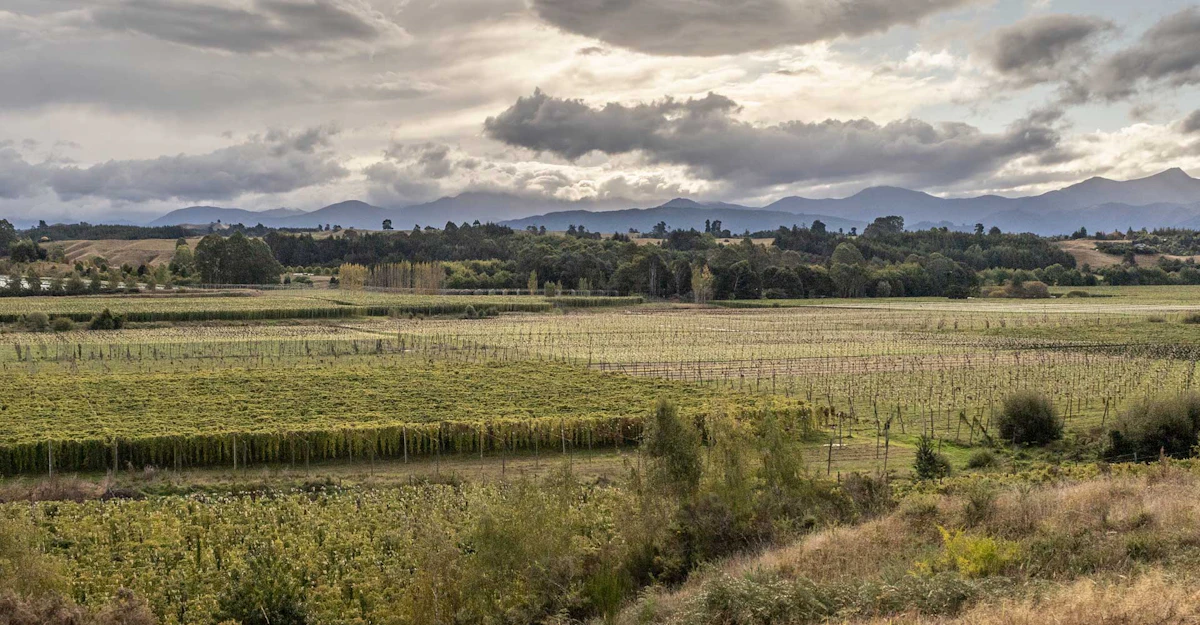
Sunset over the hop fields at Freestyle
Hot Side and Biotransformation
Like craft brewers anywhere else around the world, the Kiwis are willing to throw hops into any part of the process, anywhere from the mash to a cold tank of beer before packaging. That flavor-driven flexibility applies to their local hops as well as aroma varieties from the United States, Australia, Germany, or anywhere.
Beyond mash and first-wort hops aimed at flavor, early-boil additions for bitterness are straightforward. Pacific Jade (12–14 percent alpha acids, 7–8 percent beta acids) is a popular choice, as is Green Bullet (11–14 percent alpha, 6.5–7 percent beta). One suggestion from Lewandowski at Mount: “In my opinion, Pacific Jade shouldn’t be used in high-ABV IPAs, due to its spicy-warming character.”
At Altitude, Menzies says they don’t often use T-90 pellets for bittering—instead, they use Flex, the flowable extract from BarthHaas. However, when they use pellets for bittering, it’s exclusively Pacific Jade: “High-alpha, low cohumulone, nice and clean and cheap,” he says.
When it comes to aroma additions among Kiwi brewers, there is a key difference that has ripple effects: Those genetically modified, thiol-unlocking yeast strains such as Omega Cosmic Punch are prohibited in New Zealand. Thus, brewers in the country that gave us Phantasm—made from local grape skins, packed with thiol precursors just waiting to be unlocked by such a strain—basically have no use for it.
On the other hand, they’re blessed with local hops already high in free thiols. And their process remains focused on harnessing biotransformation, especially for hazy IPAs, often involving massive hop loads in the whirlpool, at “dip hop,” or early in primary fermentation.
The whirlpool is often a “cool pool” of 175–185°F (80–85°C), aiming to minimize the extraction of bitterness while preserving some of the more volatile aroma compounds. The dip hops get a similar temperature range, but the hops and hot wort (or water) go straight into the CO2-purged fermentor to steep for a while. Once the chilled wort and yeast pitch join the party, the yeast’s enzymes get a chance to work their magic on all that hop matter.
At Altitude, “the favorite New Zealand variety for cool pooling or dip hopping—which feature heavily in our recipes—is Motueka,” Menzies says. “We love how this hop performs from a biotransformative point, and [it] adds a baseline saturation to hoppy beers. This compares to the cold side, where we use it more sparingly and more as a tool to support the driving hops. Big differences in results, as during active [fermentation], the tropical fruit drizzled in lime comes out. But on the cold side, [it’s] much more the lemon-lime-grapefruit.”
“Riwaka is also another good one here,” he says, “but we love Riwaka on the cold side, also. A lot of New Zealand varieties also work well [for] dip hopping. The grassiness-capsicum that can come—and thus go—from something like Riwaka is a great candidate for utilizing this technique,” as the fermentation can turn those compounds into punchier thiols.
Kiwi brewers don’t necessarily limit those big whirlpool or dip-hop additions to hazy IPAs, either—they’re almost as likely to appear in West Coast–style IPAs, pale ales, and hop-forward New Zealand pilsners, albeit with later finings and/or filtration as part of the plan.

Left: Hinetai Hops in the Tapawera valley. Right: Nectaron on the bine.
Dry Hops
As on the hot side, there is a wide range of approaches on the cold side, from early in primary to post-crash. And, just as it is in the United States, cooler dry hopping after primary fermentation is gaining currency.
Peter Bircham, head of R&D at Garage Project in Wellington, says they recently tested cooler versus warmer dry hopping on their Fresh Hazy IPA. As it turns out, the warmer-hopped version was higher in terpene alcohols, while the cooler-hopped one was higher in free thiols—and they preferred the latter.
“It was kind of the opposite of what we expected, which is weird,” says Pete Gillespie, Garage Project’s founder and head brewer. “It was the cold dry hop that seemed to be far more expressive.”
At Altitude, Menzies says they’ve tested a number of approaches with their dry hopping—at pitch, at kräusen, colder temperatures, hop oils, and more—but here is their preferred method, for now: First, let the beer get to about 0.005 (1.2–1.3°P) above terminal; then, “mini–soft crash” by going 4–9°F (2–5°C) below fermentation temperature to encourage flocculation, harvest yeast, then dry hop, “whilst some active fermentation [is] still going on,” he says.
“This, for us, gets the most out of our dry hops, and we felt we were missing some depth when it came to doing it cold,” Menzies says. “We will then give the hops two days whilst [rousing], and start dropping them out, as any more than five days we find we start getting burn.”
Their favorite New Zealand hops on the cold side are “pretty classic,” Menzies says, before diving into the fun of pairing and blending specific varieties.
“Riwaka, Nelson—both amazing as single hops but pair so well, too,” he says. They also like Motueka, Nectaron, NZ Cascade, Southern Cross, and Waimea as dry hops, but they prefer them paired with others, he says. “Our favorite pairings are Motueka-Riwaka, Motueka-Nelson, Nelson-Citra, and Nelson-Nectaron—often with some other country’s hops as a third, to better drive a desired profile.”
At Mount, Lewandowski is an advocate for something he calls the “golden ratio” when blending hops. Typically, that means a lead hop at 50 or 60 percent of the load, followed by equal portions of two supporting hops. Here are some of his favorite combos:
- Southern Cross with Nelson Sauvin and Motueka: “Goes well for hazies, bigger IPAs.”
- Motueka or Riwaka with Nelson Sauvin and Taiheke: “Can be used for NZ pilsners.”
- Nelson Sauvin or Southern Cross with Riwaka and Motueka: “For hazies.”
- Nelson Sauvin with Rakau and Motueka: “For gooseberry, passion-fruit notes along with floral and citrus notes.”
- Nectaron with Nelson Sauvin and Motueka or Riwaka: “For more modern NZ IPA [or] hazies, in the 50/25/25 ratio.”
- Waimea (“for woody-piney notes”) with Nelson Sauvin, Pacific Jade, and Motueka or Taiheke: “For what I would call old-school NZ IPAs.”
Lewandowski says he also enjoys mixing in some U.S. hops with the combos, such as Nelson Sauvin with Southern Cross and Simcoe; Amarillo with Motueka and Taiheke; or Mosaic with Motueka and Riwaka.
Another thing to consider on the cold side: hop oils and other aroma extracts made from New Zealand varieties. Clayton Hops, the country’s largest grower, produces its own Amplifire line of hop oils and concentrated lupulin pellets using state-of-the-art equipment.
Altitude is among the New Zealand breweries experimenting with these products, which “we are still getting to grips with,” Menzies says. “But two things to note are [that] they tend to take a week for that green terpene edge to mellow out, but [also that they] have an impressive true-to-type character that seems to retain that New Zealand sulfury-fruit angle well.”

Left: Hops hanging at Nelson Lakes. Right: Loading hops into the kiln at Nelson Lakes.
Diving into the Varieties
When it comes to hops, brewers in New Zealand are like others around the world—they play favorites. Here’s some more advice on how to get the most from a few specific varieties.
Riwaka
“Riwaka is the most expensive hop in the world because it’s not fun to grow,” says fifth-generation farmer Brent McGlashen of Mac Hops in Motueka. Growers hate Riwaka’s fussiness and low yield, but they like what brewers are willing to pay for it.
It’s a variety with fervent fans as well as risks: This is a hop often associated with those divisive diesel notes.
Those notes come from a rich, complex matrix of its thiols, which can vary considerably depending on when it was picked, how brewers use it, and how much they use. Broadly, late-pick hops, larger quantities, and cold-side use are more likely to push those diesel-dank notes—but not everyone is as sensitive to them. At lower intensities, those same compounds tend to smell more like passion fruit, kumquat, grapefruit, or lime.
“The diesel-mineral aromatic character is quite polarizing,” says Brayden Rawlinson, head brewer at Wellington’s Fork & Brewer, named the country’s Champion Micro Brewery at the 2024 New Zealand Beer Awards. “Some people like it, whereas others can’t stand it. To me, Riwaka smells like money, which is an associative smell.”
Rawlinson’s predecessor at the Fork & Brewer—Kelly Ryan, a veteran brewer now working with Freestyle Hops—says he believes that the diesel character in Riwaka hops is not as prominent as it was in years past. He also says that diesel-mineral character mellows over time.
“One of the tricks I would use—and I actually believe that this cold aging would give a lot of positive attributes—was [to store] a more diesel-prone batch of Riwaka … for 12 months or so,” he says, “and then when using it, the diesel would be gone. This was usually a necessity due to the fact that Riwaka was super-hard to get, and when you did have the chance to get some, you’d always over-order for your contract. I discovered that after eight to 12 months of cold storage, any of the more pungent sulfurous character associated with kerosene or diesel would dissipate, leaving behind the tropical and citrus goodness. Perfect for my beloved NZ pilsners.”
On the other hand, maybe you want that diesel aroma. In that case, Rawlinson says, you should use it as a later dry-hop addition. “If you want to reduce this character, use it on the hot side—or even in a dip hop, if you’re adamant on using it in the fermentor.”
That suggests that whatever compounds are creating that character aren’t effective survivables, he says. (For more on hop compounds and survivables, see page 65). However, “it’s also important to add that this is all purely anecdotal—I’m a brewer, not a chemist.”
Despite the pitfalls, it’s hard to find a brewer who isn’t a fan of Riwaka.
Ryan—whose career has included four years brewing at Thornbridge in England—names Riwaka as his favorite New Zealand hop. With a flavor impact that outweighs its alpha and oil content, “it never ceases to amaze me,” he says. “Even at around 20 percent on hot-side/whirlpool or in dry hop, a good batch of Riwaka will make itself known, generally with an interesting combination of bright citrus—grapefruit and kumquat, sometimes approaching sweet blood orange—or passion fruit. … Nothing else smells or tastes like it.”
“This is a very cool hop,” says Petrovic at Saint Leonards. “It has great market potential, as it makes every punter feel like a beer expert—it’s so recognizable.” In his view, the concerns about diesel-kerosene notes “are outdated or exaggerated. Modern Riwaka can be fruity and tropical as heck—sometimes too much so. Ideally, it should have a flinty minerality that makes a beer incredibly complex.”
However, he adds: “Be careful, as it can skew savory and/or drive vegetal compounds in a beer.”
At Mount, Lewandowski says that with Riwaka, he looks for “classic notes of diesel, passion fruit, with touch of lemongrass—that goes well in NZ pilsner, West Coast pilsners [or] IPAs, or even hazies. I use it as a supporting [hop] in companion with others, as on its own it’s quite intense and unique.”
Motueka
“Motueka is “one of my favorite hops,” says Petrovic at Saint Leonards of Motueka. He says to ignore the usual aroma description on websites or brewing software. “It has an absolutely killer range, from pure lime zest to tropical to Riwaka-leaning.”
He says they like to use it in saisons, lagers, hazies, West Coast styles, and more. “Just figure out what type of Motueka you have and how you want to use it,” he says. “It can bring an excellent brightness, which works well with other hops.”
Ryan at Freestyle describes what he likes in Motueka: “Intense citrus, usually bright lime and lemon, zesty mint, and wisps of herbal, floral notes. ... Tropical papaya, lychee, and guava when choosing a later variety and matching it with just enough Riwaka and Sauvin.” Motueka, Ryan says, “is chimeric in a lot of ways, with harvest windows showing it in all its glory—from the zesty early notes to the intense late tropical impact that can rival some of the American varieties.”
At Altitude, Menzies says they might use Motueka as 100 percent of their hot-side hops or up to 25 percent on the cold side—like many other New Zealand varieties, it’s punchy, he says, so a small amount works well to boost other types.
At Mount, Lewandowski says that he’s looks for “crushed-lime mojito citrus notes” in his Motueka, and that they use it as the lead hop in pilsners and pale ales, and as a supporting hop in their bigger NZ IPAs.
Notably, the hop breeders at Plant and Food Research in Motueka, when testing experimental crosses in beer, always use Motueka and Nelson Sauvin as controls—those are the standards for intensity that they aim to reach with new varieties.
Nelson Sauvin
One of New Zealand’s most cherished hops, released in 2000, is also one of its most variable. Nelson Sauvin’s character can differ more widely than most others depending on where it’s grown and when it’s picked. As such, every brewer in New Zealand seems to have an opinion on how they like their Nelson.
“An amazing hop,” says Petrovic at Saint Leonards. “I’ve had the privilege of trying early- versus late-harvest, and the difference that seven days makes is astounding. Like Simcoe, this hop can add an amazing brightness, even with just 10 percent of the hop bill.”
Ryan, the veteran brewer now with Freestyle Hops, says that Nelson, when used on the hot side, should be used gently. “But if used in the right amounts,” he says, it “brings a bright peel-like bitterness and sweet, tropical flavors.”
The hop can also add a sense of fullness, he says. “I believe that Nelson Sauvin really adds body to a beer, especially when used in something that is lower-alcohol. I don’t know if it’s the impression of a wine-like character that tricks the mind into this, but there seems to be an inherent viscosity that I associate with this hop and the flavor impact it yields.”
Ryan says he also loves pairing Nelson with American hops. “It acts as a binding and boosting hop,” he says, “accentuating the pine, citrus, tropical, and berry notes that come through from the U.S. varietals and highlighting the punchy intensity that is reminiscent of these beers.”
At Mount, Lewandoski says he selects Nelson for “intense notes of gooseberry, passion fruit, grassy,” and that they use it “quite heavily in our hazies and NZ IPAs and as a supporting hop in our pilsners.” It also has a place in almost all his favorite hop blends.
Simon Nicholas, chief brewer at Hop Federation in Motueka, says he looks for gooseberry and lychee notes when he’s selecting his Nelson. “It’s so in-your-face,” he says. “I feel it’s probably one of the best hops to do a fresh-hopped beer with.” Their Green Limousine, at 6 percent ABV, is a fresh-hopped, all-Nelson IPA—and it’s a top seller.
At Parrotdog in Wellington, cofounder and head brewer Matt Warren says that using Nelson in the whirlpool can sharpen its character—and that can be a good thing for some beers, but also that they would never do that for their hazies. (The same applies to Riwaka, which “is pretty expensive for the whirlpool,” he says, but a little bit there can be nice.)
Nectaron
While Nectaron is generally popular for its sweeter fruit notes, most New Zealand brewers so far appear to prefer this variety, released in 2020, as a supporting hop rather than on its own.
At Mount, Lewandowski says he uses it for “big tropical notes of ripe pineapple, passion fruit that I like to use intensively in our hazies, along with Nelson Sauvin or American varieties.”
Wai-iti
“Personally, I’m a big fan of Wai-iti,” says Rawlinson at Fork & Brewer. Underrated and often overshadowed by other New Zealand varieties, Wai-iti is lower-alpha but “packs a serious apricot-peach aroma punch due to the high weight of oils it carries,” Rawlinson says. It’s also versatile, he says, working well in a range of styles from Belgian-style witbier to lagers, pale ales, and IPAs.
“It’s fantastic when used as a whirlpool addition,” he says. “The low alpha-acid percentage—in some years below 2.5 percent—means that you don’t require the cooler whirlpool temperatures that you would otherwise need with varieties that are above the 10 to 12 percent alpha-acid range.” While the whirlpool can pull a lot of bitterness from those higher-alpha varieties, Wai-iti is more forgiving.
“It’s an amazing support hop when used in dry-hop applications in New World, hop-forward styles,” Rawlinson says, “especially when you’re looking for an extra kick of New World hop aroma [and] flavor.”

Kiwi Hops: A Cheat Sheet
Here are the key New Zealand varieties to know, with a few typical stats and common descriptors. As always with such descriptors—a potent mix of marketing and subjectivity—your mileage may vary.
Dr. Rudi: Alpha 10–12%, beta 7–8.5%, total oils 1.5 ml/100 g.
Bittering/dual-purpose hop. Notes: pine, lime pith, lemongrass.
Green Bullet: Alpha 11–14%, beta 6.5–7%, total oils 1–1.5 ml/100 g.
Bittering hop. Notes: spicy dried fruit, pine needles, woody, resinous.
Kohatu: Alpha 5–8%, beta 5–6%, total oils 1 ml/100 g.
Notes: fresh tropical fruit, melon, stone fruit.
Motueka: Alpha 6.5–9.5%, beta 5.5–6%, total oils 1.3–2.8 ml/100 g.
Notes: mojito lime up front, with lemon, tropical fruit, herbs.
Moutere: Alpha 17–19.5%, beta 7.5–8.5%, total oils 1–2.3 ml/100 g.
Super alpha with low cohumulone. Notes: passion fruit, grapefruit, pine.
Nectaron: Alpha 10–12%, beta 4.5–5%, total oils 1.5–2 ml/100 g.
Notes: citrus, pineapple, passion fruit, grapefruit, peach.
Nelson Sauvin: Alpha 11.5–14.5%, beta 6–6.5%, total oils 1.2–2 ml/100 g.
Notes: white-wine grape, gooseberry, passion fruit, lychee. Lemon-citrus notes in early-pick Nelson can get floral then give way to more tropical-dank notes in later picks.
Pacifica: Alpha 4–6%, beta 5–7%, total oils 0.5–1.2 ml/100g.
Notes: floral, spice, citrus, dried fruit.
Pacific Gem: Alpha 13–15%, beta 7–9%, total oils 1.1–1.3 ml/100 g.
Bittering hop. Notes: blackberry, black pepper.
Pacific Jade: Alpha 12–14%, beta 7–8%, total oils 0.6–1 ml/100g. Bittering hop. Notes: herbal, citrus, black pepper.
Pacific Sunrise: Alpha 12–15%, beta 5–7%, total oils 1.5-2.5 ml/100 g.
Bittering/dual-purpose hop. Notes: orange, lemon, melon, mango, tropical fruit, berries, floral.
Rakau: Alpha 9–10.5%, beta 3.5–4%, total oils 1.7–2 ml/100 g.
Notes: apricot, stone fruit, plum, mango, fig.
Riwaka: Alpha 4.5–6.5%, beta 4–5%, total oils 0.8–1.5 ml/100 g.
Notes: passion fruit, citrus, pink grapefruit, can verge into diesel/dank.
Southern Cross: Alpha 11–14%, beta 5–6%, total oils 1–1.3 ml/100g.
Dual purpose. Notes: lemon zest, lime, tropical, pine.
Superdelic: Alpha 9–10.5%, beta 3–3.6%, total oils 1.3–2.2 ml/100 g.
Released by NZ Hops in 2023. Notes: citrus, berries, red fruit, tropical fruit, candy, lollipops.
Taiheke/NZ Cascade: Alpha 6–8%, beta 4–6.5%, total oils 1–1.5 ml/100 g.
Notes: citrus, grapefruit, lime.
Wai-iti: Alpha 2–2.5%, beta 5–6%, total oils 0.75–1.5 ml/100 g.
Notes: lime, citrus, peach, apricot, stone fruit.
Waimea: Alpha 16–19%, beta 6–8%, total oils 1.6–2.3 ml/100 g.
Super alpha. Notes: citrus, pine, grapefruit, tangerine.
Wakatu: Alpha 6.5–8.5%, beta 8.5%, total oils 1 ml/100 g.
Notes: floral, lime, citrus.
Kiwi Hops on the Horizon
Ssssh, no names (yet). Here are some of the trial varieties that New Zealand breeders and growers are scaling up, each with the potential to catch on with brewers and get a wider release. Without knowing much about them yet, we can only share some descriptors we’ve heard, read—or scribbled down ourselves, after rubbing. NZH denotes NZ Hops trials with their Bract program, while the NZ numbers are up-and-comers at Hāpi Research.
NZH-106: Tropical, citrus, guava, mango, orange gummi, sweet nectarine.
NZH-109: Sweet lime, lemon, grapefruit, herbs, white grape, stone fruit.
NZH-111: Subtle citrus, spice, lime gummi, light diesel.
NZH-112: Citrus, stone fruit, lemon, dank, candied pineapple.
NZH-115: Spice, citrus, earthy.
NZ02: Lower-alpha, unique passion-fruit aroma.
NZ03: Higher alpha, earthy, alluvial.
NZ04: Strong, punchy, Nelson-like.
NZ05: Punchy, tropical, resinous.
NZ06: Moderate to high alpha, strong and punchy.
Hear Here!
Want to hear from the brewers, hop growers, and scientists themselves? Check out these episodes of the Craft Beer & Brewing Podcast, recorded on location in New Zealand during harvest:
- Episode 405: Pete Gillespie of Garage Project and Hāpi Research Is Fighting the Forces of Homogenization
- Episode 406: Dr. Tom Shellhammer and Dr. Ron Beatson Discuss the Impacts of Genetics, Terroir, and Pick Timing on New Zealand Hops
- Episode 407: Biotransformation Myths and Realities in Hoppy and Nonalcoholic Beers, with Dr. Peter Bircham
- Episode 408: Brent McGlashen of Mac Hops Is Harvesting Sunshine on the Family Farm in Motueka
- Episode 409: Paweł Lewandowski of Mount Puts New Zealand Pilsner in Perspective
- Episode 410: NZ Grape Ale? All-Riwaka Pils? Fork & Brewer’s Brayden Rawlinson Applies European Influence to Local Ingredients
- Episode 411: Matt Warner of Parrotdog Takes a Counterintuitive Approach to Hops in Classic, Bright, and Hazy IPA
Disclosure: This reporting and related Craft Beer & Brewing Podcast episodes were possible thanks to travel support from Hāpi Research, which is jointly run by Freestyle Hops and Garage Project. That support came from market-development grants partly funded by New Zealand’s Ministry of Primary Industries and aimed at raising the profile of the country’s hops and beers.
