

One of the fiercest challenges facing the Cinderlands team last year was what to do about double IPA.
Contrary to trends in other regions, the Pittsburgh brewery saw sales of double IPAs flagging. Paul Schneider, Cinderlands’ cofounder and head of brewing operations, says he felt this was mainly due to the higher prices of those beers on shelves, as drinkers moved toward more affordable but still heavily hopped standard-strength IPAs.
The question for Cinderlands was how to meet that drinker.
“We developed a full-time, 9 percent [ABV] imperial hazy IPA that sells at our IPA price tier,” Schneider says. “It was recipe-designed using advanced hop products and certain considerations on the grist and fermentable side and yeast side to keep our costs in line with a standard-strength IPA.”
Today, that beer—called Full Squish—is the brewery’s second-best seller behind standard-strength Squish, a hazy pale ale of 5.5 percent ABV. For Cinderlands, it proved the power of this type of “reverse engineering”—working backward from a target cost to create a beer that not only tastes great but has an appealing price on the shelf. The brewery doesn’t approach every beer this way, Schneider says, but for core IPAs designed to be sales workhorses, the exercise has literally paid dividends.
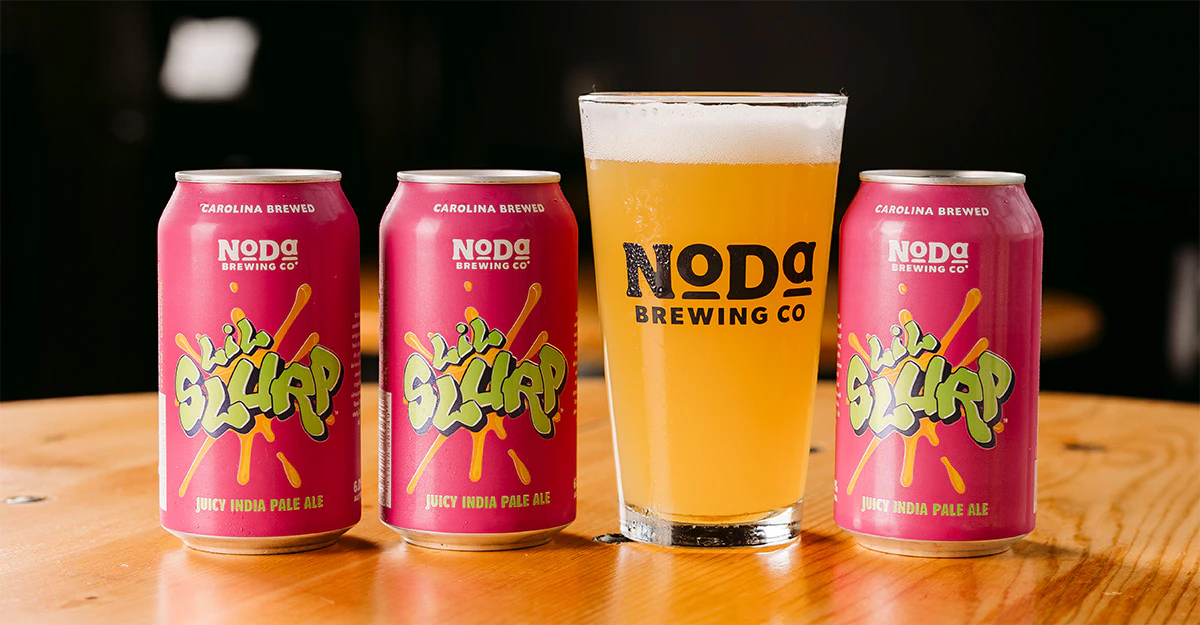
Photo: Courtesy NoDa
Tighter Belts, Tighter Market
It’s a timely way to approach IPA recipe design. The style continues to dominate sales, ranking as the top-selling craft style in every region. Its heft varies slightly across the country, ranging from 45 percent of craft dollars in the Midwest to 62 percent in the Northeast, according to NIQ data analyzed by the Brewers Association.
The challenge for brewers, meanwhile, is to continue delivering the intensity drinkers expect in an IPA while keeping costs in check. As breweries’ costs become make-or-break, survival may depend on making their IPAs as efficiently as possible while keeping them as tasty as ever.
Chad Henderson, head brewer and co-owner of NoDa Brewing in Charlotte, North Carolina, says he expects IPAs to remain popular. “And people expect more and more out of them, which is unfortunate, because it takes more and more money to make them that way,” he says. “You have to constantly keep your head on a swivel to see what’s something else that you can still hit them with, to achieve that huge aroma and flavor blast that they want and not have to hit your wallet super-hard at the same time.”
Drinkers are feeling the pinch, too. Beer is more expensive than it was a few years ago: In July, the Consumer Price Index for beer at home increased 4 percent year-over-year—twice the rate of total beverage alcohol at home (2 percent), and higher than the broader CPI for all goods (2.9 percent). At the same time, drinkers have more alcohol choices than ever—at more price points than ever—from which to choose.
Meanwhile, nationally distributed IPA brands can afford to sell 19.2-ounce cans at 2-for-$6 rates in convenience stores, shifting drinkers’ expectations of the relationship between alcohol, flavor, and price. Competition on the shelf and draft tower is intense.
Of course, not every brewery seeks to lower its IPA pricing. Some know their retailers and distributors wouldn’t allow it; others see their premium price point as a signal of quality in shoppers’ eyes. Regardless, approaching IPA recipe design and brewing processes with an eye toward reducing costs and improving efficiencies is an instructive exercise for any brewery. It may illuminate areas of waste and inefficiency—or it could simply spark new approaches.
John Trogner, cofounder and brewmaster at Tröegs in Hershey, Pennsylvania, says the company views innovation first and foremost from a place of creativity and quality. However, the leadership team also keeps a cost spreadsheet open alongside recipe files, he says—particularly for beers such as core IPAs meant for full distribution.
“We’ve brewed beers before, and we go to sell it and we say, ‘Oops, we’re paying people to drink the beer,’” Trogner says. “So, it kind of became a little game for us … not to make a cheap beer by any means, but to keep ourselves in check while we’re creating and then prove out whether certain ingredients are needed or not. The spreadsheet is in the backseat the whole time.”
Whether a brewery seeks to launch a new IPA or wants to reduce costs on an existing brand, it’s worth applying a methodical approach to squeezing the most out of every ingredient and process.
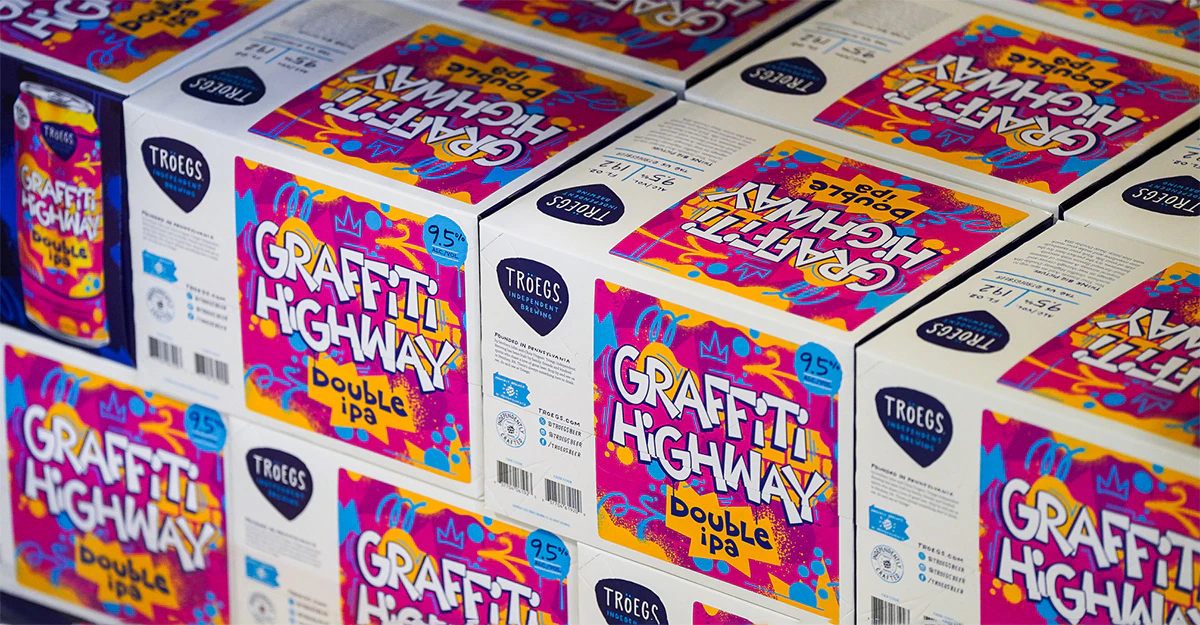
Photo: Courtesy Tröegs
Know Your Baseline, and Reduce It
When staff of other breweries ask Trogner about cost reduction, they tend to assume a 100,000-barrel brewery of Tröegs’ size gets massive discounts on ingredients. Not so, Trogner says. Yes, there are minor bulk discounts, but they’re not wholly or even primarily responsible for keeping the brewery’s costs in line. Instead, he says, that evaluation starts with simply knowing what costs are.
“It’s wild how most people can’t see what their actual expenses are,” Trogner says. “They don’t break down production in a way that lets them see how many cents go into every can. … Out of the 50 people I’ve talked to recently about this, three of them could probably see what their costs are.”
There are software solutions to help with this task, but Trogner says old-fashioned spreadsheets containing details of all inputs—water, gas, electricity, wastewater, labor, ingredients—can be simpler and just as effective. “Just by writing things down, … you see areas of waste where you can hopefully adjust.”
Through this kind of exercise, Trogner says, Tröegs realized in 2022 that its carbon-dioxide costs were a huge expenditure for the brewery. Rather than trying to save money on hops or malt, the brewery instead asked whether it could reduce CO2 usage. The answer was yes, to the tune of 25 to 30 percent.
Here’s how the brewery found that out: Brewers wrote down the equipment and processes that were using the most CO2, recording their baseline readings on flow meters. Then, brewers reduced the flow of CO2 incrementally, sending beer over to the quality team for analysis. Once the beer reached a threshold where it no longer met quality standards, they then increased the CO2 rates until they did. It turned out the brewery could reduce its gas use by almost a third without sacrificing beer quality at all. (The installation of a nitrogen generation system also helped offset a portion of CO2 use.)
“That made an enormous impact on our spending structure overall,” Trogner says. “That was probably just as beneficial, if not more beneficial, than us looking at the cost of [ingredients].”
Trogner says he’s approached dry hopping in a similar way: Does a certain beer need all these $15-per-pound hops? Or could they reduce those without sacrificing aroma?
Originally, Tröegs dry hopped its Graffiti Highway IPA at a rate of five pounds per barrel. Then the production team dialed back the dry-hop levels incrementally, evaluating them along the way for quality and sensory compliance. The conclusion was clear: Not only did the beer not need five pounds of dry hops per barrel, but the sensory analysis found that reducing that amount got better extraction, improving the beer’s flavor and aroma, making them clearer and less vegetal.
Trogner advises other brewers to do the same: Dial back ingredients, maximize efficiency, and mark the point at which that negatively affects quality.
“Turn it down until you lose your magic,” he says.
Cost-Effective Construction
When tweaking recipes to achieve efficiencies, breweries should be conscious of staying true to brand. Incremental adjustments can eventually make a beer taste different from its original incarnation, turning off customers who are loyal to it.
NoDa has unlocked great yields by using an Omega Yeast thiol-boosting strain to build its SLURP series of beers—but Henderson says he wouldn’t dream of pitching such a yeast into the brewery’s flagship IPA, Hop Drop ’n Roll.
“There’s no way I could make Hop Drop ’n Roll a thiolized beer,” he says. “It wouldn’t taste anything close to it. It would make it way more efficient, but people would be like, ‘What the heck happened to this beer?’”
Henderson loves how thiol-boosting yeasts produce some of IPA’s desired tropical flavors without the loss that can come with high hop loads: On a comparable IPA without thiol-boosting yeast, he’d expect to lose about 15 percent of volume between hot side and packaging; with SLURP, those losses are reduced to just 3 percent.
However, he says, the aromas and flavors those yeasts produce would have been too dramatic a shift from NoDa’s existing IPAs. The only choice was to build an entirely new IPA family around this yeast. Today, Lil Slurp is the brewery’s second best-selling beer behind Hop Drop ’n Roll—and, crucially, it didn’t cannibalize sales of the brewery’s existing IPA brands. Big SLURP, an imperial version, also took home a bronze medal in the Experimental IPA category at the 2022 Great American Beer Festival. The SLURP beers have been a commercial and competitive success, and their efficiency allows them to fit into an on-the-shelf price tier that might otherwise not be possible.
“Lil Slurp … yields as good as our lagers do,” Henderson says, “and has a price point that can be half of what IPAs to the left of it could be on the shelf.”
The SLURP series proved to Henderson that yeast was a critical tool for unlocking IPA efficiencies, but also that new strains are likely to require an entirely new brand. That’s more work up front, but SLURP’s success has shown that it can also spur creativity and innovation and make a major sales contribution to a brewery’s portfolio.
“A lot of yeast innovations have a ton of possibility for higher-efficiency brews, lower up-front costs, overall just making COGS significantly less,” Henderson says. “The one caveat that comes with it is they usually do not come with the ability to just retrofit existing recipes—not without making it blatantly obvious that you’re retooling [an IPA] or making a different version of it.”
Use What’s in the Pantry
Yeast and advanced hop products aren’t the be-all and end-all when it comes to IPA efficiency. At Tröegs, Trogner says they’ve “tried all of that” in the brewhouse, yet they continue to return to pelletized hops.
While advanced hop products and thiol-boosting yeast strains can create better yields, he says, there are so many quality pelletized hops on the market that it’s often financially smarter to use up existing stock. Sometimes those are in a brewery’s own cold storage, or they’re available inexpensively on the market.
“A hop product might be great, but I already have 20,000 pounds of Chinook lying around,” Trogner says. “We collected so many different types of hops over the years. Do we really need that many? Turns out, you don’t. You can use them in a different way or come up with a different brewing technique or temperature to get new flavors out of them.”
Trogner says he often reaches for home-cooking metaphors when describing efficiencies: Know the inventory in your pantry. Store what you have with care. Use what you have in creative ways before buying more ingredients.
If such principles are enough to get families through lean times, perhaps they can do the same for breweries.