

“It’s kind of a beer masquerading as a wine,” Dan Wye says while pouring a tall glass of hazy, straw-pale liquid.
Called Smúdan—from the Scots Gaelic for “pigeon”—the beer is a blend of raw ale fermented in stainless and a Nelson Sauvin–hopped saison aged in chardonnay barrels, brewed in collaboration with Glasgow’s Dookit. After blending, the beer spent more time on limes, gooseberries, and some locally foraged flora, including elderflower, sunflower, marigold, and borage.
It is light, zesty, thrilling. With the acidity dialed to just a whisper, the beer’s floral and citrus attributes shine. Carbonation levels are low and delicate, with just enough prickle to help bring out those gooseberry notes in the finish. Its body is perhaps its most interesting quality: full and rich, almost wine-like, allowing Smúdan’s complexities to linger a while longer on the tongue.
The intention, Wye says, is to replicate the flavor and mouthfeel of a cool-climate sauvignon blanc. However, despite its vinous nature, this is not a true beer-wine hybrid—there are no grapes in it. No grape juice, and no lees, pomace, or grape must. Nor have there been any grapes in any of the other beers that Wye has so far produced as part of this project.
And yet there’s no denying that regarding his intention to replicate those wine-like qualities, he’s hit the mark.
Strange Creatures and Their Origins
It might sound bullish, but with these beers, Wye figures he’s onto a new style entirely.
He calls them “wine chimeras,” after the mythical Greek beast that’s typically portrayed with a lion’s head and body, a goat’s head coming out the back, with a tail that ends in a snake’s head. Symbolically, the beast has come to represent strange hybrids and amalgamations.
Thankfully, these beers are far less fearsome than their namesake, mingling flavors that demonstrate the patience of a skilled mixed-culture brewer with a distinct sense of place, showcasing ingredients available on Wye’s doorstep. These are beers with terroir.
“I once made a beer using grape pomace sourced from Renegade Urban Winery in London,” Wye says, “but it just didn’t make sense, as Scotland isn’t a wine-growing region. Instead, we started trying to make beers that taste like wine without grapes, and I decided to call them ‘chimeras’ because they have lots of elements in play.”
Established in 2001 by Jonny and Tuggy Delap, Fyne Ales is today managed by their son, Jamie, and it’s one of the most respected independent breweries in Britain. That’s largely down to the massive success of their flagship, Jarl—a Citra-hopped blonde ale of 3.8 percent ABV, making up about 60 percent of the brewery’s total production.
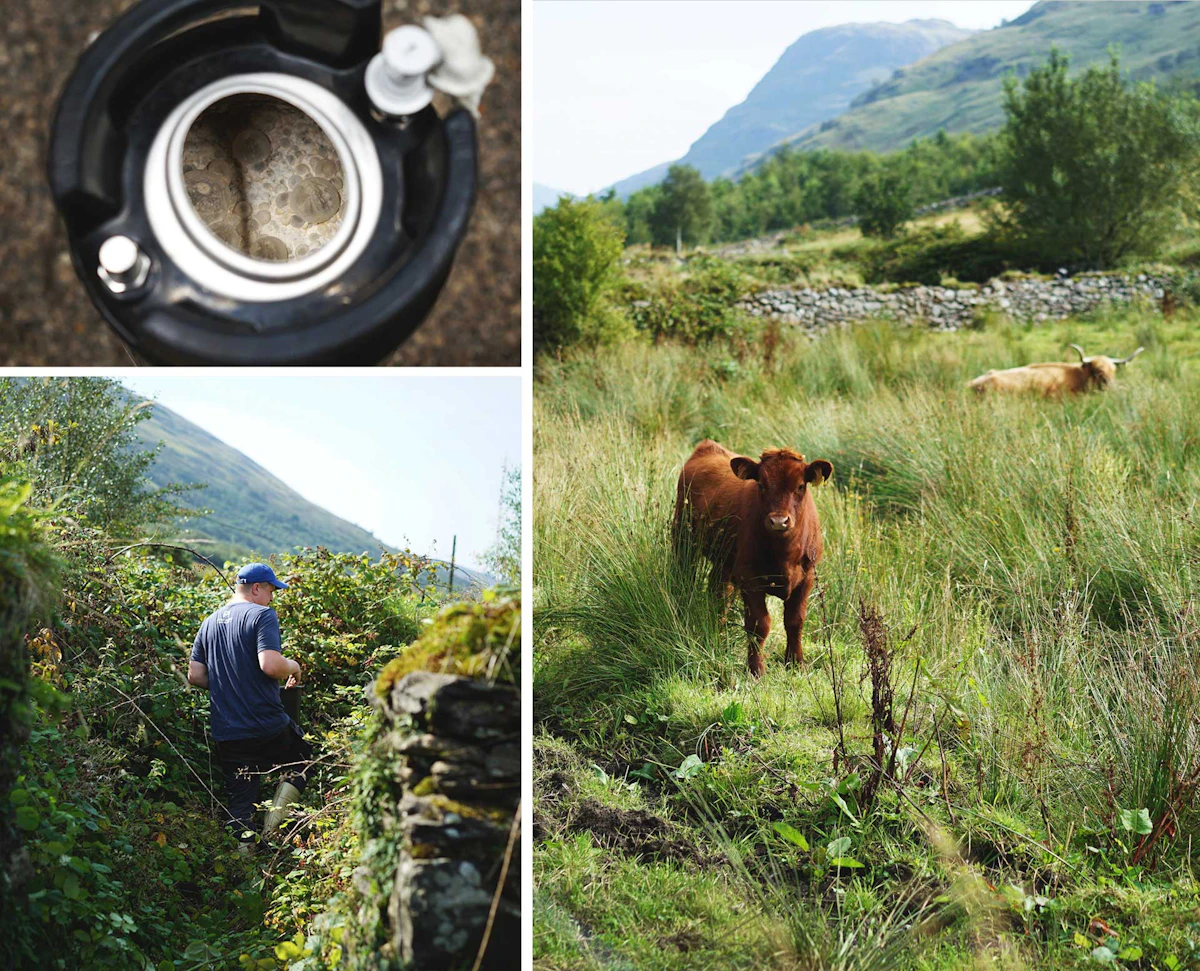
Fyne Ales also is a farmhouse brewery in the truest sense. About 55 miles northwest of Glasgow, it’s based on a working cattle farm surrounded by the towering hills of Glen Fyne, at the northern tip of Loch Fyne—a breathtakingly beautiful spot that’s hugely popular with visiting tourists.
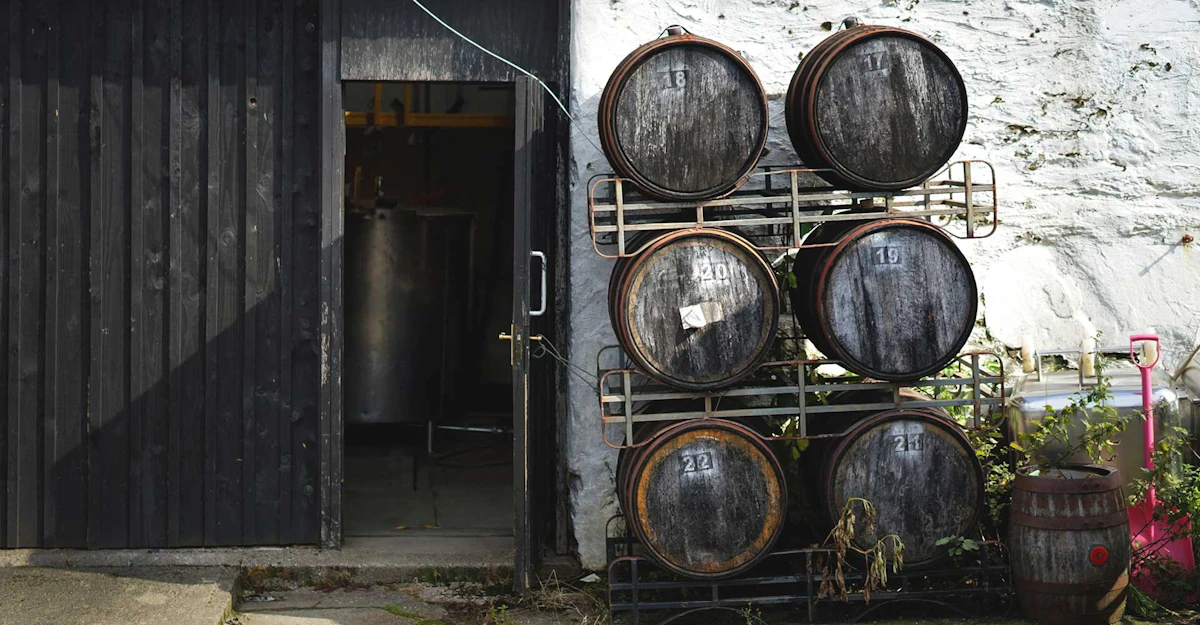
Wye joined Fyne Ales in 2021 to head up Origins, the brewery’s side project focused on spontaneous and mixed-culture fermentations. Jarl’s success made it possible: When the brewery expanded to its current 50-barrel facility in 2014, it left the original 10-barrel kit gathering dust in the former milking shed where it was stationed. Origins launched there in 2017, and one of its initial ambitions was to produce gueuze-inspired blends of one-, two-, and, three-year-old spontaneously fermented beer.
Wye has dialed back that particular ambition, aware that in Cairndow he’s a long way from Brussels. His own decade-long career has seen him work for the likes of English mixed-culture brewers Wild Beer in Somerset and Pastor in Cambridge. Today, at Fyne Ales, Wye is focused on delivering his own take on British wild beer that captures the essence of where they’re made.
It’s handy, then, that he lives in a cottage right here in Glen Fyne, just a few hundred yards from the brewery. “Origins is about trying to bring some of the Glen back to our customers,” Wye says. “Jarl doesn’t exactly scream Scottishness, so the beers I’m making are an attempt to bring a little of that sense of place back into what we do.”
Wild Beer in Britain
British mixed-culture brewing has come of age in recent years, with Origins being one of several focal points that demonstrate the niche’s maturity.
It’s taken a while to get there, but British takes on the tradition have developed their own distinctive strut, as compared to Belgian or North American counterparts. They tend to feature what I perceive as a softness, keeping titratable acidity in check to provide a certain level of accessibility. Informed and inspired by the wild and sour ales that came before them, these beers have been shaped by the demands of local drinkers into something distinctly different.
One of the pioneers of British wild beer is Mark Tranter, who established Burning Sky Brewery in the village of Firle, East Sussex, in 2013. He’s no stranger to beer-wine hybrids, having produced several collaborations with local winery Westwell.
“As brewers, it’s easier for us to take what we can from Westwell after harvest, and then work on doing our best to produce something that treads the boundaries between beer and wine—tasting like both, tasting like neither,” Tranter says. “I think what Dan is doing is truly interesting and inspirational. The beers I’ve tried from him are fascinating.”
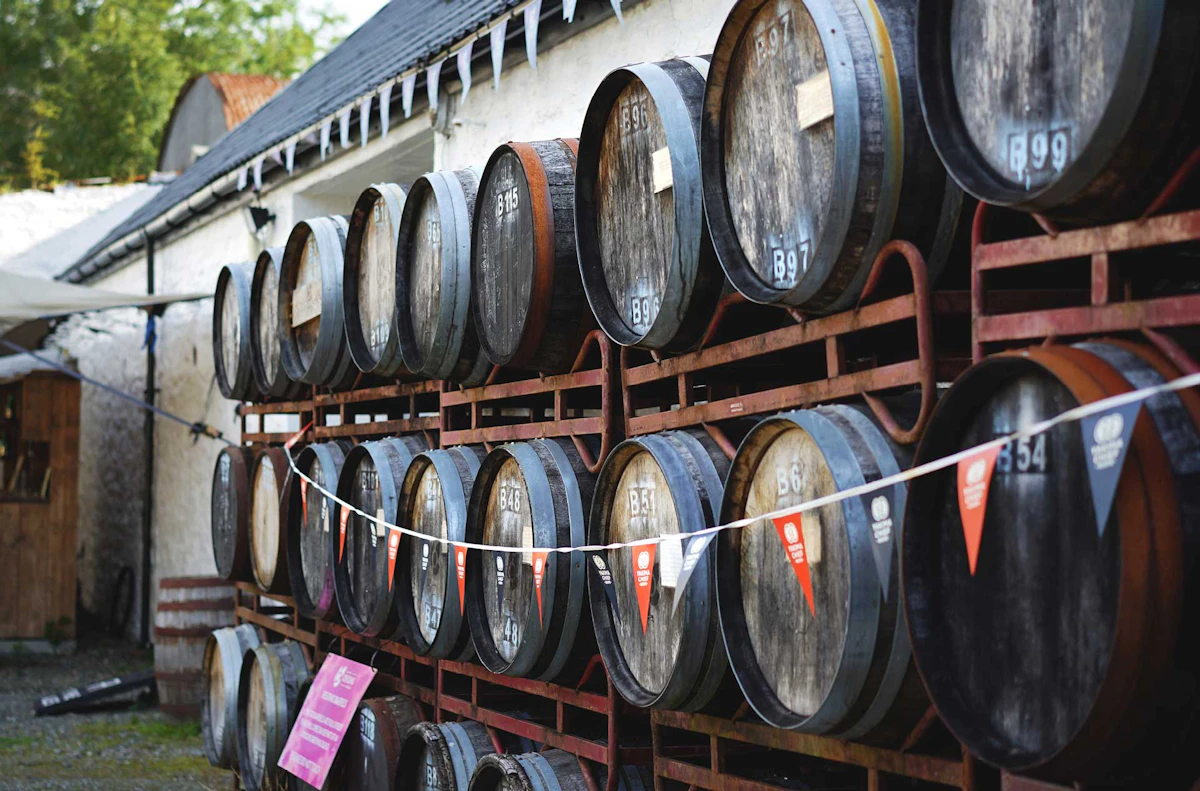
At the center of Origins is Wye’s house culture, which he calls “Mother Beer”—a mixture of conventional Saccharomyces, Brettanomyces, Lactobacillus, and a bit of pesky Pediococcus. The latter has been annoying him lately—he demonstrates by pouring a viscous, ropey sample from one of 10 sherry butts, each holding about 500 liters of different batches for blending. He says he’s not too worried about it, though; he trusts his culture to break down that viscosity with time.
Besides the 10 sherry butts, Wye has a diverse stock of 82 wine, brandy, gin, sherry, port, and whiskey barrels. He pulls a particularly delicious sample of bière de garde base beer that’s matured in a barrel from the nearby Springbank single-malt distillery. (We both agree it’s ready for packaging.)
To find the right beers for his chimeras, Wye regularly tastes his way through the barrel stock, making small, experimental blends with herbs, flowers, or fruit. He’s also planted his own fruit garden just a few yards from the brewery entrance, increasing the options readily available. On my visit, we spend a few hours foraging for wild blackberries and pineapple weed, which he’ll use to create a beer meant to mimic a light-bodied red wine.
“I don’t have a standard base beer,” he says. “I’m constantly mixing it up to diversify my blending options. A rough base for me is 60 percent Scottish pale malt, and the rest is either wheat, oats, rye, spelt, or maize. The hops are just whatever old stock that needs to be used up from the main brewery.”
Inviting Chimeras to Dinner
Wye isn’t alone in producing wine-like beers without grapes.
For example, at Balance Brewing and Blending in Manchester, founders Will Harris and James Horrocks also have been attempting to create wild beers that mimic the character of wine. In May 2025 they released Plonk, a barrel-matured beer with richer body and lower carbonation, aged on damson plums for color and deeper fruit character.
“The way we think about our beers, and our fruited ones in particular, is often in terms of the tannins, acidity, and depth of character that using barrels and whole fruit brings,” Horrocks says. “The secondary fermentation on fruit also utilizes yeast from the fruit skins, which has a nice connection to winemaking.”
Horrocks agrees with Wye that they may be on to a separate category of beer, inspired by wine but not imitating it.
These beers are also a natural fit at the table, and Wye’s chimeras are now available at local fine-dining restaurant Inver. Smúdan currently features on an 11-course tasting menu that costs £115, or about $155, a head. That interest is giving Wye greater motivation to ramp up his experimentation, with multiple collaborations in the works, including with Balance, Burning Sky, and Inver.
Perhaps “chimera” won’t catch on as a term, but it’s hard to deny that something exciting—and most importantly, delicious—is being made, thoughtfully and with care, here by the shores of Loch Fyne.
