

It’s been a wild ride, from the vision of New Belgium’s founders Kim Jordan and Jeff Lebesch to the thousands of coworkers who helped build one of America’s most loved breweries.
To mark the occasion, we’re looking back on 35 moments that shaped New Belgium’s first 35 years.
The Basement Homebrewing Years (1985–1992)
Basement homebrewing (mid-1980s). Homebrewing had been legal in the United States for only a few years when Jeff started making beer in his Fort Collins basement, alongside his engineering day job. One recipe he kept dialing in was an amber ale he called Fat Tire, after the Colorado nickname for a thick-tired mountain bike. Jeff spent the next six years perfecting the recipe that would help redefine American beer.
A bike trip through Belgium (1988). In the 1980s, American beer was a sea of pale-yellow lager. A wave of homebrewers and early microbreweries were starting to experiment with European-inspired styles: pale ales, porters, and stouts. But Belgian beers were almost entirely overlooked.
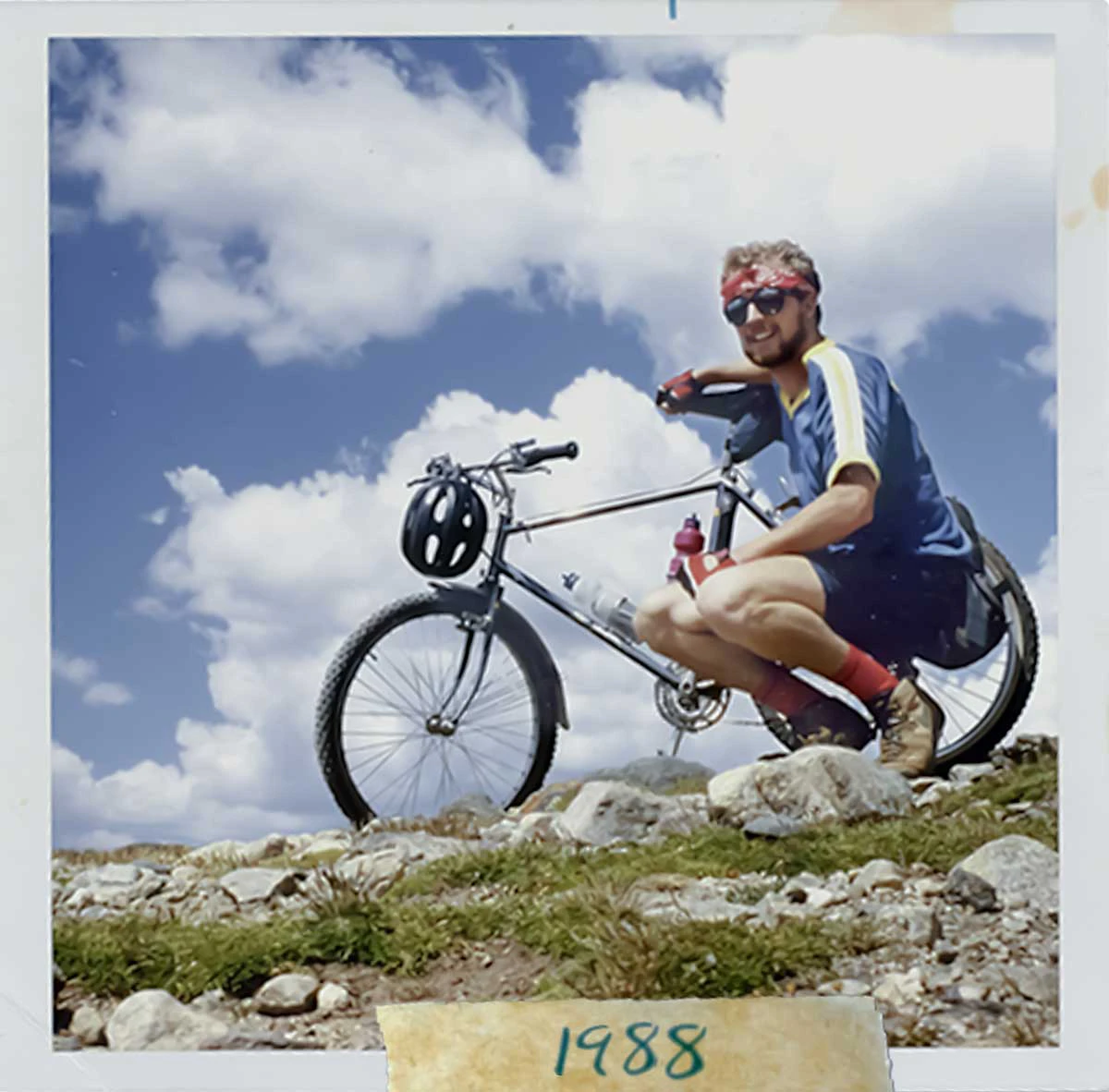
In 1988, Jeff decided to travel across the Atlantic to explore where it all began. On his now-legendary solo bike ride across Belgium, he visited a tiny beer bar in Bruges called ‘t Brugs Beertje. The owner, Jan De Bruyne, poured not just beer but 90 minutes of brewing history and lore. Jeff came home inspired—and with live Belgian yeast cultures—to bring Belgian-style beer to America.
The Rocky Mountain hike (1991). By spring 1991, Kim and Jeff had decided to take their homebrewing commercial. They already had the brewing equipment and recipes. What was left was the harder question: what would their brewery stand for? On a sunny Easter Sunday, with snow still on the ground, Kim and Jeff drove into Rocky Mountain National Park for a hike and to brainstorm what their budding brewery would stand for. They came back with four core values:
- Make world-class beer.
- Promote beer culture.
- Be environmental stewards.
- Have a hell of a lot of fun.
“We had not yet even made any [sellable] beer,” Kim says, “and we were going to produce world-class beer. That’s ridiculous. Except, you know what? We would.”
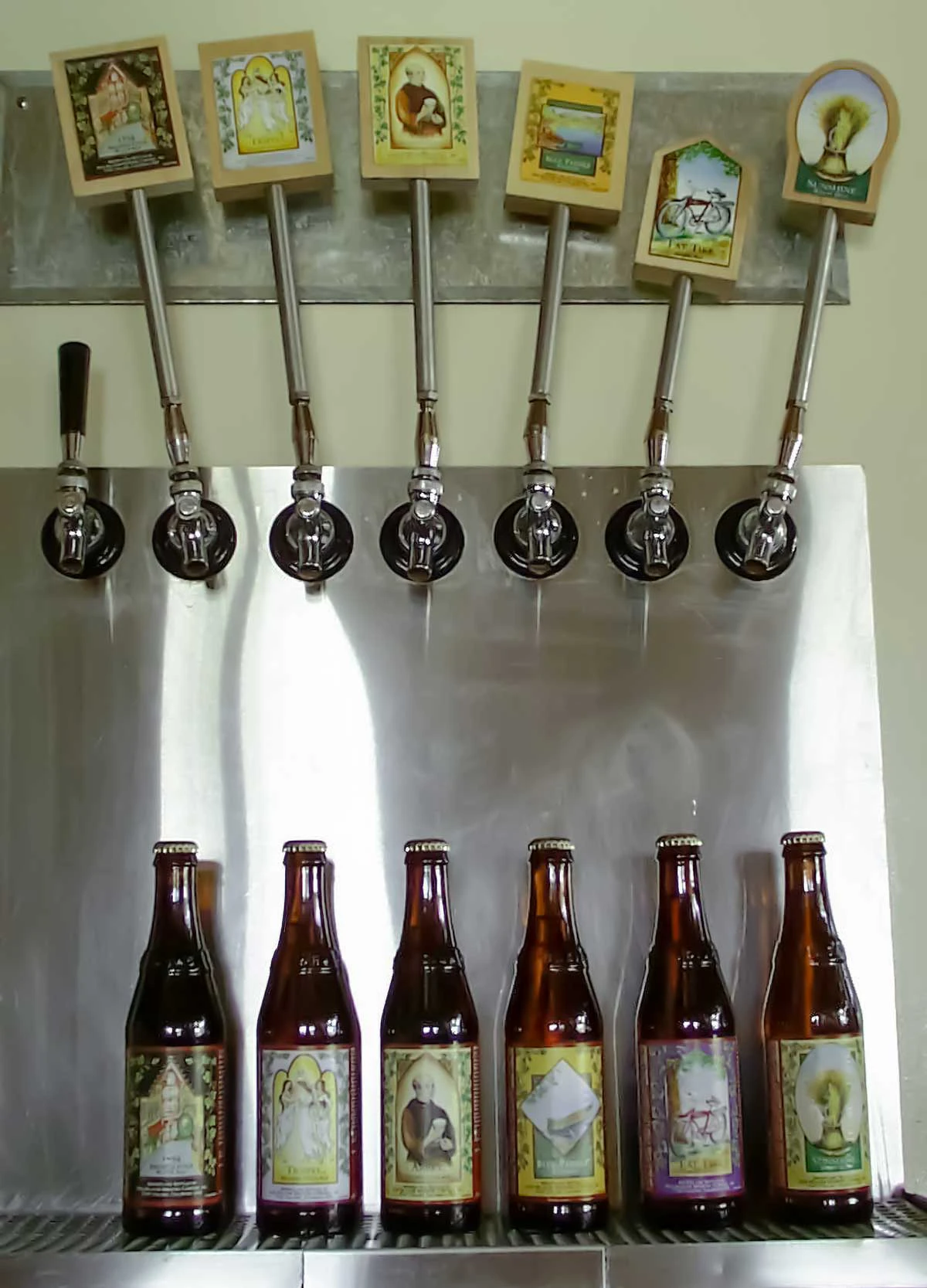
Anne Fitch’s labels (1991). Beer packaging of the time was all similar: bold corporate lettering, stock illustrations, and variations of gold, silver, red, and blue. But the New Belgium labels had to be unique, just like the liquid Kim and Jeff were brewing. They enlisted the skills of their neighbor and watercolor artist Anne Fitch to paint their labels. They captured the homegrown feel of the brewery: hop vines, wheat, and for Fat Tire, a red Columbia cruiser. The labels have become iconic to New Belgium and craft beer of that era.
First beer sold (June 1991). On June 4, the first commercial batch of Fat Tire went into the brew kettle in Kim and Jeff’s basement. Seventeen days later, they sold the first cases to Town Pump in Fort Collins, then walked over to Mountain Tap Tavern to make the second sale. Each bar took one case of Fat Tire and one case of Abbey for $24 cash apiece.
The station wagon sales route (1991–92). Jeff brewed. Kim bottled, sold, distributed, and planned finances. She worked the Colorado Front Range in a station wagon loaded with their hand-bottled beer, growing the brewery person by person, account by account.
2 a.m. feedback phone calls (1991). New Belgium has always had a strong connection with their fans, and there’s no better story to illustrate that than the first batch of Old Cherry Ale. The brew came out lighter in cherry color and aroma than expected. It was good, but not what they expected. What did drinkers think? They printed mailing labels for each bottle, explained the issue, and asked for feedback at the brewery’s number, which was also Kim and Jeff’s home line.
Then came the “2 a.m. drunken phone calls from people saying that this beer rocked,” Kim says. “I was on the phone side of the bed, so I had the distinct pleasure of trying to sound interested. Good thing it was only 60 cases, or we never would have gotten any rest.”
Becoming a Brewery (1991–1996)
Linden Street (1992–95). Momentum was building. People wanted more New Belgium beer. By summer 1991, Kim and Jeff had hired their first coworker. As they outgrew the basement, they quit their day jobs and made New Belgium their primary focus. They moved first into a former railroad freight terminal at 350 Linden, then to 500 Linden in 1995, the brewery’s home today.
Abbey wins GABF gold (1993). While New Belgium was getting more and more buzz in Colorado, there was always the question: how does New Belgium’s beer stack up among peers across the country? Abbey was one of the most noted beers: Rich dark malt, fruity esters, raisiny, at 7% ABV. Belgian-style ales were so unfamiliar to American craft drinkers that the Great American Beer Festival didn’t have a category for them. So, they created one. Winning the inaugural gold was a stamp of quality and a sign that Belgian beer had a home in American craft.
Open-book management (1995). Kim and Jeff weren’t just starting a brewery, but also a business and everything that comes with it. They were familiar with the finances, but that didn’t mean other coworkers were. And in those early days, every dollar counted. After reading The Great Game of Business by Jack Stack, Kim had the idea of getting more coworkers invested.
At the next company retreat, with about 40 coworkers in the room, Kim handed out a quiz. “I said, ‘We’re taking $100 in revenue. How much do we have left over?’ The average answer was that we had $60.”
Actual margin for a brewery: 10 to 15 percent. From that moment on, open-book management was core. Every coworker sees the financials and understands them.
Building the New Belgium Way (1996–2000)
Peter Bouckaert joins from Rodenbach (1996). Kim and Jeff sponsored Peter Bouckaert, brewmaster at Rodenbach, the legendary Flemish sour brewery, to speak at the Craft Brewers Conference in Boston. They also said they were looking for a Belgian brewmaster. After the event, Peter and his wife Frezi drove their rental car from Boston to Colorado to see the country and decide whether Kim and Jeff were serious in their offer.
Peter ended up staying with New Belgium for 21 years as the brewmaster. He brought the rigor of a European brewing engineer and the imagination of an artist. Under him, New Belgium launched the most ambitious sour and wood-aging program in American craft.
1554 Black Lager (1997). New Belgium has always reached back into Old World brewing traditions and brought them forward. The clearest example is 1554. When a 16th century Belgian black lager recipe was found in a centuries-old brewing manuscript, Peter helped re-create it. They named it for the year the recipe was written down. Twenty-eight years later, 1554 won gold at GABF in the Historical Beer category.
Blue Paddle Pilsener (1998). Peter wanted to make a true Czech-style pilsener: smooth, hopped with Saaz, built on a proper lager yeast for that authentic Czech character. The name came from a fan submission in a public naming contest and quickly became a customer favorite.
The wood cellar and La Folie (1998–99). The wood cellar started in February 1998 with nine wine barrels. “It wasn’t supposed to be lucrative,” former wood cellar director and master blender Lauren Limbach says of the program. “It was supposed to be educational and entertaining for us.”
The experiments became La Folie in 1999, the first commercial American Flanders-style sour. The name is French for “the foolish thing.” That foolishness gave the brewery a creative spark and grew into what is now a world-renowned sours program with 65 oak foeders.
The wind-power vote (1999). Being environmental stewards has been core to New Belgium since the beginning. In 1999, the brewery had a chance to source 100 percent of its electricity from wind power, funding a wind farm in Wyoming through Platte River Power Authority. The catch: coworkers had to give up that year’s profit-sharing bonus to pay for it.
Kim and Jeff laid out the choice at an all-staff meeting, then left the room. Forty-five minutes later, the coworkers came back with a unanimous decision: forgo their bonuses and fund the wind farm. New Belgium became the first wind-powered brewery in America.
“It wasn’t a long discussion,” brewing manager Alex Dwoinen says. “It was, yeah, this seems like the right thing to do.”
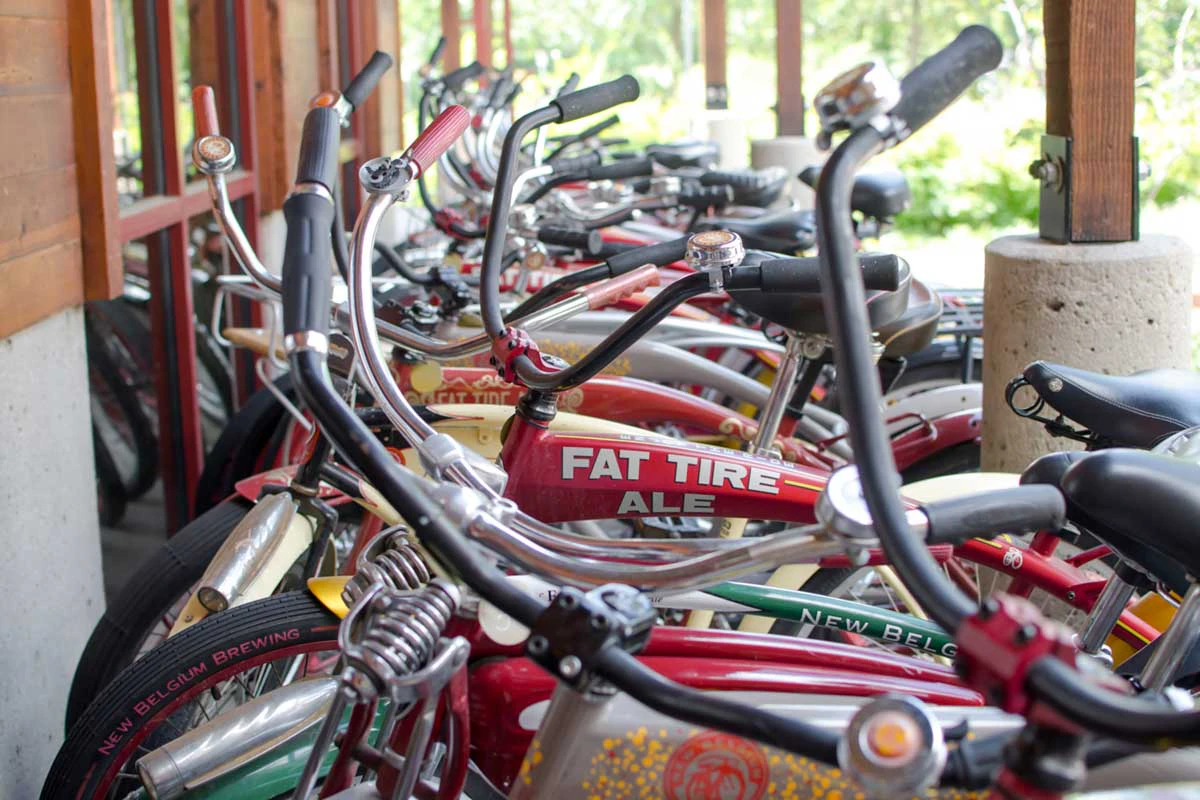
The first-anniversary bike (1999). Mason Lathrop, an early coworker, wanted to ride to work. He needed a bike. “I wanted a bike, really, I needed a bike,” he says. And why not get one from New Belgium? A bike was part of the origin story, the logo, and the label on the flagship beer. Mason proposed to Kim that every coworker get one on their first anniversary. She went for it. Since then, thousands of coworkers have received a custom anniversary bike.
The first Belgium trip + sabbaticals (Late ’90s). Belgium is where the inspiration really caught fire for the brewery. So, why not let every coworker experience it, too? At five years, every coworker earns a trip to Belgium to retrace Jeff’s ride, sit down at ‘t Brugs Beertje, drink Westmalle from a chalice, and taste a Lambic where it’s still made. Coworkers share trains and meals and more than a few beers. They come back tied closer to the brewery, its origin story, and each other. Seventy coworkers went in 2025.
Also in the late ’90s began our tradition of sabbaticals: Every 10 years, coworkers get an extended time off to rest, recharge, and follow their folly. Since then, nearly 1,500 coworkers have taken part in this transformative experience.
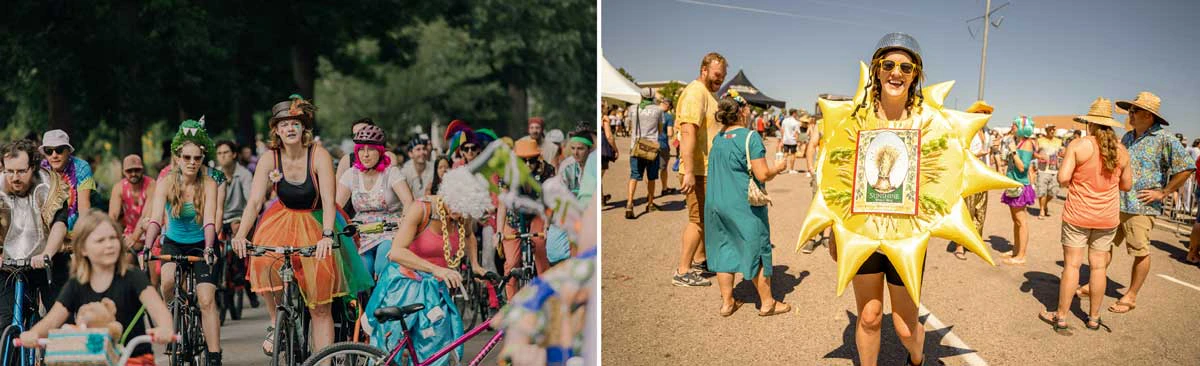
A hell of a lot of fun: Tour de Fat (1999). How does a brewery built on bikes, beer, and community celebrate all three at once? You throw a party. Tour de Fat was born in 1999 as a festival of bikes, beer, costumes, music, and charity. Today, Tour de Fat is held every fall in Fort Collins and Asheville, having raised more than $6 million for local bike nonprofits over 26 years.
Going National (2002–2012)
Brewhouse 2 (2002). As the demand for craft beer increased across America, New Belgium needed more brewing capacity. A second, much larger brewhouse came online in Fort Collins in 2002. Coworker Bubba Speed called it “our flag on the moon as a micro brewery disruptively evolving into a major craft brewery.”
Wastewater treatment (2002). But as New Belgium got bigger, so did its environmental impact. In 2002, an on-site wastewater-treatment plant came online to clean water from brewing. The plant takes water from brewing, strips out methane-rich biogas, funnels it through a generator, and runs the energy created back into the brewery, providing about 11 percent of the Fort Collins facility’s power today. At the time, no other craft brewery had built a system like it, and it set a template many in the industry would follow.
A dollar per barrel for the planet (1993, formalized 2007). Since 1993, every barrel of New Belgium beer sold has put a dollar into a philanthropy fund for nonprofits that support issues important to the business, such as climate, water, bicycle advocacy, and community programs. Cumulative giving crossed nearly $40 million in 2025.
The first Fat Tire can (May 2008). It’s hard today to imagine a time when craft beers weren’t in cans. In the mid 2000s, cans were still seen as packaging for macro lagers, but consumer preference was shifting. So, when Fat Tire went into a can in May 2008, it was “a huge milestone for NBB and Craft in general,” says longtime coworker Brendan Beers. “When I started in 2002, there wasn’t a thought in the world that we would ever put our products in anything other than kegs or amber glass bottles.” Within a few years, the rest of the craft-beer industry started to follow.
Solar on the roof (2009). Continuing the work of being good environmental stewards, we installed solar panels on the Fort Collins brewery’s roof to reduce dependence on the grid. At install, it was the largest privately owned array in Colorado.
Ranger IPA (2010). Many at the brewery never thought New Belgium would brew an IPA. We were a Belgian brewery. But as tastes shifted to hoppy ales, our brewers knew they could make something great. So, Ranger IPA was born, named for the sales-team coworkers who traveled the country selling our beer. Ranger opened the door to the Voodoo Ranger IPA family that would later define New Belgium’s growth.
Growth Continues (2012–2019)
First U.S. craft brewery to certify B Corp (January 2013). New Belgium became the first U.S. craft brewery to certify as a B Corporation, third-party verification that a business meets a high bar for social and environmental performance, transparency, and accountability. The certification has been re-earned every three years.
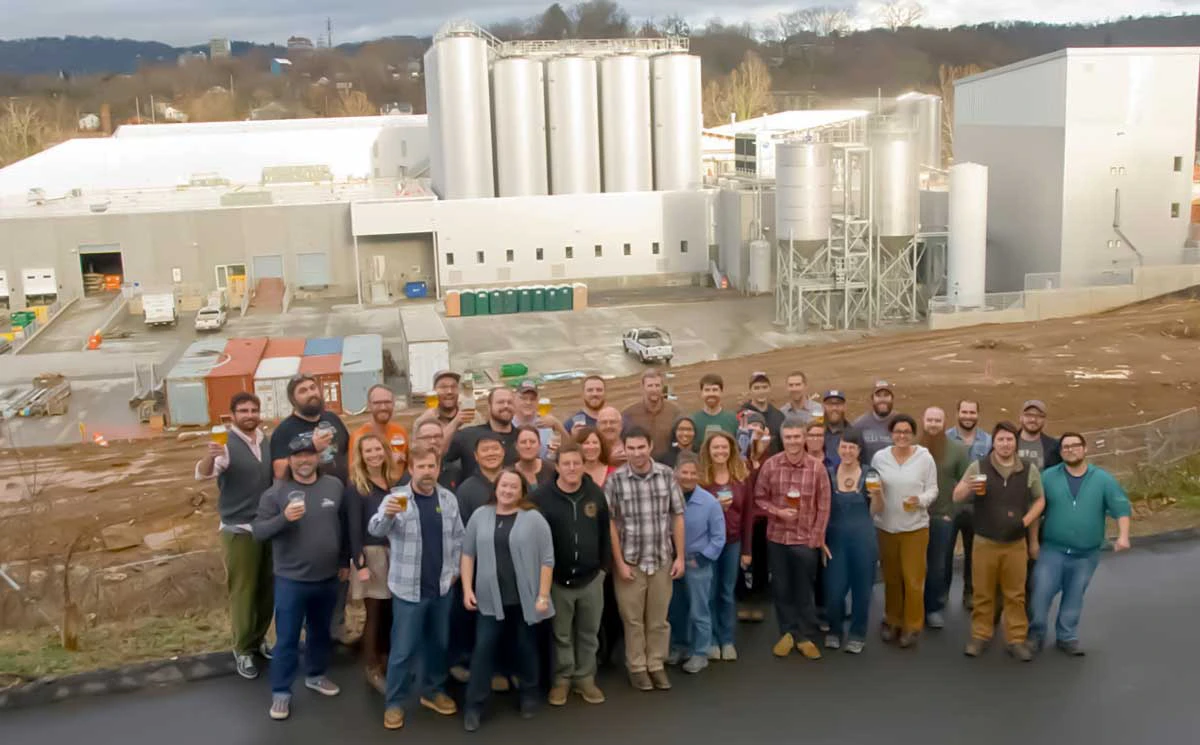
Asheville brewery opens (2016). By 2011, New Belgium needed an East Coast home as Fort Collins was nearing capacity. Shipping beer across the country was costly and carbon intensive. The brewery wanted to set up a second brewery in a place that already shared its identity: outdoor culture, craft beer, and a connection to water.
After narrowing down dozens of potential locations, New Belgium picked Asheville, North Carolina. The site was located on a brownfield near the French Broad River and the River Arts District. New Belgium worked with the community to remediate the land, building the brewery with 75 percent recycled materials, as well as adding new trails along the river. The brewery and Liquid Center have become a community gathering spot.
Voodoo Ranger launches (2017). What started as Ranger grew into Voodoo Ranger. Bolder identity. Sharper visuals. A skeleton character on the label, which was different from previous branding. By 2021, Voodoo Ranger Imperial was America’s number-one IPA, reaching a whole generation of drinkers that craft beer had never touched before.
National distribution (2017). We reached a major milestone when New Belgium’s distribution reached every state in the country. That milestone belonged to a lot of people: the Beer Rangers who lived on the road and opened accounts one bar at a time, the distributor partners who got our beer into stores in every market, and every coworker who made sure the beer in those trucks was worth shipping. Twenty-six years from a basement in Fort Collins to all fifty states—not too shabby.
Building the Future (2020–Now)
Fat Tire goes carbon neutral (August 2020). Fat Tire was certified the first U.S. craft beer to be carbon neutral. It was a public commitment to environmental stewardship, showing that craft beer could be delicious and responsibly brewed.
One million barrels shipped (2020). New Belgium shipped one million barrels in a single year for the first time ever, during a pandemic, nonetheless. It was a huge milestone made possible by the dedication of our coworkers, distributors, and fans.
Bell’s joins forces (November 2021). Bell’s Brewery, the Michigan craft pioneer behind Two Hearted and Oberon, joined the New Belgium family. Now, two of America’s most respected craft breweries were sharing techniques, skills, and culture, building what comes next, together.
The Force Family launches (March 2022). Voodoo Ranger Juice Force, a 9.5% ABV hazy imperial IPA, launched in 19.2-ounce single-serve cans. Brewbound called it “the biggest first-year craft launch of all time.” And the family has expanded with Tropic Force, Fruit Force, and G-Force, making the Force Family one of the most successful brands in the history of craft beer.
Daleville joins New Belgium (May 2023). New Belgium acquired a 259,000-square-foot brewery in Daleville, Virginia, to focus on expanding production and innovation.
Asheville flood and recovery (2024). Hurricane Helene flooded the French Broad River in September 2024, shutting down the Asheville brewery for five months. A 150-person remediation crew was on-site within four days. Coworkers took care of each other, helping each other secure water, food, and communication. Coworkers across the company donated $80,000 to the Coworker Assistance Fund. The brewery came back stronger than ever.
Building for the Future (2026). Under CEO Shaun Belongie, New Belgium’s next chapter is being written. A five-year strategic plan to build what’s next will strengthen and expand core brands such as Voodoo Ranger and meet 2030 emissions targets. “Resilience,” Shaun says, “is not a finish line. It’s a practice.”
Make world-class beer. Promote beer culture. Be environmental stewards. Have a hell of a lot of fun.
Those four values came from a hike Kim and Jeff took in 1991, but thousands of coworkers have since lived them, growing them into what New Belgium is today. They show up in every bottle opened, every can cracked, every draft poured. They show up in all-staff meetings, Tour de Fat costumes, and gatherings where our beer makes the moment.
We’ve been brewing fun since ’91 and can’t wait to see what comes next.
Cheers to 35 years!