

Producing exceptional beer takes more than recipe control and process expertise. It also requires sanitation processes that are reliable, repeatable, and efficient.
In brewery operations, cleaning and sanitation directly affect product quality, tank turnaround, labor efficiency, water and chemical use, and overall uptime. When sanitation is inconsistent, the impact reaches far beyond housekeeping. Cleaning cycles take longer, manual intervention increases, costs rise, and production schedules become harder to maintain. That’s why, as a brewer, you should treat sanitation as a production priority, not just a support function.
Common Sanitation Issues in Breweries
When sanitation performance begins to slip, the warning signs are usually easy to spot. Tanks may require re-cleaning. Water and chemical use may increase. Manual washdown may become more frequent. Cleaning procedures may begin to vary by operator or shift. Over time, sanitation becomes less predictable and more expensive.
One of the main reasons this happens is that sanitation is often approached primarily as a chemistry issue. While chemical concentration, temperature, and contact time all matter, chemistry alone can’t compensate for poor spray coverage or insufficient impact. If cleaning solution doesn’t reach critical areas, or if spray force isn’t strong enough to remove residue effectively, sanitation results will vary.
Your brewery also deals with a challenging mix of soils. Wort residues, proteins, sugars, hop material, yeast, and fermentation by-products can build up on vessel walls and equipment surfaces. Organic films can resist simple rinsing, and mineral deposits can make tanks even harder to clean over time. Even similar vessels may clean differently depending on residue type, production schedule, and how long soil remains before sanitation begins.
Manual sanitation can present the same type of challenges. Exterior tank surfaces, floors, drains, keg areas, and transfer points all require routine washdown. If spray tools aren’t suited to the application, if point-of-use pressure is too low, or if equipment is difficult to control, cleaning becomes slower and less consistent. Operators may spend more time cleaning without improving the result.
Across the brewery, the most common sanitation problems usually come back to the same root causes: incomplete coverage, insufficient cleaning force, pressure loss at the point of use, lack of standardization, and performance drift caused by wear.
Tank Cleaning: Often the Biggest Challenge
Sanitation issues can occur throughout the brewery, but tank cleaning often has the greatest operational impact. Fermentors, bright tanks, and process vessels all need to be cleaned thoroughly and consistently because cleaning time directly affects turnaround, CIP performance, and production flow.
Many breweries rely on traditional spray balls because they are familiar and widely used in sanitary applications. In some cases, they can be effective. But they aren’t always the best option for every vessel or every soil load.
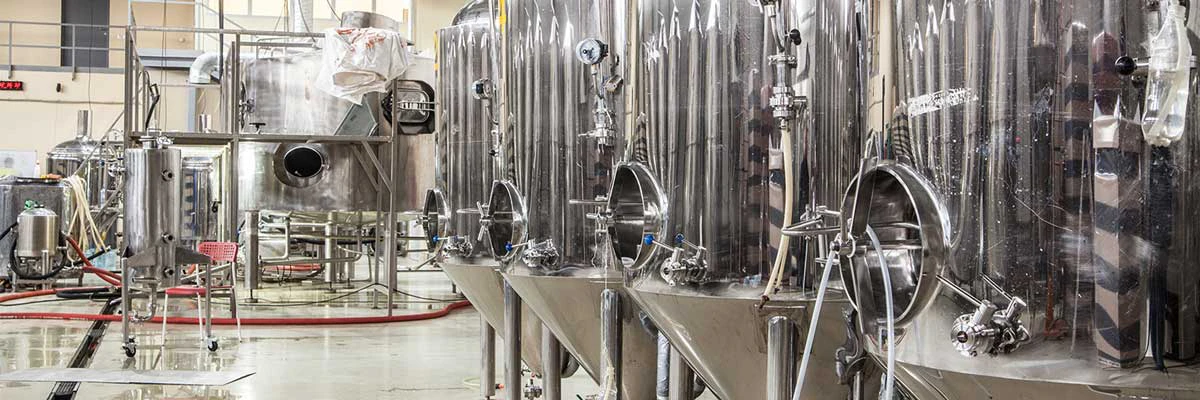
Tank-cleaning requirements vary based on vessel size, internal geometry, and the type of residue being removed. In lighter-duty applications, spray balls may provide adequate coverage and chemical contact. But in larger tanks or more demanding cleaning conditions, higher-impact tank cleaners can provide better soil removal and more consistent results in less time.
Tank internals add another layer of complexity. Agitators, coils, baffles, fittings, sensors, and manways can create shadow areas that limit spray coverage. Even a well-selected cleaning device can underperform if placement doesn’t account for these obstructions.
This is one reason cleaning performance can vary significantly from one vessel to another. Tanks may appear similar in size or function, yet differences in internals, residue profile, and cleaner placement can lead to very different sanitation outcomes. When the cleaning method isn’t matched to the application, breweries often compensate by extending cycles or adding manual touch-up cleaning. That increases labor, wastes resources, and creates unnecessary disruption.
Practical Ways to Improve Sanitation Performance
The most effective sanitation programs treat cleaning as a system, not a collection of disconnected tasks. That starts with identifying where problems are occurring and whether the root cause is spray coverage, cleaning force, system pressure, tool selection, or process variation.
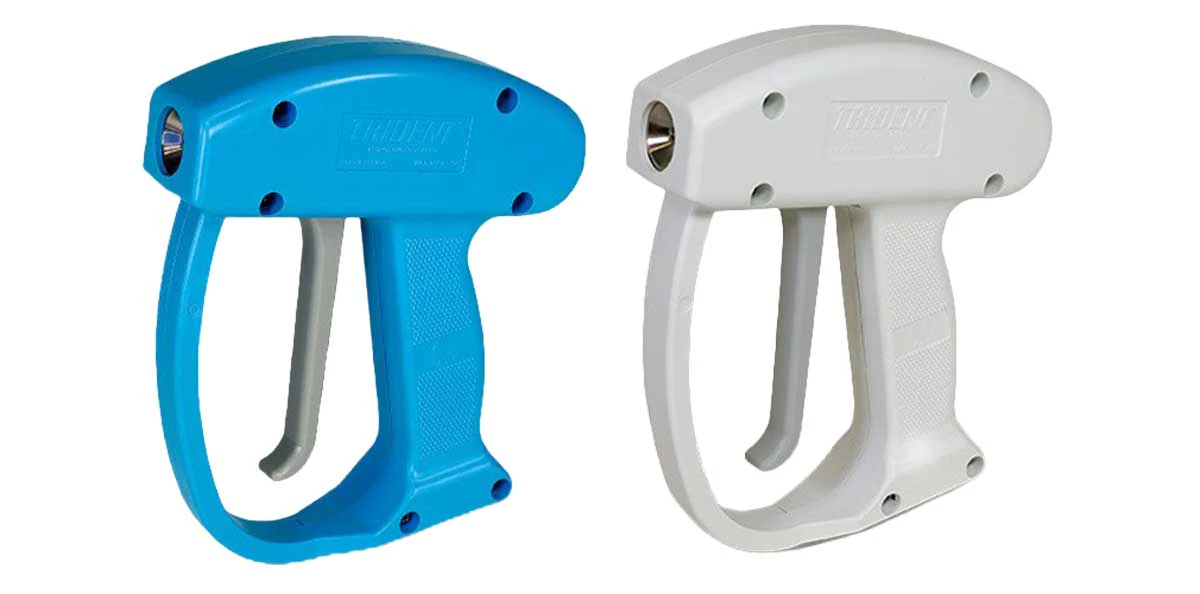
For general washdown, the first step is selecting the right spray tool for the job. You should choose hand-held spray guns based on the cleaning task, required spray pattern, and operating environment. Wider patterns may be best for rinsing larger surfaces, while more focused sprays are better for removing stubborn residue. Durability and operator control also matter in demanding brewery environments.
For tank cleaning, the priority is matching the cleaning device to the vessel and soil load. Not every tank requires the same level of mechanical action, and not every vessel should use the same cleaning cycle. You can improve consistency by classifying tanks by cleaning demand and using equipment designed for those conditions.
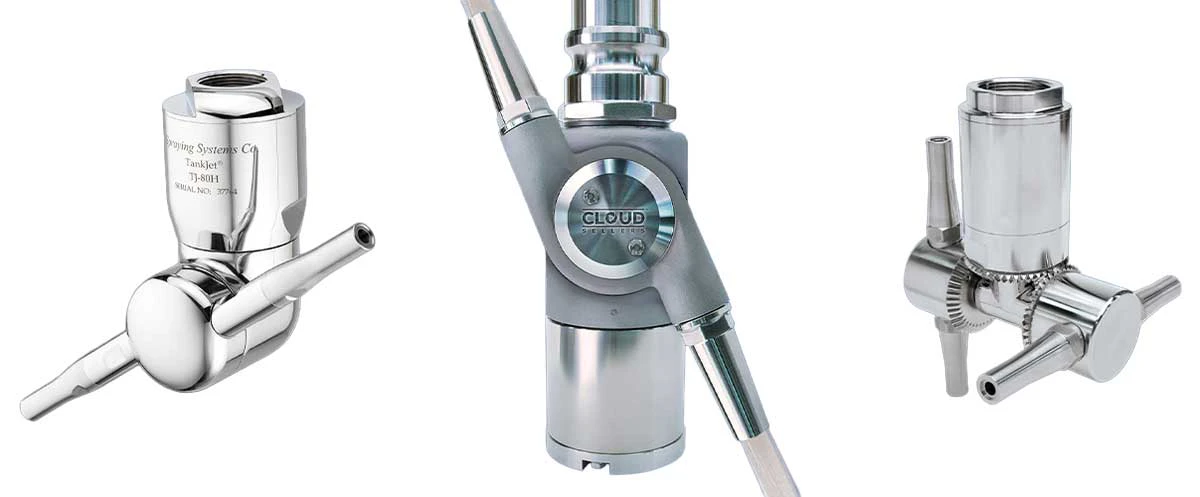
You should also review tank-cleaner placement carefully, especially in vessels with internals. If shadow areas are preventing complete coverage, stronger chemistry is unlikely to fix the problem on its own. In many cases, better placement or a better-matched tank cleaner delivers a more effective solution.
It is also important to evaluate the sanitation system as a whole. Pump capacity, line size, hose length, filtration, and supply pressure all affect performance at the point of use. If these factors aren’t aligned, even high-quality spray equipment may not deliver the expected results.
Breweries achieve better sanitation outcomes when cleaning methods are defined by application, operating conditions are documented, and shift-to-shift variation is reduced. Routine inspection and maintenance are equally important. Spray nozzles, washdown guns, and tank cleaners wear over time, and that wear can quietly reduce performance long before failure becomes obvious.
The goal isn’t just to get equipment clean. The goal is repeatable sanitation that protects quality, reduces waste, and supports efficient production.
Toward More Predictable Sanitation Performance
For breweries, sanitation isn’t just about cleanliness. It is about protecting uptime, controlling costs, and making production more predictable. Facilities that treat cleaning and sanitation as a critical part of brewery operations are better positioned to improve efficiency, reduce waste, and maintain the hygienic standards needed to produce consistent, high-quality beer.
Spraying Systems Co. helps breweries improve sanitation by applying engineering discipline to washdown and tank-cleaning applications. That includes identifying coverage gaps, selecting the right spray tools and tank-cleaning equipment, and helping brewers maintain long-term performance through proper system design and maintenance practices.
To learn more about sanitation solutions for brewery operations, including hand-held washdown tools and tank-cleaning systems, visit Spray.com to explore resources and connect with a local Spraying Systems Co. representative.