

At Goldfinger, we have this tradition of brewing a beer with Austin’s Live Oak for our anniversary every year (our Lagerversary). And I was talking with Dusan Kwiatkowski, the brewer there, about some styles that we could brew for our anniversary two years ago.
That was right around the time that a lot of craft brewers were starting to make American-style lagers, and I thought there was a way to make something a little more flavorful and more interesting than just trying to copy a macro lager. At the same time, Dusan and I were geeking out over the zoigl tradition in Germany.
The idea that these communities would come together to make beer, and that each one would take a turn literally opening their home to the public—in my opinion, that’s probably the most authentic example of how beer can bring people together. So, we decided to make an American lager but blend it with the zoigl style—not that it’s clearly defined, but zoigl is typically more on the amber side, not so pale. But we also wanted to Americanize it, have it be approachable to the locals, and have some familiar flavors.
So, we built a beer around some adjuncts—corn and local ingredients. We tried to stay as local as possible and to resurrect some old-school, really cool American hops that aren’t interesting to American brewers anymore. We got whole-cone Mt. Hood and put those in the whirlpool—a really cool beer.
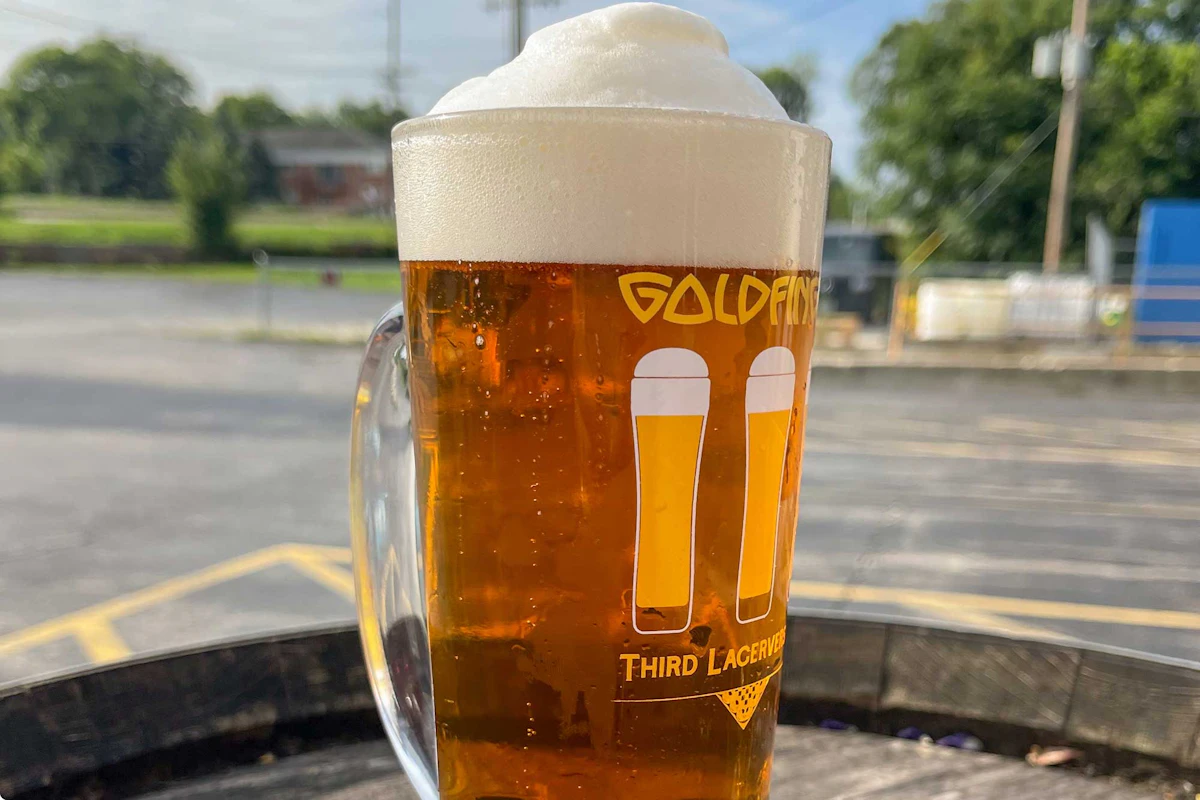
A New Tradition?
I had no other plans for the beer—we were going to call it American Zoigl, we were going to talk about what zoigl is, and then why we interpreted our version in this way.
I asked my father-in-law to build a zoigl star, so we could hang it outside our brewery and at least pay homage to that tradition—of hanging the symbol to let people know they’re welcome to come into our home (our home, in this case, being our taproom).
Shortly after the Lagerversary event, Dusan wanted to do his version down in Texas. So I said, “Well, why don’t I ship the star down to you, so you can do this whole thing that we did?” He brewed his version—kept the ingredients pretty similar, but of course he approached it a little bit differently—and he hung the star up in their brewhouse, right behind their taproom’s bar down in Austin.
One day it occurred to me, “Hey, maybe other breweries want to do this.” So I started an Instagram account, @americanzoigl, and I started promoting it on Goldfinger’s social media. I also started building up American Zoigl, to see if any other breweries around the country were interested—and immediately we had about 65 breweries across 40 states ask if they could be a part of it.
The whole idea was: Open your home, let’s make it a nationwide thing—to kind of bring craft breweries back together because that’s what attracted me so much to the industry. So, let’s do something collaborative that gets people excited.
I found a perfect box for the star. I created a binder and a little history of the American Zoigl project—which essentially is just passing the star from brewery to brewery, creating a few guidelines for the recipe, and then hanging the star and welcoming in the locals, to let them know that your home is open for drinking your American zoigl.
So far, the participating breweries have been Goldfinger, Live Oak, Urban Chestnut in St. Louis, Human Robot in Philadelphia, Fox Farm in Connecticut, Schilling in Vermont, Good Word in Georgia—seven breweries, and some of the best lager breweries in the country. People have really taken a liking to it. And the coolest part is that everybody’s going to have their own touch on it, whether that’s ingredients, process, how they promote it, how they interpret the style.
I think that’s probably one of the truest parallels with the zoigl tradition—it’s very community-driven, but in terms of the specifics on the beer, it’s kind of open to interpretation.
Hops are one way that breweries are interpreting it differently. Schilling, for example, used whole-cone Mt. Hood. Urban Chestnut actually mixed in a bit of French hops. On the adjunct front, most people have stayed true to the corn, but some are using a local corn grown in their county, for example, while others might use flaked corn. The balance is all over the map—some are very bitter, like pilsner, and some are very malty.
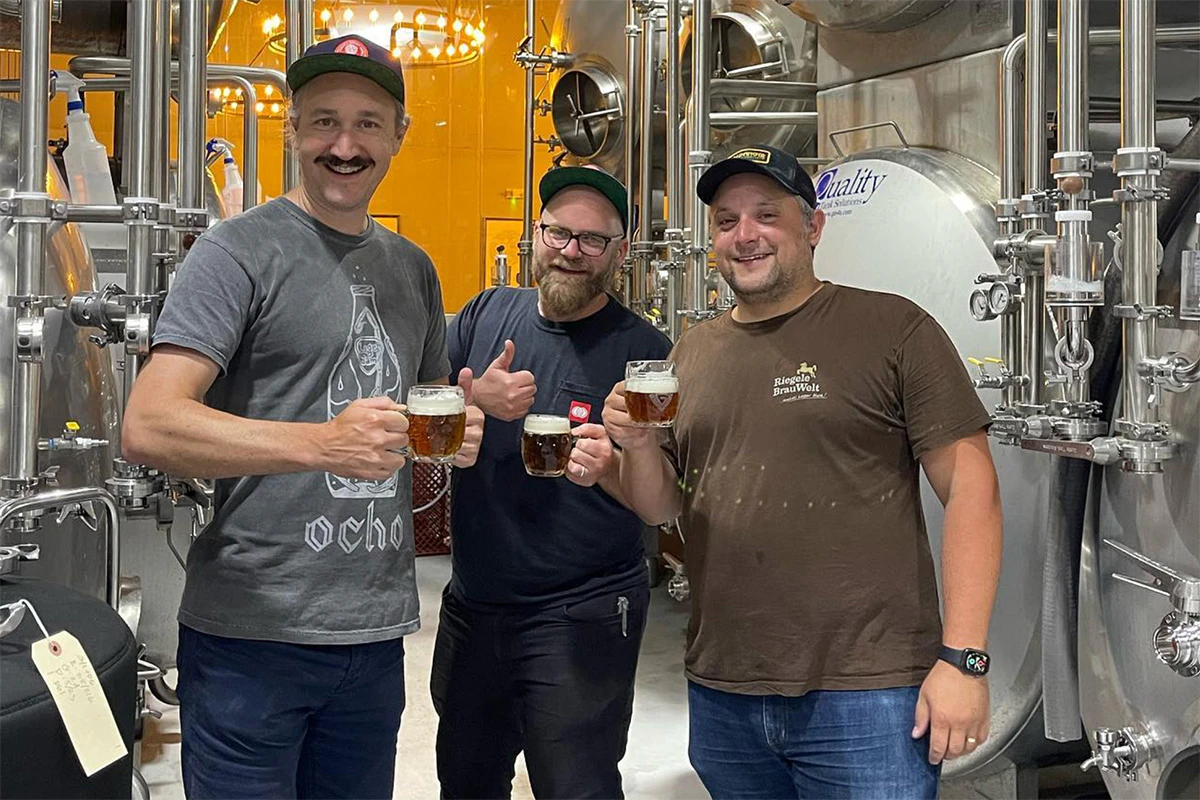
Dusan Kwiatkowski, Niko Tonks, and Tom Beckmann
The Contours of American Zoigl
Definitely try to source as many of your ingredients locally as you can. The idea behind that is that the German zoigl beers are made with local ingredients—they’re not importing other stuff. So, we want to showcase the local flavor.
We try to keep the hops mainly American, but if you needed to sprinkle in some Noble, you can. Then the use of an adjunct—that’s more of a nod to American lager, basically showing that you can use these adjuncts to make really good lager that isn’t just yellow, fizzy, and tasteless.
Any brewers who are interested can follow the project @americanzoigl on Instagram and send us a message. We’ve got a queue going now, and we hope to speed up the transfer of the zoigl star so we can cover more ground because there’s a lot of interest in it. I’m not trying to manage it—I am now, because it’s still in the early stages, but I think ideally it would take on a life of its own, and each brewer would know to send the star on to the next one.
Right now, I have the next seven breweries confirmed, but there are 25 others that are interested. We’re trying to not repeat states initially—we’re trying to make sure we cover every state, and then we’ll start going back.
